

The Divine Name Revealed: A Historical and Linguistic Study of YHWH, Jehovah, and Yahweh | The Echo of the Divine Name: A Synthesis of Its Historical Pronunciation and Suppression
The Divine Name Revealed: A Historical and Linguistic Study of YHWH, Jehovah, and Yahweh
Meta Description
What is the meaning of the divine name YHWH? Explore the history, pronunciation debates, and suppression of the sacred name of God in the Bible, including the forms Jehovah and Yahweh.
The Divine Name Revealed
A Historical and Linguistic Study of YHWH, Jehovah, and Yahweh
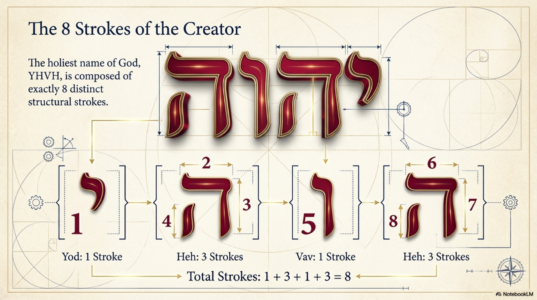
In the Hebrew Bible, the sacred name of God is written as YHWH, a four-letter name known as the Tetragrammaton. This name appears thousands of times in the Hebrew Scriptures and represents the personal covenant name of the Creator.
Originally, this name was spoken openly in ancient Israel. Over time, historical pressures, religious reverence, and linguistic changes led to the gradual suppression of its pronunciation. As a result, alternative forms such as Jehovah and Yahweh developed in later traditions.
This article explores the historical use, linguistic meaning, and later transformation of the divine name.
1. Early Use of the Divine Name
In ancient Israel, the name YHWH was not hidden or secret. It was used in prayers, blessings, oaths, and daily greetings.
Reference
Book of Exodus 3:14–15
In this passage, God revealed His identity to Moses:
“I AM WHO I AM.”
After this declaration, God instructed Moses to tell the Israelites that YHWH had sent him.
Key characteristics of the name
• Appears about 6,800 times in the Hebrew Bible
• Represents God’s personal identity
• Intended to be remembered and spoken across generations
Social usage
The name was even used in ordinary greetings.
Example
Book of Ruth 2:4
Boaz greeted the workers in the field saying:
“The Lord be with you.”
In Hebrew, this greeting originally included the divine name.
2. Linguistic Meaning of YHWH
Scholars generally connect YHWH with the Hebrew verb “to be.”
The name reflects three dimensions of existence:
• He was
• He is
• He will be
Thus, the divine name expresses the idea of eternal existence.
It describes God as the self-existing and eternal One.
3. Suppression of the Divine Name
The open use of the divine name gradually changed during the Roman period.
After the destruction of Jerusalem in 70 AD and the later Bar Kokhba revolt (132–135 AD), Roman authorities imposed strict controls on Jewish religious practices.
Under Emperor Hadrian, several Jewish traditions were restricted:
• Circumcision
• Sabbath observance
• Public expression of Jewish religious identity
These pressures contributed to the growing reluctance to pronounce the divine name publicly.
4. Rabbinic Tradition and Silence
By the third century, Jewish rabbinic tradition had developed strict caution regarding the pronunciation of the name.
According to references in the
Talmud (Kiddushin 71a), the correct pronunciation of the name was transmitted only to select disciples.
Protective traditions included
• Teaching the pronunciation only occasionally
• Ritual purification before instruction
• Limiting the knowledge to trusted scholars
One reason for this restriction was to prevent the misuse of the divine name in magical practices.
5. Translation Changes
When the Hebrew Scriptures were translated into Greek in the Septuagint, translators often replaced YHWH with the Greek title Kyrios, meaning “Lord.”
Later Latin translations used Dominus, also meaning “Lord.”
This shift gradually replaced the personal name of God with a title of authority in many biblical translations.
6. The Pronunciation Debate: Jehovah vs Yahweh
During the Middle Ages, Jewish scholars known as the Masoretes preserved the Hebrew text by adding vowel marks.
This process contributed to two widely discussed pronunciations.
Jehovah
The form Jehovah developed by combining the consonants YHWH with the vowel signs associated with the word Adonai (Lord).
Yahweh
Many modern scholars believe the ancient pronunciation may have been Yahweh, based on linguistic reconstruction and historical references.
The exact original pronunciation remains uncertain.
7. The Spiritual Significance of the Name
In Hebrew thought, a name represents character and identity.
Therefore, the divine name reveals the nature of God.
Scripture emphasizes the power of God’s name.
Reference
Book of Proverbs 18:10
“The name of the Lord is a strong tower; the righteous run to it and are safe.”
Conclusion
The divine name YHWH holds a central place in biblical history and theology. It was once spoken openly in ancient Israel but gradually became hidden due to reverence, historical pressures, and linguistic changes.
Later forms such as Jehovah and Yahweh reflect attempts to understand and pronounce the sacred name.
Studying the divine name helps readers understand the language, history, and spiritual message of the Bible more deeply.
The Echo of the Divine Name: A Synthesis of Its Historical Pronunciation and Suppression
1. The Primordial Usage: From Public Greeting to Divine Command
In the foundational stratigraphy of the Hebrew Bible, the Tetragrammaton—the four-letter Name of the Creator—functions not as an esoteric secret, but as the pulsating heart of Israelite identity. According to the ontological revelation in Exodus 3:14-15, the Name was established as a permanent designation. While the declaration Ehyeh Asher Ehyeh (“I am that I am” or “I will be what I will be”) provided the existential framework, the specific Name (Y-H-V-H) was explicitly commanded as a “memorial” (zikir) for all generations.
Philologically, the root of zikir denotes a “mention” or a calling out; thus, the Name was intended to be a vocalized anchor in prayer, legal oaths, and daily discourse. This mandate is reflected in the sheer frequency of the Name: the Tetragrammaton appears 6,827 times in the Hebrew Bible (6,828 in the Leningrad Codex), dwarfing the title Adonai (Lord), which appears approximately 434 times.
The linguistic weight of the Name is rooted in a tripartite existential synthesis. It is a contraction of the verbal roots Hayah (He was), Hoveh (He is), and Yi’yeh (He will be). By weaving these tenses into a single designation, the Name defines the Divine as the one who possesses eternal, continuous existence. This era of transparency is characterized by the use of the Name in common social interactions, bridging the gap between the celestial and the terrestrial.
The Name in Ancient Social Interaction
| Aspect | Biblical Precedent | Theological Mandate | Linguistic Function |
| Social Context | Common greetings utilized by Boaz (“Yehovah be with you”) and the Angel’s address to Gideon. | Establishing a specific, personal identity amidst the myriad deities of the Egyptian and Canaanite pantheons. | Utilization as a zikir (mention/calling out), indicating the Name was designed for vocalization. |
| Linguistic Root | Manifestation of Divine presence in immediate circumstances (harvest, battle). | Contraction of Hayah, Hoveh, and Yi’yeh—defining the “Self-Existent One.” | Explicitly designated as a “memorial for generation to generation,” intended for perpetual usage. |
This period of vocal transparency eventually succumbed to a complex trajectory of silence, as external geopolitical pressures and internal theological shifts forced the Name into a state of systematic occlusion.
2. External Suppression: The Hadrianic Persecutions and Roman Policy
The transition from the vocalization of the Name to its suppression was catalyzed by the catastrophic deterioration of Roman-Jewish relations following the destruction of the Second Temple in 70 AD and the subsequent Bar Kokhba Revolt (132–135 AD). In the eyes of the Roman administration, the Name became a flashpoint for political subversion. While the “Jewish exemption” had previously allowed Judeans to sacrifice for the Emperor to their own God rather than to the Emperor as a god, this tolerance was rescinded under the reign of Emperor Hadrian.
The Hadrianic Decrees represented a state-sponsored program of forced assimilation. Hadrian sought to abolish the distinctive markers of Judaism—circumcision, Sabbath observance, and the public mention of the Name—to dissolve the religious identity that fueled Jewish resistance.
The failure of the Bar Kokhba Revolt, which many had hoped would usher in a messianic era, solidified a Rabbinic pivot toward self-censorship. The expected restoration of the Name was deferred to a future “World to Come” (Olam Ha-Ba), where the Messiah would reign and the Name would finally be “read as it is written.” This convergence of Roman state violence and messianic disappointment effectively drove the Name into a ritualized silence.
3. Internal Proscription: The “Conspiracy of Silence” and the Talmudic Debate
Internal Jewish mechanisms of protection soon mirrored external Roman prohibitions. While the sage Hanina ben Teradion was martyred by the Romans for “pronouncing the Name according to its letters,” the formal “Conspiracy of Silence” was a 3rd-century transition led by figures such as Rama bar Bar-Khana. This period saw the mandate that the Name be transmitted only in secret, once every seven years, to ensure that the correct vocalization was preserved without being exposed to Roman detection or common profanation.
The primary Rabbinic justification for this proscription was the prevention of “the abuse of the Name in magic.” Evidence from the Mishna and Talmud (Kiddushin 71a) reveals that the Name was being utilized in gnostic incantations and unauthorized healing rituals. To safeguard the Name, it was relegated to an elite cycle of transmission involving rigorous purification:
- Seven-Year Transmission Cycle: Sages transmitted the vocalization to select disciples once every seven years.
- Purification Rituals: Preparation involved fasting and immersion in a mikveh (ritual bath).
- Ritual Attire: Participants wore white clothing to symbolize theocratic purity.
- Esoteric Vocalization: The Name was often whispered over water or transmitted via mnemonics such as SHA-KO (representing the vowels Schwa, Cholem, and Kamatz) to preserve the precise nikud (vocal points) while avoiding public utterance.
This retreat from the public sphere necessitated textual surrogates, leading to a permanent linguistic shift in the transmission of sacred manuscripts.
4. The Linguistic Shift: From Paleo-Hebrew to Greek and Latin Surrogates
The translation of the Old Testament into the Septuagint (LXX) served as the primary vehicle for the Name’s transformation in the Hellenistic world. Early manuscripts of the Septuagint—as seen in discoveries like 4Q120—often retained the Tetragrammaton in Paleo-Hebrew characters, a visual “stop sign” amidst the surrounding Greek text. However, as Christian scribes unfamiliar with the Hebrew script began copying these texts, paleographic corruptions occurred.
The most notable instance is the “Pi-Pi” error. Because the Paleo-Hebrew He (ה) visually resembles the Greek Pi (Π), and the Yod (י) or Vav (ו) can be mistaken for an Iota (Ι), Greek scribes frequently transcribed the Tetragrammaton as “ΠΙΠΙ.” Eventually, these visual anomalies were replaced with theocratic elisions: the titles Kyrios (Lord) and Dominus.
The Impact of Theological Occlusion
- Erosion of Specificity: The replacement of a unique personal Name with the title “Lord” obscured the specific identity of the God of Israel, making Him indistinguishable from generic deities like the Canaanite Baal (which also means “Lord”).
- Distance vs. Intimacy: The shift from a Name to a title of authority fundamentally altered the perceived relationship between the Divine and the devotee, favoring an exalted mystery over a present, breathing reality.
- Downstream Obscurity: These Greek and Latin traditions created what Martin Luthur described as a “downstream puddle” of translation, clouding the original Hebrew for Western scholars and leading to centuries of academic friction.
5. Masoretic Preservation and the Great Pronunciation Debate
The codification of the oral tradition fell to the Masoretes (c. 600 AD), who developed the system of nikud (vowel points) found in the Aleppo and Leningrad Codices. While they utilized the “Qere/Ketiv” system (written as Y-H-V-H but read as Adonai), the internal evidence of the manuscripts challenges 19th-century scholarship.
The “Stupid Christian Hypothesis,” championed by Wilhelm Gesenius, asserted that the vowels for Yehovah were merely the vowels of Adonai transposed onto the Tetragrammaton by ignorant Christians. However, a manuscript specialist must note that Peter Galatinus (1518) explicitly acknowledged that Jews read the Name as Adonai; the hypothesis was not based on Galatinus’s ignorance, but on a modern misrepresentation of his work. Furthermore, the linguistic evidence is definitive: the vowels of Adonai (Chateph Patach-Cholem-Kamatz) do not match those of Yehovah (Schwa-Cholem-Kamatz). If the scribes had intended a simple transposition, the Yod would require a Chateph Patach to match the Aleph in Adonai. The presence of the Schwa in over 2,441 manuscripts suggests the vowels are inherent to the Name itself.
The Yahweh vs. Yehovah Debate: A Battle of Stems
| The “Yahweh” Case (Genebrard, 1699) | The “Yehovah” Case (Masoretic Evidence) |
| Based on a 5th-century report by Theodoret of Cyrus regarding a Samaritan pronunciation (Yave). | Based on over 2,441 biblical manuscripts (e.g., Aleppo Codex) utilizing the Schwa-Cholem-Kamatz nikud. |
| Relies on the Hiphil (Causative) stem: “He who causes to be” (Creator). | Aligns with the Kal (Simple) stem: “He who was, is, and will be” (Existential). |
| Grounded in Gnostic/Greek magical papyri and Samaritan sources (who themselves often used the surrogate “Shema”). | Supported by 16+ historical Rabbis (e.g., Menachem Sione, 14th century) who preserved the vowels as a secret tradition. |
The “Yahweh” reconstruction, while popular in modern academia, relies on the shaky foundation of a Samaritan report centuries after the Samaritans had ceased pronouncing the Name. Conversely, the “Yehovah” vocalization aligns with the existential theology of Exodus 3:14.
6. Synthesis and Historical Conclusion: The Character of the Name
The journey of the Divine Name—from the common greetings of the harvest fields to the ritualized silence of the Talmudic era—reflects a profound shift in Hebraic philosophy. In Semitic thought, Shem (Name) is synonymous with “Character.” The journey from vocalization to silence reflects a shift in the perceived character of the Divine: from a present, breathing reality to an exalted, hidden mystery. This is even reflected in the “Breath of God” theory, which suggests that Y-H-V-H mimics the sound of respiration (Yod-He/Inhale, Vav-He/Exhale), implying that the Name is woven into the very DNA of existence.
Three Critical Takeaways
- Philological Precision: Scholars must move beyond the “Stupid Christian Hypothesis” and recognize the technical nikud evidence (the Schwa vs. Chateph Patach) that supports the Masoretic vocalization.
- Theocratic Integrity: The replacement of a personal name with the title “Lord” in Western translations constitutes a theological occlusion that masks the specific, covenantal identity of the Creator.
- Ethical Transmission: The historical record shows the Name was suppressed as a temporary measure against magic and Roman persecution, not as an eternal erasure.
The historical trajectory of the Name suggests that the current movement toward restoration is not a modern innovation, but a return to the primordial zikir. As envisioned in the prophetic conclusion of Zechariah 14:9, the era of surrogates and elisions is destined to end: “In that day shall there be one Lord, and His name one.” The suppression of the Name was a strategic withdrawal; its restoration signifies the return of the Divine Character to the public consciousness of the world.
FAQs
1. What does YHWH mean?
YHWH is the four-letter Hebrew name of God, often connected with the meaning “He who is” or “the Eternal One.”
2. How many times does YHWH appear in the Bible?
It appears approximately 6,800 times in the Hebrew Scriptures.
3. Are Jehovah and Yahweh the same?
Both are attempts to vocalize the same Hebrew name YHWH, though they come from different linguistic traditions.
4. Why did Jews stop pronouncing the name?
Out of reverence for its holiness and to prevent misuse, the name gradually stopped being spoken publicly.
5. Why do many English Bibles use “Lord” instead?
Translators followed the tradition of replacing YHWH with the title “Lord,” reflecting the ancient Greek and Latin translation.