Author: Anguri John

  • The YHWH Code in the Human Body | Deep Spiritual and Numerical Connections in Hebrew Gematria | The YHWH Code: Central Numerical Value 26

    The YHWH Code in the Human Body | Deep Spiritual and Numerical Connections in Hebrew Gematria | The YHWH Code: Central Numerical Value 26

    The YHWH Code in the Human Body | Deep Spiritual and Numerical Connections in Hebrew Gematria | The YHWH Code: Central Numerical Value 26

    Explore the YHWH Code and Hebrew Gematria in depth. Discover how the number 26, the divine Name, the human spine, iron in blood, DNA structure, Adam, flesh and spirit, and the number 7 form a symbolic numerical pattern within biblical theology.

    Introduction

    Is the human body only biological design, or does it reflect a deeper numerical structure?

    Hebrew Gematria proposes that letters and numbers form the foundation of creation. According to this system, the sacred Name of God, יהוה, known as YHWH, carries a numerical value that appears symbolically within human anatomy.

    This study examines the YHWH code, the number 26, the spine, blood, DNA structure, breath, Adam, flesh and spirit, and the symbolism of the number 7.

    The goal is not speculation, but structured analysis of numerical patterns within Hebrew language and biblical symbolism.


    1. What Is Hebrew Gematria?

    Hebrew Gematria is an ancient interpretive system.

    Each Hebrew letter has a fixed numerical value. Words therefore carry numeric totals.

    Core principles:
    • Letters function as numbers
    • Numbers carry symbolic meaning
    • Creation is structured through word and measure

    Ancient Hebrew thought viewed letters as building blocks of reality. Gematria seeks patterns within those structures.

    The YHWH Code in the Human Body | Deep Spiritual and Numerical Connections in Hebrew Gematria

    2. The YHWH Code: Central Numerical Value 26

    The sacred Name יהוה consists of four letters:

    • Yod (י) = 10
    • He (ה) = 5
    • Vav (ו) = 6
    • He (ה) = 5

    Total:
    10 + 5 + 6 + 5 = 26

    The number 26 is traditionally associated with divine harmony and covenant identity.

    This value becomes central in numerical interpretations involving the human body.

    The YHWH Code in the Human Body | Deep Spiritual and Numerical Connections in Hebrew Gematria

    3. The Human Spine and the Number 26

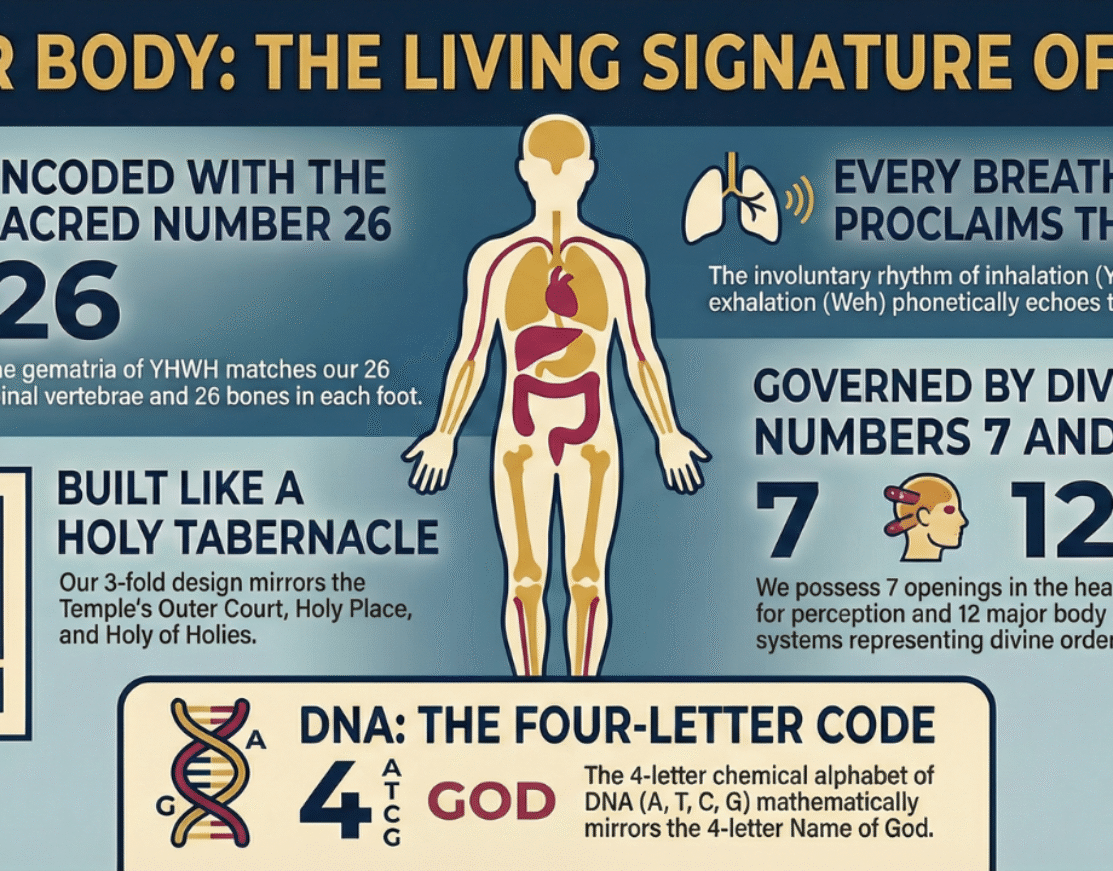
    The adult human spine contains 26 vertebrae after fusion.

    This numerical alignment with 26 forms one of the most discussed symbolic parallels.

    The Hebrew letter Vav (ו):
    • Shaped as a vertical line
    • Represents connection
    • Functions grammatically as “and”

    Symbolically:
    • The spine connects head and body
    • Vav connects heaven and earth
    • Both represent structural alignment

    In symbolic interpretation, the human body stands upright like the Name itself.


    4. Iron, Hemoglobin, and the Number 26

    Iron has atomic number 26.

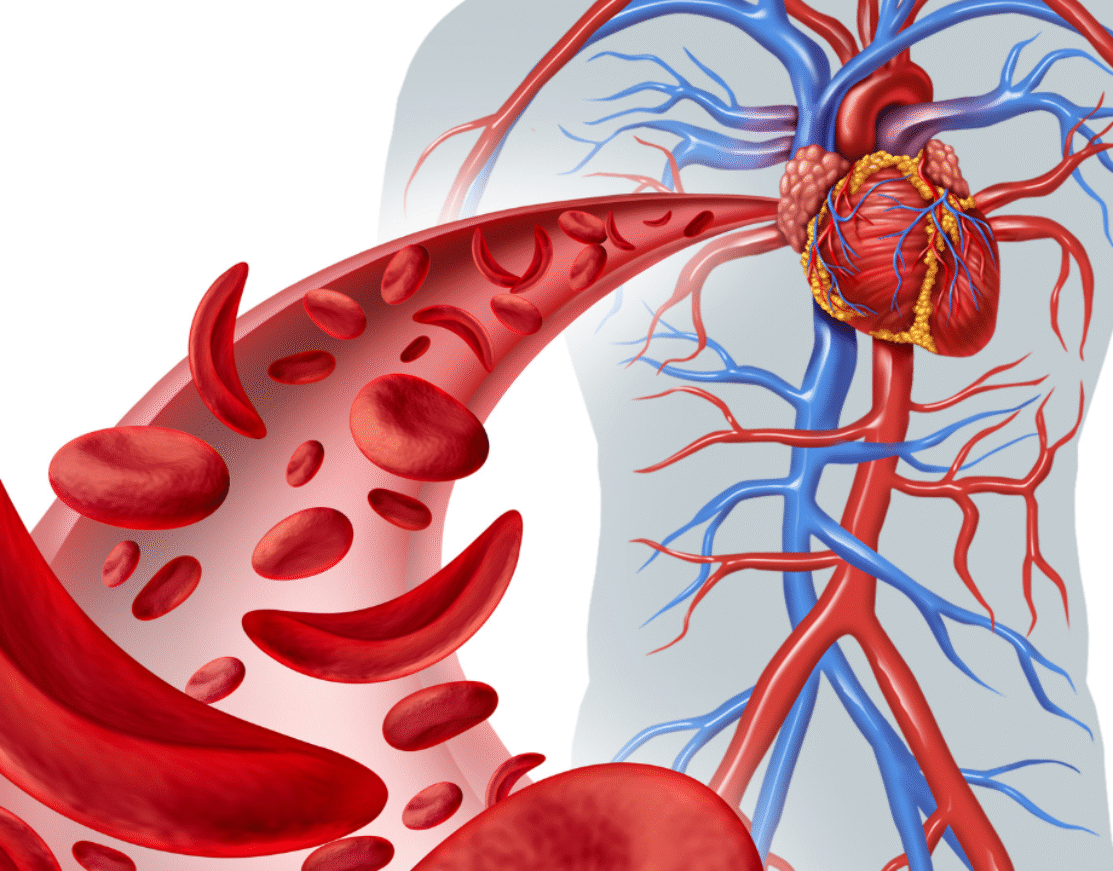
    Hemoglobin, the molecule that carries oxygen in blood, contains iron.

    Blood sustains biological life.

    In symbolic Gematria interpretation:
    • 26 flows through the bloodstream
    • Life is numerically linked to the divine Name

    Scientifically, iron enables oxygen transport. Symbolically, the number 26 appears within that process.


    5. Adam and the Divine Equation

    The Hebrew word Adam (אדם):

    • Aleph = 1
    • Dalet = 4
    • Mem = 40

    Total = 45

    When Adam (45) is added to YHWH (26):

    45 + 26 = 71

    The Hebrew word Ehyeh (אהיה), meaning “I Am,” carries a numerical value associated with 21 in standard calculation, but extended symbolic interpretations sometimes connect 71 with divine identity structures in rabbinic tradition.

    Within symbolic frameworks, the union of 45 and 26 represents humanity joined with divine identity.


    The YHWH Code in the Human Body | Deep Spiritual and Numerical Connections in Hebrew Gematria

    6. DNA and the Four-Letter Structure

    YHWH consists of four letters.

    Human DNA consists of four nucleotide bases:
    A, T, C, G

    Gematria-based interpretations draw symbolic parallels:

    • Four letters in the divine Name
    • Four molecular bases in life’s code

    Additional symbolic number patterns:
    • 3 bases per codon
    • 7 often symbolizes completion
    • 12 represents structure and governance in biblical tradition

    These comparisons are symbolic, not biochemical claims.

    The YHWH Code in the Human Body | Deep Spiritual and Numerical Connections in Hebrew Gematria

    7. Breath and Covenant

    The Hebrew word Neshama means breath of life.

    Breathing rhythm resembles the phonetic flow often associated with the Name:
    Inhale
    Exhale

    Some traditions interpret this as the sound of divine presence within respiration.

    Symbolically:
    • Breath equals life
    • Life reflects divine origin
    • Every inhale and exhale sustains covenant existence


    8. Flesh and Spirit Numerical Analysis

    Basar (בשר), meaning flesh:
    Bet 2
    Shin 300
    Resh 200
    Total = 502

    Ruach (רוח), meaning spirit:
    Resh 200
    Vav 6
    Chet 8
    Total = 214

    Combined:
    502 + 214 = 716

    Digit reduction:
    7 + 1 + 6 = 14

    14 = 7 × 2

    Seven symbolizes completion.
    Two symbolizes witness or covenant.

    The numeric pattern represents the union of body and spirit within covenant structure.


    9. The Significance of the Number 7

    The number 7 repeatedly appears in biblical structure.

    Examples:
    • Seven days of creation
    • Seven visible openings in the human head
    • Seven often represents fullness or completion

    In symbolic interpretation, seven reflects divine design.


    10. The Letter Vav and Structural Alignment

    The Hebrew letter Vav:

    • Represents connection
    • Graphically resembles a spinal column
    • Holds value 6

    Placed within the Name יהוה, it connects the upper and lower letters.

    Symbolically:
    • Head corresponds to Yod
    • Spine corresponds to Vav
    • Breath corresponds to He

    The structure reflects anatomical metaphor within Hebrew symbolism.


    11. Dam and the Essence of Blood

    The Hebrew word Dam (דם), meaning blood:

    Dalet = 4
    Mem = 40
    Total = 44

    Blood represents life essence in biblical language.

    Although 44 differs from 26, it forms part of broader symbolic numeric patterns linking body and covenant.


    12. Aleph and DNA Structure

    Ancient Hebrew Aleph (א) has a diagonal structure.

    Some symbolic interpretations compare its shape to the crossing strands of DNA’s double helix.

    Aleph represents unity and divine oneness.

    DNA represents biological identity.

    The parallel is symbolic rather than scientific equivalence.


    13. The Human Body as Living Numerical Expression

    Hebrew Gematria proposes that:

    • The body reflects divine order
    • The Name’s value appears symbolically in anatomy
    • Number patterns echo spiritual structure

    Key recurring numbers:
    26
    7
    14
    4
    3
    12

    These numbers appear in both scripture and symbolic human analysis.


    Conclusion

    The YHWH code centers on the number 26.

    Through Hebrew Gematria, this number is connected symbolically to:
    • The 26 vertebrae of the spine
    • Iron’s atomic number 26
    • The structure of the divine Name
    • The relationship between Adam and divine identity
    • Patterns of flesh and spirit
    • Breath and covenant symbolism

    These interpretations are theological and symbolic.

    They present the human body as structured design rather than random form.

    Within this framework, humanity is viewed as a living reflection of divine order written in letters and numbers.

    FAQs

    What is the numerical value of YHWH?

    The value is 26 based on standard Hebrew letter values.

    Why is 26 connected to the human spine?

    The adult spine contains 26 vertebrae, forming a symbolic parallel.

    Does iron truly connect to the YHWH code?

    Iron’s atomic number is 26. Symbolically, this aligns with the divine Name’s value.

    What is the gematria value of Adam?

    Adam equals 45 in standard calculation.

    What is the significance of 45 + 26?

    The sum 71 is interpreted symbolically within certain Hebrew traditions.

    Is the DNA comparison scientific?

    The comparison is symbolic. DNA has four bases, paralleling the four letters of YHWH.

    What does the number 7 represent?

    Seven commonly symbolizes completion or perfection in biblical literature.

    What is the gematria value of flesh and spirit?

    Basar equals 502. Ruach equals 214. Their combined symbolic reduction connects to covenant themes.

    Does Gematria claim the body is mathematically divine?

    Gematria interprets symbolic alignment, not biological proof.

    What is the core message of the YHWH code?

    The human body reflects structured order that mirrors the symbolic value of the divine Name.


    https://youtu.be/vkUuGDeBM8s

    https://divinetruthofnumbers.com/ark-of-the-covenant/

  • The Secret Code of Gematria of the Ark of the Covenant According to Exodus | What is the Hebrew name of the Ark of the Covenant? | What Does 874 Suggest?

    The Secret Code of Gematria of the Ark of the Covenant According to Exodus | What is the Hebrew name of the Ark of the Covenant? | What Does 874 Suggest?

    The Secret Code of Gematria of the Ark of the Covenant According to Exodus | What is the Hebrew name of the Ark of the Covenant? | What Does 874 Suggest?

    Explore the secret code of Gematria in the Ark of the Covenant according to the Book of Exodus. Learn Hebrew letter values, numeric patterns, sacred measurements, and the hidden structure behind Aron HaBrit and the Mercy Seat.

    The Secret Code of Gematria of the Ark of the Covenant According to Exodus | What is the Hebrew name of the Ark of the Covenant? | What Does 874 Suggest?
    The Secret Code of Gematria of the Ark of the Covenant According to Exodus | What is the Hebrew name of the Ark of the Covenant? | What Does 874 Suggest?

    1. What Is the Ark of the Covenant?

    The Ark of the Covenant appears in the Book of Exodus.
    It is first commanded in Book of Exodus chapter 25.

    God instructs Moses on Mount Sinai to build a sacred chest.
    It represents His covenant with Israel.

    Exodus 25:10
    “Let them make an ark of acacia wood.”

    The Ark becomes the central object of the Tabernacle.


    The Secret Code of Gematria of the Ark of the Covenant According to Exodus | What is the Hebrew name of the Ark of the Covenant? | What Does 874 Suggest?

    2. Hebrew Name and Gematria?

    Hebrew term
    ארון הברית
    Aron HaBrit
    Ark of the Covenant

    Breakdown of letters and values

    א Aleph = 1
    ר Resh = 200
    ו Vav = 6
    ן Nun = 50

    Total for ארון
    1 + 200 + 6 + 50 = 257

    ה He = 5
    ב Bet = 2
    ר Resh = 200
    י Yod = 10
    ת Tav = 400

    Total for הברית
    5 + 2 + 200 + 10 + 400 = 617

    Grand Total
    257 + 617 = 874

    The Secret Code of Gematria of the Ark of the Covenant According to Exodus | What is the Hebrew name of the Ark of the Covenant? | What Does 874 Suggest?

    What Does 874 Suggest?

    8 represents new beginning.
    7 represents completion.
    4 represents creation or earth.

    The Ark connects heaven and earth through covenant.
    It stands at the center of worship.

    The Secret Code of Gematria of the Ark of the Covenant According to Exodus | What is the Hebrew name of the Ark of the Covenant? | What Does 874 Suggest?

    3. The Mercy Seat Code

    The Mercy Seat in Hebrew
    כפרת
    Kapporet

    Letter values

    כ Kaf = 20
    פ Pe = 80
    ר Resh = 200
    ת Tav = 400

    Total
    20 + 80 + 200 + 400 = 700

    700 in biblical structure often relates to spiritual perfection and divine covering.

    Exodus 25:17
    “You shall make a mercy seat of pure gold.”

    Gold in Hebrew
    זהב
    Zahav

    ז Zayin = 7
    ה He = 5
    ב Bet = 2

    Total = 14

    14 connects with covenant lineage, seen in biblical genealogies.

    The Secret Code of Gematria of the Ark of the Covenant According to Exodus | What is the Hebrew name of the Ark of the Covenant? | What Does 874 Suggest?

    4. The Dimensions and Numeric Pattern

    Exodus 25:10 gives measurements:

    • Length: 2.5 cubits
    • Width: 1.5 cubits
    • Height: 1.5 cubits

    Add the numbers
    2.5 + 1.5 + 1.5 = 5.5 cubits

    Number 5 in Scripture often links to grace.
    Half measures suggest divine-human partnership.

    The Ark is not oversized.
    It fits within sacred proportion.


    5. Contents of the Ark

    According to Book of Exodus 25:16:

    “You shall put into the ark the testimony.”

    Later Scripture reveals three items:

    • Tablets of the Law
    • Manna
    • Aaron’s rod

    These represent:

    Law
    Provision
    Authority

    Three items reflect divine completeness.


    6. Cherubim and Throne Code

    Exodus 25:18 describes two cherubim.

    Two represents witness.
    The Ark becomes a place of divine testimony.

    The Ark is placed in the Most Holy Place.
    Only one high priest enters once a year.

    One priest
    One day
    One sacrifice

    This structure emphasizes unity and holiness.


    7. Ark as Numerical Theology

    You see layered patterns:

    • Name value 874
    • Mercy Seat value 700
    • Gold value 14
    • Three sacred objects
    • Two cherubim
    • One high priest

    Nothing appears random.
    Exodus presents worship through order and number.

    The Ark is more than furniture.
    It is covenant encoded in wood and gold.


    Final Insight

    The Ark of the Covenant stands at the heart of Exodus worship.
    Its Hebrew letters carry numeric meaning.
    Its structure reflects balance and design.
    Its placement reveals divine holiness.

    When you read Exodus carefully, you see pattern.
    Gematria highlights the structure behind the sacred text.

    Study the letters.
    Count the values.
    Observe the order.

    The covenant speaks through number.

    https://youtu.be/BoRwd5RWFgA

    https://divinetruthofnumbers.com/biblical-truths-explained-sin-holiness/

    FAQs

    What is the Hebrew name of the Ark of the Covenant?

    The Hebrew name is ארון הברית, pronounced Aron HaBrit. It means Ark of the Covenant.

    What is the Gematria value of Aron HaBrit?

    The total Gematria value is 874 based on standard Hebrew letter values.

    What is the Gematria of the Mercy Seat?

    The Hebrew word כפרת, Kapporet, has a Gematria value of 700.

    Why are the Ark’s measurements important in Exodus?

    Exodus 25 gives exact cubit measurements. These proportions reflect order, balance, and sacred design.

    What were the three items placed inside the Ark?

    The stone tablets of the Law, manna, and Aaron’s rod. They represent law, provision, and authority.

    Why are there two cherubim on the Ark?

    Two often represents witness in Scripture. The cherubim symbolize divine presence and testimony.

    Where is the Ark first described in the Bible?

    It is described in Exodus chapter 25, where God gives instructions to Moses.

    How does Gematria help in understanding the Ark?

    Gematria assigns numeric value to Hebrew letters. This reveals patterns and structure embedded in the text.

    What does gold symbolize in the Ark’s design?

    Gold represents purity, kingship, and divine glory in biblical symbolism.

    Why is the Ark central in the Tabernacle?

    The Ark represents God’s covenant and presence among His people. It is placed in the Most Holy Place.

  • The Human Heart — The Throne of God and the Numerical Pulse of Divine Love

    The Human Heart — The Throne of God and the Numerical Pulse of Divine Love

    The Human Heart — The Throne of God and the Numerical Pulse of Divine Love

    (Divine Numerological Truths According to Hebrew Gematria and Biblical Numerology)

    Where Heaven Beats Within You?

    When Scripture says, “Man looks at the outward appearance, but the Lord looks at the heart” (1 Samuel 16:7), it’s not mere poetry — it’s a numerical and spiritual truth.

    The human heart is the center of divine life — a throne room where God’s presence dwells within His creation.
    Every beat, every pulse, and every rhythm of your heart is a mathematical echo of the divine order that governs all existence.

    Through Hebrew Gematria and Biblical Numerology, we discover that the numbers of the heart’s structure and rhythm reveal a divine pattern — one that mirrors the Throne of God, the New Jerusalem, and the very Name of YHWH (יהוה).

    The Human Heart — The Throne of God and the Numerical Pulse of Divine Love

    1. The Heart — God’s Throne Within the Human Temple

    In ancient Hebrew understanding, the “heart” (lev, לב) was not only the seat of emotion but the center of spirit and consciousness.

    • The Hebrew word לב (Lev) = Numerical Value 32 (Lamed = 30, Bet = 2).
    • The number 32 represents the pathways of divine wisdom in Kabbalistic tradition — the same 32 times the name Elohim (God) appears in Genesis 1.

    Thus, the human heart (Lev) is numerically and spiritually linked to the creative power of God.
    Your heart is the microcosm of creation, beating with divine intelligence.


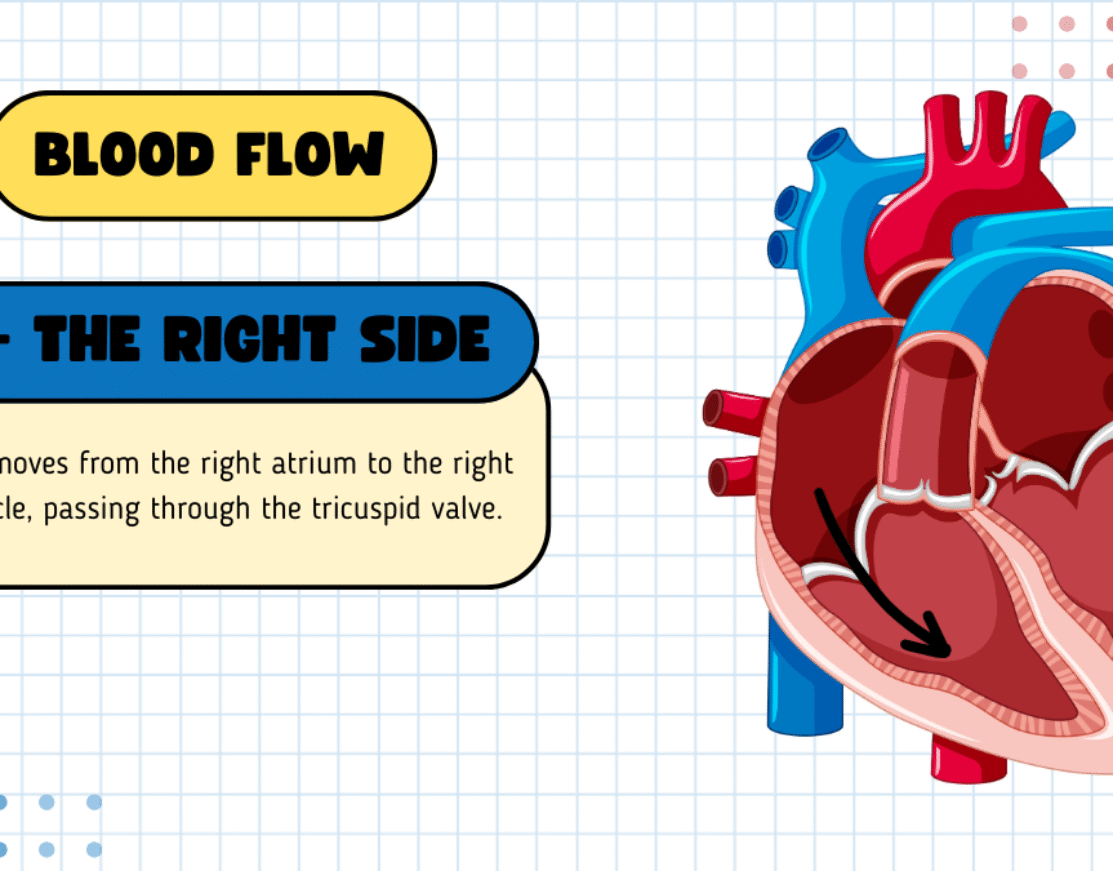
    2. The Heart’s Four Chambers — The Four Faces of God’s Throne

    The Bible often speaks of four living creatures around the throne of God (Ezekiel 1:5–10; Revelation 4:7).
    Each has a face of lion, ox, man, and eagle, symbolizing the divine completeness of creation.

    Similarly, your heart has four chambers:

    • Two atria (receiving chambers)
    • Two ventricles (sending chambers)

    These correspond to the four directions, four elements, and four faces of God’s throne — all united in perfect motion to sustain life.

    Biblical SymbolHeart ChamberFunctionSpiritual Meaning
    Lion (Courage)Left VentriclePumps blood to the bodyStrength & Dominion
    Ox (Service)Right VentriclePumps blood to the lungsHumility & Breath
    Man (Wisdom)Left AtriumReceives oxygenated bloodConscious Spirit
    Eagle (Vision)Right AtriumReceives venous bloodSpiritual Insight

    Just as the four living creatures uphold God’s throne, the four chambers uphold the throne of life — your heart.


    3. The Number 7 — The Rhythm of Divine Completion

    A healthy heart beats on average 70–72 times per minute at rest — a divine echo of the number 7, which signifies perfection and divine order.

    • The heart rate rhythm follows cycles of 7-second waves in heart-rate variability studies.
    • The muscle fibers of the heart are arranged in 7 spiral layers, ensuring the perfect twist during contraction.

    Even the shape of the heart reflects divine geometry — the golden ratio (1.618) governs its curvature, the same ratio used in the Ark of the Covenant and Temple design.

    Every heartbeat, therefore, resonates with divine math — you live to the rhythm of creation itself.


    4. The Heart and the Name of YHWH (יהוה)

    The sacred name YHWH numerically equals 26.
    Incredibly, the heart reveals this divine signature:

    • The average adult heart weighs ~260 grams (10 × 26).
    • It beats about 100,000 times a day, producing 26 billion pulses in a human lifetime on average.
    • 26 is also the number of bones in the human foot — showing that God’s Name governs both foundation (feet) and life-force (heart).

    When the Name YHWH is seen as a living code —

    Yod (י) = spark of life
    He (ה) = breath
    Vav (ו) = connection
    He (ה) = manifestation

    — it becomes clear that your heartbeat is the living expression of YHWH’s Name pulsing through your being.


    5. The Blood — The River of Life

    In Revelation 22:1, John saw “a pure river of the water of life, clear as crystal, flowing from the throne of God and of the Lamb.”

    That river flows within you — it is your blood.
    Your heart is the throne, and your circulatory system is the river of divine life that nourishes every cell.

    Biblical Numerology reveals:

    • Blood (דָּם, “Dam”) in Hebrew = 44
    • Adam (אָדָם) = 45
      When the letter Aleph (א) — symbol of God’s breath — is added to Dam (blood), it becomes Adam.

    Thus, man becomes “living” when God’s Spirit enters the blood — the exact mystery revealed in Genesis 2:7.

    Your blood is numerically and spiritually infused with the Breath of God.


    6. The Twelvefold Flow — The Apostolic Order of the Heart

    Just as the 12 apostles carried the message of divine life to the world, your heart sends blood through 12 major arteries, distributing life to every part of your body.

    This represents divine government and completeness within your physical temple.

    • 12 systems of the body
    • 12 major arteries
    • 12 disciples of Christ
      All mirror the same heavenly order — divine life flowing from the heart of God to all creation.

    7. The Heartbeat and the Holy Name “I AM”

    When measured scientifically, the lub-dub rhythm of your heart creates a sound frequency pattern remarkably similar to the Hebrew phonetic breathing of Yah-weh.

    Each beat — contraction and relaxation — corresponds to Yod-He and Vav-He.
    Even when silent, your body worships with every pulse.

    Your heartbeat is prayer in motion, and your circulation is worship in rhythm.


    8. The Spiritual Revelation

    When God said, “I will write My law upon their hearts” (Jeremiah 31:33), it was both spiritual and biological truth.
    Your heart’s electrical field is 5,000 times stronger than the brain’s — governing emotion, intuition, and divine connection.

    This energy aligns with the Heart Chakra, symbolized by a 12-petaled lotus, which again reflects the number 12 — God’s government through love.


    Conclusion: The Heart as Heaven’s Mirror

    Your heart is not just an organ — it is God’s living throne, beating with divine precision, mathematical harmony, and eternal love.

    • 4 chambers = Four faces of God
    • 7 spiral layers = Divine perfection
    • 12 arteries = Apostolic government
    • 26 vibration = Name of YHWH
    • 32 gematria of “Lev” = Pathways of wisdom

    Each beat proclaims,

    “YHWH reigns within me.”

    So the next time you feel your heart beating, remember:
    You are not just alive —
    You are the temple of the Living God,
    and every pulse is the echo of His Name in divine rhythm.

    https://divinetruthofnumbers.com/22-skull-bones-and-the-22-hebrew-alphabet/

    https://biblenumbers101.com/153-2/

  • Biblical Numerology of 7 And 12, God’s numbers In The Human Body, Divine Order In Anatomy, Sevenfold Spirit, Twelve Cranial Nerves, Body As Temple of God, 12 Tribes Spiritual Meaning, Divine Mathematics, Human Body Spiritual Design | Seven and Twelve — God’s Sacred Numbers Mirrored in the Human Anatomy

    Biblical Numerology of 7 And 12, God’s numbers In The Human Body, Divine Order In Anatomy, Sevenfold Spirit, Twelve Cranial Nerves, Body As Temple of God, 12 Tribes Spiritual Meaning, Divine Mathematics, Human Body Spiritual Design | Seven and Twelve — God’s Sacred Numbers Mirrored in the Human Anatomy

    Seven and Twelve — God’s Sacred Numbers Mirrored in the Human Anatomy (A Divine Numerological Revelation Through Biblical and Biological Harmony)

    Have you ever wondered why God designed the human body with such intricate order and symmetry?
    Just as the universe operates by divine numbers, your body too is governed by the same sacred mathematics.

    According to Biblical Numerology, the numbers 7 and 12 symbolize perfection, completion, and divine governance.
    These two numbers are repeatedly used throughout Scripture—and astonishingly, they are also woven into the blueprint of your anatomy.

    The Body as God’s Living Temple

    From the seven layers of your skin to the twelve pairs of cranial nerves, your body proclaims the same truth:

    “You are fearfully and wonderfully made.” — Psalm 139:14


    1. Number 7 — The Divine Number of Spiritual and Physical Completion

    The number 7 in the Bible represents divine perfection and spiritual completion.
    God created the world in 6 days and rested on the 7th, blessing it as holy (Genesis 2:2–3).
    This same pattern of seven is imprinted into the design of creation—and into you.

    Let’s explore how the number 7 manifests in your very being:

    AspectDivine Pattern of 7Meaning
    7 Layers of SkinProtects and renews lifeSymbol of divine covering
    7 Chakras (Energy Centers)From base to crownSpiritual awakening and divine flow
    7 Endocrine GlandsPineal, Pituitary, Thyroid, Thymus, Pancreas, Adrenals, GonadsCorrespond to 7 lamps of the temple
    7 Openings in the Head2 eyes, 2 ears, 2 nostrils, 1 mouthChannels of divine perception
    7 Colors of Light SpectrumVIBGYORSymbol of divine covenant (rainbow)
    7 Musical NotesSa Re Ga Ma Pa Dha Ni (Do Re Mi…)Creation vibrates in divine harmony

    The same Creator who built the 7 days of creation built your body to function in 7 sacred layers—a living reflection of His divine rest and wholeness.

    Biblical Numerology of 7 And 12, God’s numbers In The Human Body, Divine Order In Anatomy, Sevenfold Spirit, Twelve Cranial Nerves, Body As Temple of God, 12 Tribes Spiritual Meaning, Divine Mathematics, Human Body Spiritual Design | Seven and Twelve — God’s Sacred Numbers Mirrored in the Human Anatomy

    2. The Sevenfold Spirit of God and the Sevenfold Human Design

    In Isaiah 11:2, the Holy Spirit is described as sevenfold:

    “The Spirit of the Lord shall rest upon him—the Spirit of wisdom, understanding, counsel, might, knowledge, fear of the Lord, and righteousness.”

    Likewise, the human spirit mirrors this divine pattern. The seven aspects of the Spirit correspond to seven human faculties:

    Divine SpiritHuman Expression
    WisdomIntellect
    UnderstandingInsight
    CounselConscience
    MightWillpower
    KnowledgeAwareness
    Fear of the LordReverence
    RighteousnessMoral action

    Thus, the human mind and spirit are structured according to the sevenfold Spirit of God, making humanity a true temple of divine consciousness.


    Biblical Numerology of 7 And 12, God’s numbers In The Human Body, Divine Order In Anatomy, Sevenfold Spirit, Twelve Cranial Nerves, Body As Temple of God, 12 Tribes Spiritual Meaning, Divine Mathematics, Human Body Spiritual Design | Seven and Twelve — God’s Sacred Numbers Mirrored in the Human Anatomy
    Biblical Numerology of 7 And 12, God’s numbers In The Human Body, Divine Order In Anatomy, Sevenfold Spirit, Twelve Cranial Nerves, Body As Temple of God, 12 Tribes Spiritual Meaning, Divine Mathematics, Human Body Spiritual Design | Seven and Twelve — God’s Sacred Numbers Mirrored in the Human Anatomy

    3. Number 12 — Divine Order and Heavenly Government

    The number 12 represents God’s government, divine authority, and heavenly order.
    Throughout Scripture, 12 is the number of divine organization:

    • 12 Tribes of Israel
    • 12 Apostles of Christ
    • 12 Gates of the New Jerusalem
    • 12 Foundation Stones in Heaven

    This same order appears within the human body—God’s living architecture.

    AspectPattern of 12Meaning
    12 Pairs of Cranial NervesDirect communication between brain and bodyDivine connection and guidance
    12 Major Systems of the BodyNervous, Skeletal, Muscular, Circulatory, Respiratory, Digestive, Endocrine, Lymphatic, Urinary, Reproductive, Integumentary, ImmunePerfect order and coordination
    12 Ribs on Each Side of Rib CageProtection of the heart and lungsSymbol of divine guarding
    12 Blood Pathways in Circulation6 arteries and 6 veins in major pairsHarmony between giving and receiving
    12 Hours of Day and Night EachBiological rhythmAlignment with divine time cycles

    Just as the 12 tribes governed Israel and the 12 apostles built the Church, the 12 systems in your body maintain divine order and harmony in your physical temple.


    4. The Heavenly Blueprint — 7 × 12 = 84

    When 7 (perfection) and 12 (order) unite, they form 84, which reduces numerically (8 + 4) to 12 again—the cycle of divine authority repeating itself.

    This mathematical pattern shows that God’s government is perfect and eternal.
    Your body, therefore, is not chaotic or accidental—it is a living mirror of the Kingdom of God, where divine perfection (7) governs divine order (12).


    5. The New Jerusalem and the Human Temple

    In the Book of Revelation, the New Jerusalem is measured by 12 gates, 12 foundations, and the Lamb’s twelvefold light.
    Similarly, your body is a living Jerusalem, filled with light through your 12 energy systems and perfected through your 7 spiritual centers.

    “Do you not know that your body is the temple of the Holy Spirit?” — 1 Corinthians 6:19

    In other words, you are the Holy City in miniature, carrying the throne of God within you.


    6. The Sacred Harmony of 7 and 12 in Worship and Creation

    • 7 days of the week × 12 months of the year = 84, completing a cycle of divine time.
    • 7 notes of music × 12 semitones = 84 total harmonic keys — the foundation of all creation’s sound.
    • 7 visible colors × 12 tones of frequency = 84 primary light combinations — the foundation of divine light.

    God designed creation, time, light, and music in the same numerical pattern that forms your body. Everything resonates to the same divine mathematics.


    7. The Revelation Within You

    When you meditate, worship, or pray, your 7 centers align, and your 12 systems synchronize.
    At that moment, your body vibrates in divine resonance — as heaven and earth meet within your being.
    This is the Kingdom of God within you (Luke 17:21).


    Conclusion

    The sacred numbers 7 and 12 are not just symbols in Scripture — they are the living architecture of your body.
    Every heartbeat, every breath, every thought echoes the divine order that governs the cosmos.

    God didn’t just create you in His image —

    He numbered you in His likeness.

    From 7 days of creation to 12 tribes of Israel, from 7 endocrine lamps to 12 systems of life, the body and the Bible reveal one unified truth:

    God’s perfection (7) rules through His order (12) — and you are His temple of both.

    https://biblenumbers101.com/153-2/

    https://divinetruthofnumbers.com/22-skull-bones-and-the-22-hebrew-alphabet/

  • Explore the 32 Paths of Wisdom, Kabbalah, and Scripture, and understand the deep connection between the 22 skull bones and the 22 Hebrew alphabet letters. Learn how divine order links spirituality, anatomy, and biblical wisdom in Part 2.

    Explore the 32 Paths of Wisdom, Kabbalah, and Scripture, and understand the deep connection between the 22 skull bones and the 22 Hebrew alphabet letters. Learn how divine order links spirituality, anatomy, and biblical wisdom in Part 2.

    Explore the 32 Paths of Wisdom, Kabbalah, and Scripture, and understand the deep connection between the 22 skull bones and the 22 Hebrew alphabet letters. Learn how divine order links spirituality, anatomy, and biblical wisdom in Part 2.

    The mystery of divine order runs through Scripture, language, and the human body. The Bible presents wisdom through structure, numbers, and design, while Jewish tradition explains this order through the 32 Paths of Wisdom. These paths combine ten spiritual attributes and twenty-two Hebrew letters. At the same time, the human skull is formed with twenty-two bones, protecting the mind, the center of thought and decision. This parallel points toward intentional design, not coincidence, revealing how spiritual truth and physical form reflect one unified order.

    The 32 Paths of Wisdom. Kabbalah, Scripture, and the Hidden Order of God | The Mystery of Twenty-Two (22) Skull Bones and the 22 Hebrew Alphabet Letters: A Spiritual and Anatomical Connection (PART 2) FAQ’S

    The Bible presents wisdom through words, numbers, structure, and symbols. Jewish tradition describes this order through Kabbalah. These teachings do not replace Scripture. They attempt to describe how divine wisdom flows from God into creation. This article explains key concepts in clear language, without speculation, and stays aligned with biblical thought.

    The 32 Paths of Wisdom

    The thirty-two paths of wisdom come from ancient Jewish teaching. They describe how divine wisdom is expressed through creation.
    These paths consist of ten spiritual attributes and twenty-two Hebrew letters.
    Together, they form a framework that explains order, meaning, and moral structure in the universe.

    The Torah of Messiah

    The Torah reveals God’s law and instruction. The Torah of Messiah refers to the fulfilment of divine law through righteousness, mercy, and truth.
    It emphasises inner transformation, obedience of the heart, and alignment with God’s will rather than ritual alone.

    Alphabet of Kabbalah

    The Hebrew alphabet has twenty-two letters. Each letter carries sound, meaning, and numerical value.
    These letters are viewed as building blocks of language and creation.
    Scripture begins with letters, not images, showing that God creates through word and order.

    The Zohar and the Tikkunim

    The Zohar is a foundational text of Jewish mysticism.
    Tikkunim refers to spiritual repair or correction.
    The idea teaches that human actions, repentance, and obedience help restore brokenness in the world.

    Secrets of the Temple

    The biblical Temple followed precise measurements and design.
    It reflected order, holiness, and separation between the common and the sacred.
    Every area had a purpose, teaching that access to God requires reverence and purity.

    The Path of Zain

    Zain is the seventh Hebrew letter.
    It symbolises spiritual struggle, discipline, and completion.
    In Scripture, seven often represents rest, covenant, and divine order.

    Names of God and the Divine Name

    The Bible reveals God through names that describe His nature.
    Each name expresses authority, mercy, justice, or presence.
    The Divine Name represents God’s eternal existence and unchanging truth.

    The Tree of Life and the Ten Sephirot

    The Tree of Life is a symbolic structure used in Jewish teaching.
    It contains ten attributes, often called Sephirot, describing how divine wisdom flows.
    These attributes include wisdom, understanding, mercy, strength, justice, and kingship.
    They describe function, not form, and point toward balance and moral order.

    Kabbalah and Qabala

    Kabbalah and Qabala refer to received tradition.
    At its core, it seeks understanding of God’s order, not secret power.
    True wisdom always leads toward humility, obedience, and reverence for God.

    Psalm 16

    Psalm 16 speaks of trust, security, and eternal hope.
    It declares that life, joy, and direction come from God alone.
    The Psalm emphasises guidance, inheritance, and the path of life.

    The Ten Plagues in Egypt

    The ten plagues were judgments against oppression and false gods.
    They demonstrated God’s authority over nature, rulers, and idols.
    Each plague exposed human pride and revealed divine justice and mercy.

    Explore the 32 Paths of Wisdom, Kabbalah, and Scripture, and understand the deep connection between the 22 skull bones and the 22 Hebrew alphabet letters. Learn how divine order links spirituality, anatomy, and biblical wisdom in Part 2.

    The Skull and the Hebrew Alphabet

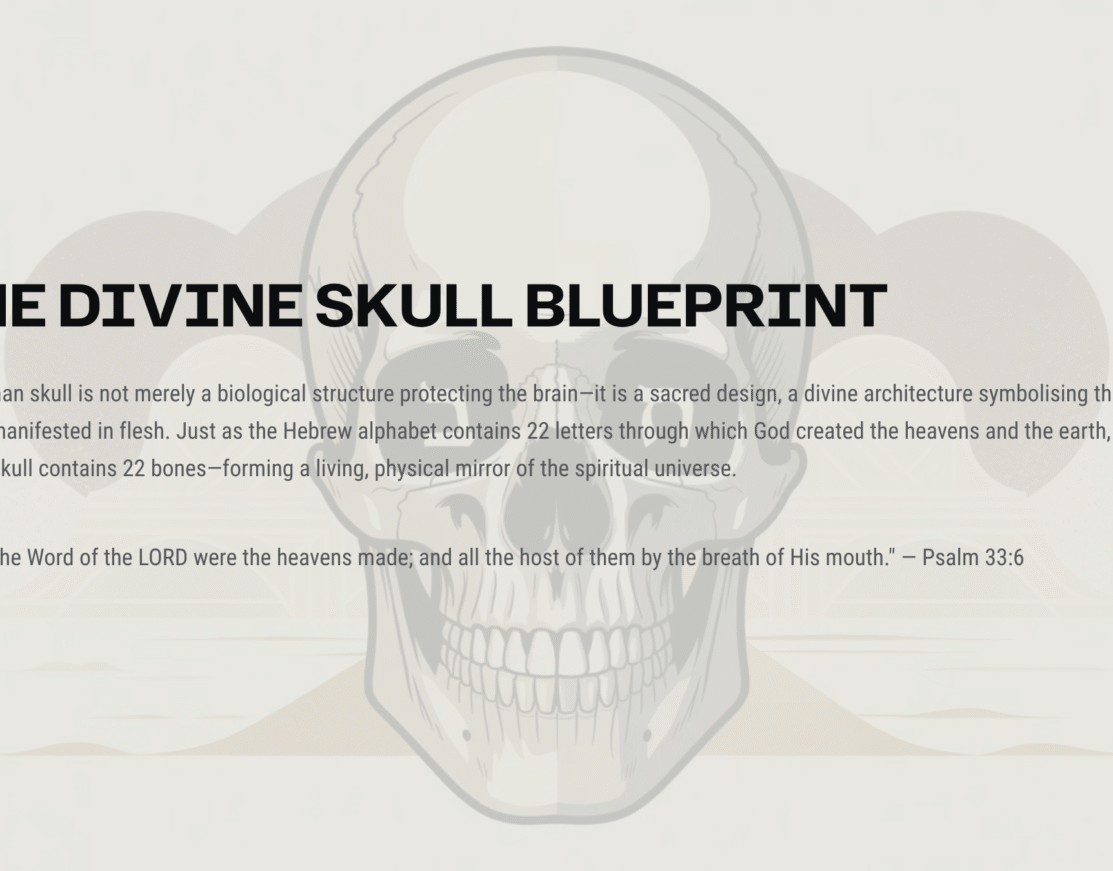
    The human skull has twenty-two bones.
    The Hebrew alphabet has twenty-two letters.
    Biblical teaching describes the human body as God’s temple.
    This parallel reflects order, not coincidence, and points to intentional design.

    The A to Z of the Skull

    The skull protects the brain, the center of thought and decision.
    Scripture repeatedly links wisdom with the mind and understanding.
    The structure supports life, perception, and moral choice.

    Explore the 32 Paths of Wisdom, Kabbalah, and Scripture, and understand the deep connection between the 22 skull bones and the 22 Hebrew alphabet letters. Learn how divine order links spirituality, anatomy, and biblical wisdom in Part 2.
    Explore the 32 Paths of Wisdom, Kabbalah, and Scripture, and understand the deep connection between the 22 skull bones and the 22 Hebrew alphabet letters. Learn how divine order links spirituality, anatomy, and biblical wisdom in Part 2.

    The Mystery of Twenty-Two (22) Skull Bones and the 22 Hebrew Alphabet Letters: A Spiritual and Anatomical Connection

    Have you ever wondered why the human skull has exactly 22 bones (in adults) and the Hebrew alphabet also consists of 22 letters? Coincidence? Maybe not. Across history, mystics, scholars, and spiritual thinkers have pointed to a profound symbolic and metaphysical connection between the human body and the divine language of Hebrew.

    In this article, we’ll uncover the fascinating mystery behind the 22 bones of the skull and the 22 letters of the Hebrew alphabet, exploring ancient wisdom, Kabbalistic insight, biblical numerology, and human anatomy. Get ready for a mind-opening journey!

    Explore the 32 Paths of Wisdom, Kabbalah, and Scripture, and understand the deep connection between the 22 skull bones and the 22 Hebrew alphabet letters. Learn how divine order links spirituality, anatomy, and biblical wisdom in Part 2.
    Explore the 32 Paths of Wisdom, Kabbalah, and Scripture, and understand the deep connection between the 22 skull bones and the 22 Hebrew alphabet letters. Learn how divine order links spirituality, anatomy, and biblical wisdom in Part 2.

    What Are the 22 Bones of the Human Skull?

    The human skull is a complex structure composed of 22 bones8 cranial bones and 14 facial bones — all interlocked like a divine puzzle.

    8 Cranial Bones (Protecting the Brain):

    1. Frontal bone (1)
    2. Parietal bones (2)
    3. Temporal bones (2)
    4. Occipital bone (1)
    5. Sphenoid bone (1)
    6. Ethmoid bone (1)

    14 Facial Bones (Forming the Face):

    1. Nasal bones (2)
    2. Maxillae (2)
    3. Zygomatic bones (2)
    4. Palatine bones (2)
    5. Lacrimal bones (2)
    6. Inferior nasal conchae (2)
    7. Vomer (1)
    8. Mandible (1)

    Total = 8 (cranial) + 14 (facial) = 22 bones

    These bones are fused to form the cranium, the sacred container of the human mind — the seat of consciousness and spiritual insight.

    Explore the 32 Paths of Wisdom, Kabbalah, and Scripture, and understand the deep connection between the 22 skull bones and the 22 Hebrew alphabet letters. Learn how divine order links spirituality, anatomy, and biblical wisdom in Part 2.
    Explore the 32 Paths of Wisdom, Kabbalah, and Scripture, and understand the deep connection between the 22 skull bones and the 22 Hebrew alphabet letters. Learn how divine order links spirituality, anatomy, and biblical wisdom in Part 2.

    The Spiritual Connection: Skull Bones & Hebrew Alphabet

    Now here’s where it gets deeply symbolic…

    1. Human Skull as the Divine Container

    • The skull holds the brain, the central organ of consciousness.
    • In many spiritual traditions, the mind is the temple where divine ideas are birthed.
    • The 22 bones protect this sacred space — just like the 22 Hebrew letters form the sacred “container” of divine wisdom.

    2. The Kabbalistic Tree of Life and Hebrew Letters

    • The Tree of Life in Kabbalah has 22 paths connecting the 10 Sefirot (divine attributes).
    • Each of these 22 paths corresponds to a Hebrew letter.
    • Similarly, one could say that the 22 skull bones form the structure (paths) that connect various parts of the brain — possibly symbolic of inner divine connection.

    3. Christ, Golgotha, and the Skull

    “Golgotha” (where Jesus was crucified) means “Place of the Skull”.

    Some Christian mystics believe that this wasn’t just a location — but also a spiritual metaphor.

    The renewal of the mind (Romans 12:2) takes place in the skull — and Hebrew, the holy language of Scripture, is also rooted in divine thought and spirit.

    4. Mystical Insight: Your Skull Is a Temple of Divine Language

    Many Kabbalists and metaphysical scholars believe that the 22 bones of the skull are not arbitrary, but divinely designed. They mirror the 22 spiritual channels through which divine thought flows into human understanding.
    “You are made in the image of God” (Genesis 1:27) — not just physically, but spiritually, symbolically, and linguistically.

    Conclusion: Coincidence or Divine Design?

    When you look at the harmony between anatomy and ancient language, it’s hard to dismiss it as mere coincidence. The 22 bones of the skull and the 22 letters of the Hebrew alphabet seem to reflect a hidden blueprint — a divine architecture encoded into both the human body and the sacred script.
    This mystery invites us to see ourselves not just as biological beings, but as spiritual vessels carrying the imprint of divine language. Your head, your mind, your words — they all hold the power of creation, consciousness, and connection.

     What Are the 22 Hebrew Letters?

    The Hebrew alphabet (Aleph-Bet) contains 22 letters, each one with spiritual, numerical, and symbolic meaning. In Jewish mysticism (Kabbalah), these letters are considered divine building blocks of creation.

    Hebrew LetterNameNumerical ValueMeaning
    אAleph1Ox, strength, leader
    בBet2House, dwelling
    גGimel3Camel, journey
    דDalet4Door, path
    הHe5Breath, window
    וVav6Hook, connection
    זZayin7Weapon, cut
    חChet8Fence, life
    טTet9Serpent, hidden good
    יYod10Hand, divine spark
    כ/ךKaf20Palm, crown
    לLamed30Staff, learning
    מ/םMem40Water, womb
    נ/ןNun50Fish, life movement
    סSamekh60Support, trust
    עAyin70Eye, perception
    פ/ףPe80Mouth, expression
    צ/ץTzadi90Righteousness
    קQof100Circle, holiness
    רResh200Head, beginning
    שShin300Tooth, fire, transformation
    תTav400Mark, truth, completion

    Each letter is a portal of divine wisdom. Hebrew is called “the language of light” in mystical traditions.

    One Thousand Two Hundred Fifty Powerful Scriptures

    The Bible contains thousands of verses focused on wisdom, holiness, judgment, mercy, and redemption.
    Scripture consistently calls humanity to repentance, faith, and righteous living.

    Hell, Sulfur, Fire, and Brimstone

    The Bible describes hell as separation from God.
    Fire and brimstone symbolise judgment, purification, and consequence.
    These images warn against persistent rebellion and injustice.
    They also affirm that moral choices matter eternally.

    Conclusion

    Biblical wisdom speaks through law, poetry, symbols, and structure. Kabbalah highlights patterns, but Scripture defines truth. From letters and numbers to the human body and moral law, the message remains clear. God is orderly. Life has purpose. Wisdom begins with reverence for Him.

    The 32 Paths of Wisdom describe how divine understanding flows into creation. The twenty-two Hebrew letters shape sacred language, while the twenty-two bones of the skull protect human consciousness. Scripture, tradition, and anatomy all point toward the same truth. God works through order. Wisdom begins in the mind. Life reflects purpose when aligned with divine design. These patterns do not replace faith. They deepen reverence and understanding.

    FAQs

    Why does the human skull have 22 bones?

    The human skull is composed of 8 cranial and 14 facial bones, totaling 22. These bones protect the brain and form the structure of the face.

    Are there really 22 letters in Hebrew?

    Yes, the Hebrew alphabet has 22 main letters. Each letter also has symbolic, numeric, and spiritual significance.

    What is the significance of the number 22 in the Bible?

    The number 22 is often seen as representing light, revelation, and completion of divine purpose. The Bible itself was originally written using this 22-letter system.

    Is the connection between skull bones and Hebrew letters scientific?

    Not in conventional science — it’s more symbolic and metaphysical. The link is often explored in spirituality, mysticism, and biblical numerology.

    How can I learn more about Hebrew letters spiritually?

    Study Kabbalah, biblical numerology, or start with books like The Sefer Yetzirah, The Zohar, or Hebrew letter meditation guides.

    What are the 32 Paths of Wisdom?

    They are a traditional Jewish framework made of ten spiritual attributes and twenty-two Hebrew letters, used to explain divine order and wisdom.

    Why are there 22 Hebrew alphabet letters?

    Hebrew uses twenty-two letters as the foundation of sacred language, prayer, and Scripture.

    How many bones are in the human skull?

    The adult human skull is formed from twenty-two bones that protect the brain and support thought and perception.

    Is the connection between skull bones and Hebrew letters biblical?

    The Bible teaches that the human body is God’s temple. The numerical parallel supports the idea of intentional design, not random structure.

    What is the role of Kabbalah in biblical study?

    Kabbalah attempts to explain patterns found in Scripture. It should be viewed as a study tool, not as authority above Scripture.

    Does this teaching change core biblical faith?

    No. It highlights order and structure but does not replace salvation, obedience, or faith taught in Scripture.

    Why is wisdom linked with the head?

    The Bible often connects wisdom with understanding, knowledge, and the mind. The skull protects the center of decision and moral choice.

    What is the main message of this study?

    God is orderly. Creation reflects purpose. Wisdom grows when spiritual truth and daily life remain aligned.

    https://biblenumbers101.com/153-2/

    https://divinetruthofnumbers.com/biblical-truths-explained-sin-holiness/

  • Biblical Truths Explained. Sin, Holiness, Wisdom, Numbers, and the Human Design

    Biblical Truths Explained. Sin, Holiness, Wisdom, Numbers, and the Human Design

    Biblical Truths Explained. Sin, Holiness, Wisdom, Numbers, and the Human Design

    Introduction: The Bible is not only a book of faith, It is a book of order, wisdom, and moral truth. It explains why humanity struggles with sin, how holiness restores life, and how divine order appears in history, numbers, and even the human body. This article presents core biblical concepts in clear and simple language, grounded in Scripture and history.

    I. Questions and Topics for Study

    “Teach us to number our days” (Psalm 90:12)

    Teach Us to Number Our Days. Psalm 90:12
    This prayer asks for wisdom, not longer life. The Bible teaches you to value time, live responsibly, and align daily choices with eternal purpose.

    What is the “5 Jar System”? How to follow it?

    The Five Jar System
    This principle reflects biblical stewardship. Income is divided for needs, savings, giving, learning, and future security. Scripture repeatedly teaches balance, planning, and generosity.

    How many kings did Israel have? Which number king was David? How many years did he reign?

    Kings of Israel and King David
    Israel had a total of forty-two kings across Israel and Judah. David was the second king of united Israel. He ruled for forty years, seven years in Hebron and thirty-three years in Jerusalem.

    David’s age (1 Chronicles 9:24) How often and how many times did David pray?

    David’s Age and Prayer Life
    David became king at the age of thirty. Scripture shows him praying morning, evening, and night. Many Psalms reveal constant dialogue with God through praise, repentance, and trust.

    Why was David called “a man after God’s own heart”?

    David was not perfect. He repented quickly, loved God’s law, trusted God in danger, and sought God’s will above power. God values a responsive heart more than flawless behavior.

    II. Deep Dive into Sin and Holiness

    What is sin?

    Sin is missing God’s standard. It includes actions, thoughts, and attitudes that oppose God’s nature.

    Types of sin (with Bible verses)

    Types of Sin in the Bible
    Inherited sin. Human nature after Adam.
    Personal sin. Conscious disobedience.
    Hidden sin. Unseen by people but known to God.
    Corporate sin. Group or national wrongdoing.
    Unintentional sin. Done in ignorance.

    What does sin do/can it do?

    Effects of Sin
    Separation from God.
    Spiritual death.
    Broken relationships.
    Inner guilt and fear.
    Social injustice and violence.

    List of all negative words/sins described in the Bible, detailed information, and explanation of Bible verses.

    Negative Words and Sins Named in Scripture
    Pride, arrogance, deceit, lying, hatred, jealousy, anger, greed, lust, idolatry, rebellion, violence, injustice, oppression, hypocrisy, unbelief, stubbornness, selfish ambition. Each is addressed directly in both Old and New Testaments.

    Nature of sin, truth of sin.

    Nature and Truth of Sin
    Sin promises freedom but produces bondage. It begins small and grows when unchecked.

    Sin against the Holy Spirit, sin against Jesus, sin against God, sin against man.

    Sin Against the Holy Spirit
    Persistent rejection of truth. Refusing repentance. Calling God’s work false.

    Sin Against Jesus
    Rejecting His message. Ignoring His sacrifice.

    Sin Against God
    Breaking His commands knowingly.

    Sin Against Humanity
    Injustice, exploitation, murder, abuse, and deceit against others.

    What is holiness? God is holy (Jehovah), Jesus is an example of holiness, and the Holy Spirit is a helper.

    Holiness
    Holiness means being set apart for God.

    God Is Holy
    God’s name and nature are pure and perfect.

    Jesus as the Example of Holiness
    Jesus lived without sin. He modeled obedience, compassion, and truth.

    The Holy Spirit as Helper
    The Spirit convicts, guides, and empowers believers to live holy lives.

    Difference between unrighteousness and righteousness.

    Righteousness vs Unrighteousness
    Righteousness aligns with God’s will.
    Unrighteousness resists God’s truth.
    The Bible calls you to choose righteousness daily.

    III. Practical Wisdom and Biblical Teaching

    Works of the flesh (sin),

    Works of the Flesh
    Sexual immorality, hatred, jealousy, rage, selfish ambition, envy, drunkenness. These destroy personal and social life.

    • Proficiency in work Behavior
    • Skill (perhaps referring to outward appearance or character)
    • Justice
    • Discipline
    • Cunning/Shrewdness
    • Knowledge and discretion
    • Increase in knowledge

    Proverbs 1:1-4 – Moral education:

    Proverbs 1:1–4. Moral Education
    Skill in work and responsibility.
    Right behavior and character.
    Justice and fairness.
    Discipline and self-control.
    Wisdom and discernment.
    Growth in understanding.

    IV. Psalms and Moral Warnings

    Authors of Psalms (7 people):

    1. David,
    2. Moses,
    3. Korahites,
    4. Asaph,
    5. Solomon,
    6. Heman the Ezrahite,
    7. Ethan the Ezrahite.

    Authors of the Psalms
    King David
    Moses
    The sons of Korah
    Asaph
    Solomon
    Heman the Ezrahite
    Ethan the Ezrahite

    7 terrible sins.

    Seven Terrible Sin

    1. Pride,
    2. Envy,
    3. wrath,
    4. Greed,
    5. Lust,
    6. Gluttony,
    7. Sloth.

    6 things the Lord hates.

    Six Things the Lord Hates
    1. Arrogant eyes.
    2. Lying tongue.
    3. Hands that shed innocent blood.
    4. A heart that plans evil.
    5. Feet eager to run toward wrongdoing.
    6. A false witness.

    V. Advanced Biblical and Mystical Concepts

    Thirty-Two Paths of Wisdom
    A Jewish framework connecting wisdom, letters, and creation.

    Torah of Messiah
    Understanding the law fulfilled through divine purpose.

    Kabbalah and Jewish Mysticism
    Focuses on divine names, the Tree of Life, and spiritual structure.

    Psalm 16
    A Psalm of trust, security, and eternal hope.

    Ten Plagues
    Judgment combined with divine deliverance.

    Human Body and Scripture
    The skull has twenty-two (22) bones, reflecting the twenty-two Hebrew letters.
    The human body has two hundred six (206) bones, symbolizing structured design.
    The Bible describes the body as God’s living temple.

    Biblical Truths Explained
    Biblical Truths Explained. Sin, Holiness, Wisdom, Numbers, and the Human Design

    VI. Research and Study Themes

    Bible numerology and structured patterns.
    Genesis 1:1 and numerical symmetry.
    Hebrew language as sacred structure.
    Human anatomy as divine blueprint.
    Wisdom linked with the head and mind.
    Eyes as symbols of divine light.
    Mathematics, primes, and biblical order.
    The concept of God’s name revealed through creation.

    VII. Fear and Do Not Fear in the Bible

    Fear of the Lord
    Reverence, obedience, and awe.
    Found throughout Exodus, Deuteronomy, Psalms, Proverbs, and the Prophets.

    Fear of Humans
    Leads to compromise and insecurity.

    Do Not Fear
    God repeats this command forty-five times across Scripture.
    It appears in Genesis, Isaiah, the Gospels, Acts, and Revelation.
    God replaces fear with faith, courage, and peace.

    The 32 paths of wisdom.
    The Torah of Messiah.
    Alphabet of Kabbalah.
    The Zohar and the Tikkunim (Jewish Kabbalah).
    Secrets of the Temple.
    Path of Zain.
    Names of God
    Tree of Life
    10 Sephirot.
    Kabbalah – Qabala –
    Divine Name.
    Psalm 16.
    Ten plagues in Isaac (likely a typo, perhaps “Egypt” or “Israel”).
    22 bones of the skull and 22 letters of the Hebrew alphabet.
    The A to Z Bones of the skull.
    1250 mighty Bible scriptures.
    What is hell & sulfur: fire and brimstone.

    Conclusion

    The Bible presents a unified vision of truth. It explains sin without hiding it. It offers holiness without denying struggle. It teaches wisdom through history, numbers, language, and the human body. Its message remains consistent. Live wisely. Choose righteousness. Walk without fear.

    https://divinetruthofnumbers.com/number-70-a-deep-spiritual-and-bible/

    https://biblenumbers101.com/%20Category%20/bibleankgyaan

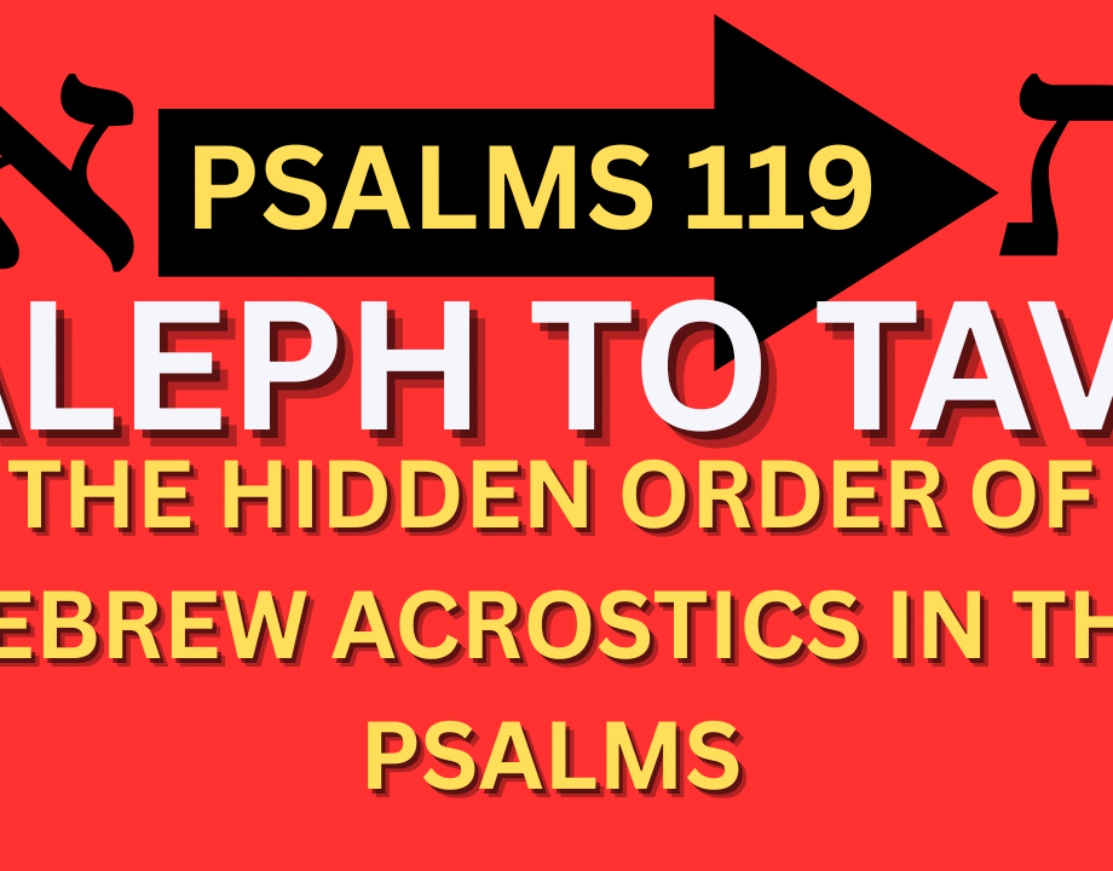
  • Aleph to Tav. The Hidden Order of Hebrew Acrostics in the Psalms | Psalm 119

    Aleph to Tav. The Hidden Order of Hebrew Acrostics in the Psalms | Psalm 119

    Aleph to Tav. The Hidden Order of Hebrew Acrostics in the Psalms | Psalm 119


    Explore how the 22-letter Hebrew alphabet shapes biblical acrostic Psalms. Learn why Psalm 119 has 176 verses, why some letters are missing, and how Aleph to Tav reveals the completeness of God’s Word.

    The Hebrew alphabet has 22 letters.
    These letters form the foundation of canonical acrostic Psalms found in the Bible.
    In these Psalms, verses or sections begin with successive Hebrew letters.
    This structure is called an alphabetical or canonical acrostic.

    The purpose is clear.
    Beauty. Order. Memory. Meaning.

    Why Acrostics Matter?

    Acrostic Psalms serve two main purposes.
    They display poetic structure.
    They help memorisation in oral tradition.

    More than style, they communicate theology.
    From Aleph to Tav, the message points to completeness.
    God’s Word covers everything. Like A to Z.

    Psalm 119. The Perfect Word-Centred Acrostic

    Aleph to Tav. The Hidden Order of Hebrew Acrostics in the Psalms
    Aleph to Tav. The Hidden Order of Hebrew Acrostics in the Psalms

    Psalm 119 is the most detailed acrostic in Scripture.

    Its structure is precise.
    • 22 stanzas
    • One stanza for each Hebrew letter
    • 8 verses per stanza
    • Total verses: 176

    Every verse in a stanza begins with the same letter.
    This order reflects perfection and completeness.

    The theme is singular.
    Love for God’s Word.
    Devotion to Torah, statutes, and commandments.

    Key Letter Sections in Psalm 119

    A list of all 22 Hebrew alphabet sections in Psalm 119,

    Psalm 119 is structured around the 22 Hebrew letters.
    Each letter governs 8 verses.
    Total verses: 176.

    Key Letter Sections in Psalm 119

    1. Aleph (א)
      Foundation of faith.
      Blessed are those who walk in God’s law.
    2. Beth (ב)
      Purity of life through God’s Word.
      A young person keeps the way clean by taking heed to the Word.
    3. Gimel (ג)
      Life as a stranger on earth.
      A longing for God’s commandments.
    4. Daleth (ד)
      Revival from clinging to the dust.
      Life restored through the Word.
    5. He (ה)
      A repeated prayer.
      Teach me the way of Your statutes.
    6. Vav (ו)
      Steadfast obedience.
      A life without shame before God.
    7. Zayin (ז)
      Comfort during affliction.
      God’s Word gives hope and strength.
    8. Heth (ח)
      God as the psalmist’s portion.
      Commitment to keep His words.
    9. Teth (ט)
      Affliction as a teacher.
      Suffering leads to obedience and wisdom.
    10. Yod (י)
      God as Creator.
      You made me and fashioned me.
    11. Kaph (כ)
      A weary soul waiting for hope.
      Trust placed in God’s promise.
    12. Lamed (ל)
      God’s Word is settled forever in heaven.
      His faithfulness continues through all generations.
    13. Mem (מ)
      Wisdom through meditation on God’s law.
      God’s commandments give greater understanding than teachers.
    14. Nun (נ)
      God’s Word as lamp and light.
      Guidance for the path of life.
    15. Samekh (ס)
      Hatred of vain thoughts.
      Love for God’s law.
    16. Ayin (ע)
      A plea for justice.
      People have made void God’s law.
    17. Pe (פ)
      The entrance of God’s Word brings light.
      Understanding for the simple.
    18. Tsade (צ)
      God’s righteousness.
      His judgments are upright and true.
    19. Qoph (ק)
      Crying out with the whole heart.
      Hope placed in God’s Word.
    20. Resh (ר)
      The sum of God’s Word is truth.
      Every judgment is everlasting.
    21. Shin (ש)
      Great peace for those who love God’s law.
      Nothing causes them to stumble.
    22. Tav (ת)
      A lost sheep seeking the Shepherd.
      A final prayer to be found by God.

    This Aleph-to-Tav structure shows the completeness and perfection of God’s Word, from beginning to end.

    1. Aleph. Foundation and faith.
    2. Beth. Purity through God’s Word.
    3. Gimel. Living as a stranger on earth.
    4. Daleth. Revival from clinging to the dust.
    5. He. A repeated cry. Teach me Your statutes.
    6. Vav (ו) Steadfast obedience. A life without shame before God.
    7. Zayin. Comfort in affliction through the Word.
    8. Heth. God as the psalmist’s portion.
    9. Teth (ט) Affliction as a teacher. Suffering leads to obedience and wisdom.
    10. Yod. God as Creator who formed me.
    11. Kaph (כ) A weary soul waiting for hope. Trust placed in God’s promise.
    12. Lamed (ל) God’s Word is settled forever in heaven. His faithfulness continues through all generations.
    13. Mem. Wisdom gained through meditation on God’s law.
    14. Nun. God’s Word as lamp and light, verses 105–112.
    15. Samekh. Hatred of vain thoughts. Love for the law.
    16. Ayin. A plea because people void God’s law.
    17. Pe (פ) The entrance of God’s Word brings light. Understanding for the simple.
    18. Tsade (צ) God’s righteousness. His judgments are upright and true.
    19. Qoph. Crying out with the whole heart.
    20. Resh. The sum of God’s Word is truth.
    21. Shin. Great peace for those who love the law.
    22. Tav. The psalmist as a lost sheep seeking God.

    Broken and Incomplete Acrostics

    Not all acrostics are perfect.
    This is intentional.

    Psalm 25 follows the alphabet but misses one letter.
    The missing letter is Vav, which means hook or connection.
    The final verse steps outside the pattern with a prayer for redemption.

    Psalm 34 also skips Vav.
    Both Psalms suggest a broken connection caused by human weakness.

    Jewish commentators like Rashi explain this clearly.
    Human prayers are limited.
    Only God’s Word is perfect.

    Linked and Irregular Acrostics

    Psalm 9 and Psalm 10 together form one incomplete acrostic.
    Individually, they look irregular.
    Together, they reveal a hidden structure.

    Other Acrostic Patterns

    Psalm 37 uses two verses per Hebrew letter.
    Psalm 111 and Psalm 112 use half-verses. Each poetic line begins with a new letter.
    Psalm 112 is titled The Blessed Man.

    Psalm 145 is an alphabetical hymn of praise.
    In the Masoretic Text, one letter is missing. Nun.
    That missing verse appears in the Dead Sea Scrolls and the Septuagint.

    Acrostics Beyond the Psalms

    The first four chapters of Lamentations use acrostics.
    In some chapters, Ayin and Pe swap order.
    This reflects grief and disruption after Jerusalem’s fall.

    Proverbs also contains an acrostic.
    Proverbs 31:10–31 describes the Woman of Valor using the Hebrew alphabet.

    The Textual Foundation

    The standard Hebrew Bible text is known as the Masoretic Text.
    It preserves these structures with precision.

    Theological Meaning

    Acrostic Psalms teach one core truth.
    God’s Word is complete.
    Human devotion strives toward that perfection.

    Aleph to Tav frames divine truth.
    From beginning to end.
    From creation to restoration.

    FAQ’S

    1. How many letters comprise the Hebrew alphabet used in canonical acrostic Psalms?

    ANSWER: 22

    1. What term is used for Psalms where each verse or section begins with a successive letter of the Hebrew alphabet?

    ANSWER: Alphabetical (or canonical acrostic) psalms.

    1. What is the primary poetic structure of Psalm 119?

    ANSWER: It has 22 stanzas, with each 8-verse stanza beginning with a successive letter of the Hebrew alphabet.

    1. What is the total number of verses in Psalm 119?

    ANSWER: 176 verses ($22 \text{ stanzas} \times 8 \text{ verses per stanza}$).

    1. Symbolically, what does an acrostic from $Aleph$ to $Tav$ represent regarding God’s Word?

    ANSWER: The completeness or totality of God’s Word (similar to “A to Z”).

    1. Besides poetic beauty, what was a practical purpose for the acrostic format in the Psalms?

    ANSWER: To help with memorisation.

    1. Which two Psalms are considered to form a single, albeit irregular and incomplete, acrostic together?

    ANSWER: Psalm 9 and Psalm 10.

    1. What is the specific acrostic pattern of Psalm 25?

    ANSWER: Each verse begins with a successive Hebrew letter, though it is slightly incomplete.

    1. Which Hebrew letter is notably missing from the acrostic sequence in Psalm 25?

    ANSWER: The letter $Vav$ (ו).

    1. How does the final verse (v. 22) of Psalm 25 deviate from the acrostic structure?

    ANSWER: It is an extra prayer for redemption that does not follow the alphabetical sequence.

    1. Which Psalm is characterised as a Messianic psalm but does not follow an alphabetic acrostic structure?

    ANSWER: Psalm 22.

    1. What is the acrostic structure of Psalm 37?

    ANSWER: Each section (or double verse) begins with a successive Hebrew letter.

    1. How do the acrostic patterns of Psalm 111 and Psalm 112 differ from most other acrostic Psalms?

    ANSWER: Every half-verse (poetic line) begins with a successive Hebrew letter.

    1. Which letter is missing from Psalm 145 in the standard Masoretic Text?

    ANSWER: The letter $Nun$ (נ).

    1. Where has the missing $Nun$ verse of Psalm 145 been discovered by scholars?

    ANSWER: In the Dead Sea Scrolls and the Septuagint.

    1. According to the provided material, which two Psalms both skip the letter $Vav$ (ו) in their acrostic order?

    ANSWER: Psalm 25 and Psalm 34.

    1. What does the Hebrew letter $Vav$ (ו) literally mean?

    ANSWER: Hook or connection.

    1. What might the intentional absence of the letter $Vav$ in certain acrostic Psalms symbolise?

    ANSWER: A “broken connection” caused by human sin or imperfection.

    1. Which biblical book contains acrostics in its first four chapters?

    ANSWER: Lamentations.

    1. In the book of Lamentations, which two letters occasionally swap their usual alphabetical order?

    ANSWER: “Ayin” (ע) and “Pe” (פ).

    1. Where in the book of Proverbs can an alphabetic acrostic be found?

    ANSWER: Proverbs 31:10–31 (the description of the “Woman of Valor”).

    1. What is the general theme of Psalm 119?

    ANSWER: Devotion to and love for God’s Word (Torah, statutes, and commandments).

    1. In Psalm 119, which letter begins the section for verses 105–112?

    ANSWER: $Nun$ (נ).

    1. The famous verse “Thy word is a lamp unto my feet, and a light unto my path” is found under which acrostic letter in Psalm 119?

    ANSWER: $Nun$ (נ).

    1. Which Hebrew letter represents the 22nd and final stanza of Psalm 119?

    ANSWER: $Tav$ (ת).

    1. What is the primary theme of the $Teth$ (ט) section (verses 65–72) in Psalm 119?

    ANSWER: How affliction can be a blessing that teaches obedience to God’s statutes.

    1. In the $Lamed$ (ל) section of Psalm 119, what is described as being “settled in heaven” forever?

    ANSWER: God’s Word.

    1. What is the core message of the $Shin$ (ש) section in Psalm 119 (verses 161–168)?

    ANSWER: Great peace belongs to those who love God’s law.

    1. According to Jewish commentators like Rashi, why are some acrostics “broken” or incomplete?

    ANSWER: To show that human prayers are limited and only God’s Word is perfect.

    1. What is the first letter of the Hebrew alphabet?

    ANSWER: Aleph (א).

    1. What is the final letter of the Hebrew alphabet?

    ANSWER: $Tav$ (ת).

    1. The section of Psalm 119 beginning with $Beth$ (ב) focuses on what theme?

    ANSWER: Maintaining purity by taking heed to God’s Word.

    1. Which section of Psalm 119 emphasises the Psalmist living as a “stranger in the earth”?

    ANSWER: The “Gimel” (ג) section (verses 17–24).

    1. In Psalm 119, the $Daleth$ (ד) section focuses on revival from what state?

    ANSWER: From “cleaving to the dust.”

    1. What is the recurring request in the $He$ (ה) section of Psalm 119 (verses 33–40)?

    ANSWER: “Teach me, O LORD, the way of Thy statutes.” 

    1. In the $Zayin$ (ז) section of Psalm 119, where does the Psalmist find comfort during affliction?

    ANSWER: In God’s Word.

    1. What does the Psalmist declare God is to him in the $Heth$ (ח) section (verses 57–64)?

    ANSWER: His “portion.”

    1. The $Yod$ (י) section of Psalm 119 acknowledges God as what to the individual?

    ANSWER: The Creator who “made me and fashioned me.”

    1. In the $Mem$ (מ) section of Psalm 119, what does the Psalmist claim gives him more wisdom than his teachers?

    ANSWER: God’s commandments and meditation on His law.

    1. In the $Pe$ (פ) section of Psalm 119, what does the entrance of God’s words provide to the “simple”?

    ANSWER: Light and understanding.

    1. The $Tsade$ (צ) section of Psalm 119 focuses on what attribute of God?

    ANSWER: His righteousness (“Tsaddi” means righteous).

    1. Which acrostic Psalm uses exactly two verses for every Hebrew letter?

    ANSWER: Psalm 37.

    1. Which acrostic Psalm includes the verse “I will bless the LORD at all times”?

    ANSWER: Psalm 34. 

    1. Which Psalm is specifically titled “The Blessed Man” and uses a half-verse acrostic structure?

    ANSWER: Psalm 112. 

    1. Which Psalm is described as a “Word-Centred Acrostic”?

    ANSWER: Psalm 119. 

    1. In the $Samekh$ (ס) section of Psalm 119, what does the Psalmist say he hates?

    ANSWER: Vain thoughts (while loving God’s law).

    1. The $Ayin$ (ע) section of Psalm 119 includes a plea for God to work because of what situation?

    ANSWER: People have “made void” God’s law.

    1. In the $Qoph$ (ק) section of Psalm 119, the Psalmist describes crying out with what part of himself?

    ANSWER: His whole heart.

    1. The $Resh$ (ר) section of Psalm 119 concludes that the “sum” of God’s word is what?

    ANSWER: TRUTH

    1. How does the final verse of Psalm 119 ($Tav$ section) describe the Psalmist’s state?

    ANSWER: As a lost sheep seeking to be found by God.

    1. Which acrostic Psalm is an alphabetical hymn of praise and is missing the letter $Nun$?

    ANSWER: Psalm 145.

    1. Is Psalm 25 considered a “perfect” or “almost complete” acrostic?

    ANSWER: Almost complete (missing “Vav”).

    1. What is the structural difference between the acrostics in Psalm 111 and Psalm 119?

    ANSWER: Psalm 111 changes letters every half-verse; Psalm 119 changes letters every 8 verses.

    1. In the context of acrostic Psalms, what is the Masoretic Text (MT)?

    ANSWER: The standard Hebrew Bible text. 

    1. What theological concept is reinforced by Psalm 119’s
      perfect acrostic structure?

    ANSWER: The perfection and completeness of the Torah (God’s Law).

    1. What theological concept is reinforced by Psalm 119’s
      perfect acrostic structure?

    ANSWER: The perfection and completeness of the Torah (God’s Law).

    https://divinetruthofnumbers.com/fact-about-the-number-153/

    https://youtu.be/pwE2P958In8

  • A Biblical Fact About the Number 153 | Genesis to Revelation and the Chapters in Between

    A Biblical Fact About the Number 153 | Genesis to Revelation and the Chapters in Between

    A Biblical Fact About the Number 153 | Genesis to Revelation and the Chapters in Between

    Genesis to Revelation and the Chapters in Between

    One fascinating numerical observation in the Bible concerns the number 153, a number best known from John 21:11, where the disciples catch 153 large fish after Jesus’ resurrection. Many Bible scholars and students have noticed that this number also appears in a remarkable structural way across Scripture.


    A Biblical Fact About the Number 153 | Genesis to Revelation and the Chapters in Between
    A Biblical Fact About the Number 153 | Genesis to Revelation and the Chapters in Between

    The First 153 Chapters of the Bible

    The Bible begins with the book of Genesis.

    1. Genesis has 50 chapters
    2. Exodus has 40 chapters
    3. Leviticus has 27 chapters
    4. Numbers has 36 chapters

    When added together:

    • 50 (Genesis)
    • + 40 (Exodus)
    • + 27 (Leviticus)
    • + 36 (Numbers)
      = 153 chapters

    This means Genesis 1 through Numbers 36 together form the first 153 chapters of the Bible.


    A Biblical Fact About the Number 153 | Genesis to Revelation and the Chapters in Between
    A Biblical Fact About the Number 153 | Genesis to Revelation and the Chapters in Between

    The Last 153 Chapters of the Bible

    At the other end of Scripture stands the book of Revelation, which has 22 chapters.

    Counting backward from the end of Revelation:

    1. Revelation (22 chapters)
    2. Jude (1)
    3. 1–3 John (5)
    4. 2 Peter (3)
    5. 1 Peter (5)
    6. James (5)
    7. Hebrews (13)
    8. Philemon (1)
    9. Titus (3)
    10. 1–2 Timothy (6)
    11. 1–2 Thessalonians (5)
    12. Colossians (4)
    13. Philippians (4)
    14. Ephesians (6)
    15. Galatians (6)
    16. 1–2 Corinthians (29)
    17. Romans (16)
    18. Acts (28)
    19. John (21)
    20. Luke (24)

    When counted carefully from Revelation backward, the total reaches 153 chapters, ending at Luke 1.

    Thus, Luke 1 through Revelation 22 make up the last 153 chapters of the Bible.


    A Biblical Fact About the Number 153 | Genesis to Revelation and the Chapters in Between
    A Biblical Fact About the Number 153 | Genesis to Revelation and the Chapters in Between

    How Many Chapters Are in Between?

    The total number of chapters in the Protestant Bible is 1,189.

    • First 153 chapters
    • Last 153 chapters

    So we subtract:

    1,189 − 153 − 153 = 883 chapters

    There are 883 chapters between the first 153 chapters and the last 153 chapters of the Bible.


    Why This Matters

    While the Bible does not explicitly explain this numerical structure, many believers see it as a reflection of divine order and intentional design rather than coincidence. The number 153 is often associated with completeness, fullness, and divine purpose, especially in light of Jesus’ miracle involving the 153 fish—symbolising the full gathering of God’s people.

    From Genesis, which begins with creation, to Revelation, which ends with new creation, the Bible opens and closes with the same remarkable number of chapters, pointing to a unified and purposeful divine narrative.

    A Biblical Fact About the Number 153 | Genesis to Revelation and the Chapters in Between
    A Biblical Fact About the Number 153 | Genesis to Revelation and the Chapters in Between

    Summary

    • First 153 chapters: Genesis 1 – Numbers 36
    • Last 153 chapters: Luke 1 – Revelation 22
    • Chapters in between: 883
    • Total Bible chapters: 1,189

    This numerical harmony adds another layer of wonder to the structure of Scripture and continues to inspire awe in those who study the Bible deeply.

    https://divinetruthofnumbers.com/genesis-1-one-gods-create-7-8-22-pattern/

    https://youtu.be/j5rMTKaU47A

  • The Divine Truth of Genesis 2:7–3:22

    The Divine Truth of Genesis 2:7–3:22

    The Divine Truth of Genesis 2:7–3:22

    Genesis 2:7–3:22 stands as one of the most profound and foundational passages in the Bible. Within these verses, Scripture reveals deep truths about human origins, divine intention, free will, sin, and God’s enduring mercy. Far from being merely an ancient narrative, this passage offers timeless insight into the human condition and humanity’s relationship with God.

    The Breath of Life and Human Identity (Genesis 2:7)

    The passage begins with a powerful image: God forming humanity from the dust of the ground and breathing into Adam’s nostrils the breath of life. This act establishes a dual truth about human nature. Humans are both earthly and divine—formed from physical matter, yet animated by God’s own breath. Life, therefore, is not accidental or self-generated; it is a sacred gift directly imparted by God: human dignity and worth flow from this divine origin.

    Life in Divine Provision and Freedom (Genesis 2:8–17)

    God places Adam in the Garden of Eden, a space of abundance, beauty, and harmony. Every need is provided, and meaningful work is offered: cultivating and caring for the garden. At the centre of Eden stand two trees—the Tree of Life and the Tree of the Knowledge of Good and Evil. God’s command not to eat from the tree of the knowledge of good and evil introduces moral freedom. Obedience is not forced; love and trust are meant to be freely chosen. Divine truth here affirms that genuine relationship with God requires freedom, even when that freedom carries risk.

    Relationship and Completeness (Genesis 2:18–25)

    God declares that it is not good for man to be alone, revealing that relationality is part of divine design. The creation of woman from man’s side signifies equality, unity, and mutual belonging. Their nakedness without shame reflects innocence, transparency, and complete trust—both with each other and with God. This state represents humanity as God intended: whole, unbroken, and unafraid.

    The Fall: Deception, Choice, and Disobedience (Genesis 3:1–7)

    The serpent’s deception challenges God’s word and motives, planting doubt and desire for autonomy apart from God. When Adam and Eve eat the forbidden fruit, the act is more than disobedience—it is a grasp for self-defined wisdom and independence. Their eyes are opened, but not to enlightenment; instead, they become aware of shame, guilt, and vulnerability. The divine truth revealed is sobering: sin distorts perception and fractures both inner peace and relationships.

    Accountability and Consequences (Genesis 3:8–19)

    God seeks the humans, not in ignorance, but in invitation—“Where are you?” This question exposes spiritual separation rather than physical location. Adam and Eve’s blame-shifting highlights how sin erodes responsibility and trust. The consequences pronounced by God affect every dimension of life: spiritual, relational, physical, and environmental. Yet even in judgment, God’s justice is purposeful, not vindictive.

    Mercy Within Judgment (Genesis 3:20–22)

    Despite humanity’s failure, God demonstrates compassion. He clothes Adam and Eve, covering their shame, and protects them from eating from the Tree of Life in a fallen state. This act prevents eternal separation from God and preserves the possibility of redemption. Divine truth shines clearly here: God’s mercy operates even in the midst of judgment. Humanity is disciplined, but not abandoned.

    Conclusion

    Genesis 2:7–3:22 reveals the divine truth of who we are, why the world is broken, and how God responds to human failure. It teaches that life comes from God, freedom is essential, sin has real consequences, and mercy remains central to God’s character. This passage lays the groundwork for the entire biblical story—a story not of humanity’s rejection by God, but of God’s persistent pursuit of humanity.

    https://divinetruthofnumbers.com/number-70-a-deep-spiritual-and-bible/

    https://youtu.be/b7biDpIna5I

  • The Divine Numerological Meaning of Number 70: A Deep Spiritual and Biblical Insight

    The Divine Numerological Meaning of Number 70: A Deep Spiritual and Biblical Insight

    The Divine Numerological Meaning of Number 70: A Deep Spiritual and Biblical Insight

     The Sacred Power of Number 70

    The number 70 is highly significant in biblical numerology, spirituality, and divine prophecy. It represents divine order, completion, judgment, restoration, and the fulfilment of God’s plan. The number 70 appears multiple times in the Bible, symbolising perfection, authority, and the connection between the physical and spiritual worlds.

    If you frequently see the number 70, or if you are studying its meaning in biblical and spiritual contexts, this in-depth guide will help you understand:
      The Biblical Meaning of 70
    The Spiritual and Numerological Symbolism of 70
    The Universal Influence of 70 in Prophecy and Divine Order
    The Hidden Mystical Significance of 70
    How 70 Relates to Your Spiritual Journey

    Let’s explore the divine truths behind the number 70 and its profound influence on life, faith, and destiny.


     The Biblical Meaning of Number 70

    The number 70 appears multiple times in the Bible, and it often represents:
    Completion and Perfection – The end of a cycle and the fulfilment of divine plans.
    Divine Judgment and Restoration – The 70 years of captivity in Babylon.
    Spiritual Authority and Leadership – The 70 elders appointed by Moses.

    Let’s explore the major biblical references to the number 70.

    1. The 70 Nations and God’s Divine Order (Genesis 10)

    After the Great Flood, the descendants of Noah formed 70 nations, as recorded in Genesis 10. This ssymbolisesthe division of humanity and the establishment of divine order on Earth.

    “These are the families of the sons of Noah, after their generations, in their nations: and by these were the nations divided in the earth after the flood.” – (Genesis 10:32)

    This passage shows that 70 represents the totality of the world’s nations, cultures, and divine governance.

    2. The 70 Elders of Israel (Exodus 24:1, Numbers 11:16-25)

    When Moses led the Israelites, God commanded him to appoint 70 elders to help lead and guide the people:

    “Gather for me seventy men of the elders of Israel, whom you know to be the elders of the people and officers over them, and bring them to the tent of meeting, that they may stand there with you.” – (Numbers 11:16)

    These 70 elders were given divine wisdom and authority, showing that 70 is the number of leadership, spiritual wisdom, and divine governance.

    3. The 70-Year Babylonian Captivity (Jeremiah 25:11-12, Daniel 9:2)

    The Israelites were exiled to Babylon for 70 years as a punishment for their sins:

    “This whole country will become a desolate wasteland, and these nations will serve the king of Babylon seventy years.” – (Jeremiah 25:11)

    However, after 70 years, God restored His people, showing that 70 is also the number of divine judgment and restoration.

    4. The 70 Weeks Prophecy of Daniel (Daniel 9:24-27)

    One of the most famous prophecies in the Bible is Daniel’s 70 Weeks Prophecy, which foretells the coming of the Messiah and the end times.

    “Seventy weeks are decreed about your people and your holy city, to finish the transgression, to put an end to sin, and to atone for iniquity.” – (Daniel 9:24)

    This prophecy highlights 70 as several divine fulfillments and the completion of God’s plan.

    5. Jesus and the 70 Disciples (Luke 10:1-17)

    Jesus appointed 70 disciples and sent them out to preach the Gospel:

    “After this, the Lord appointed seventy others and sent them two by two ahead of Him to every town and place where He was about to go.” – (Luke 10:1)

    This represents the universal mission of the Church, showing that 70 symbolises divine ministry and spiritual expansion.


     The Spiritual and Numerological Symbolism of 70

    1. The Number 70 as a Symbol of Completion

    Since 70 is a combination of 7 (spiritual perfection) and 10 (divine order), it represents:
      The completion of divine cycles
      The fulfillment of spiritual destiny
      The transition from one era to another

    Whenever 70 appears in your life, it may signify the end of a major phase and the beginning of something new.

    2. The Number 70 as a Symbol of Divine Judgment and Mercy

    Throughout the Bible, 70 is connected to both divine punishment and restoration. It signifies:
      The end of a period of testing
      The fulfillment of prophecy
      A time of renewal and transformation

    Seeing 70 may indicate that you are entering a period of divine change, correction, or spiritual renewal.

    3. The 70 Names of God in Jewish Mysticism

    In Kabbalah and Jewish mysticism, it is believed that God has 70 sacred names, each representing a different aspect of divine power and wisdom.

    This highlights 70 as a deep spiritual knowledge and divine revelation.


     The Universal Influence of 70 in Life and History

    1. The 70 Years of Human Life (Psalm 90:10)

    The Bible states that the average human lifespan is 70 years:

    “The years of our life are seventy, or even by reason of strength eighty; yet their span is but toil and trouble.” – (Psalm 90:10)

    This shows that 70 represents a complete human lifetime, symbolising wisdom, ageing, and the cycle of life.

    2. The 70 Elders of the Sanhedrin

    In Jewish history, the Sanhedrin (Jewish Supreme Court) had 70 elders, who were responsible for interpreting divine law and justice.

    Thisemphasisess 70 as several legal and spiritual authorities.


     How Number 70 Impacts Your Spiritual Journey

    If 70 frequently appears in your life, it is a message from the universe that:
      A major cycle in your life is ending, and a new one is beginning.
      You are being called to leadership and divine wisdom.
      You may be entering a period of correction or spiritual renewal.
      God’s promises and plans for you are about to be fulfilled.

    What to Do When You See 70?

     Pray for guidance – Seek divine wisdom about what cycle is ending in your life.
      Trust the process – 70 often signals transformation and new beginnings.
      Reflect on spiritual lessons – What has this phase of your life taught you?
      Prepare for a new chapter – 70 is a sign that change is coming.


     Conclusion: The Divine Message of 70

    The number 70 is a sacred and powerful symbol of divine order, completion, and fulfilment. Whether in biblical prophecy, numerology, or history, 70 represents the transition from one phase to another.

    Whenever you see 70, take it as a divine message that a season in your life is ending, and a new chapter is about to begin.

     Have you experienced the number 70 in your life? What message do you feel it holds for you? Share your thoughts in the comments! 

    https://divinetruthofnumbers.com/numerology-and-personal-growth-2/

    https://youtu.be/6RhfVejXSE4