7 Ancient Hebrew Names of God That Reveal a Surprising Side of the Divine | The “Uni-Plural” Creator: The Mystery of Elohim
To the believer, the many names of God revealed throughout the tapestry of Scripture are far more than mere labels; they are windows designed to throw light upon an infinite nature. Because God’s revelation of Himself is progressive, these names act as descriptive markers, spotlighting different facets of His personality and character as humanity’s capacity to understand Him grew. Yet, as we peer through these windows, we must acknowledge a scholarly humility: no single name, nor even the collective sum of them, could ever fully express the “unsearchable fullness” of His forgiveness, grace, and mercy toward mankind.
By examining these ancient titles, we discover a Divine Being who is not a static monolith, but a dynamic Presence who meets the specific crises of the human condition with specific revelations of His nature.
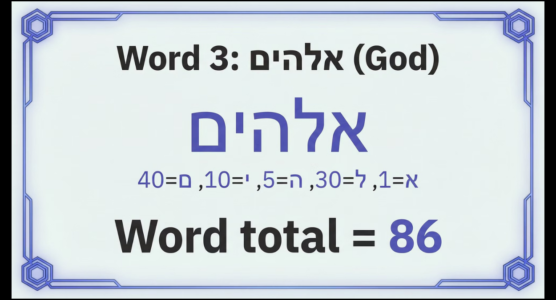
1. The “Uni-Plural” Creator: The Mystery of Elohim
The name Elohim is the first name of God to grace the sacred page, appearing in the opening breath of Genesis: “In the beginning God…” It is a name that signifies the “putting forth of power,” identifying the Divine as the source of all life and the sovereign Creator of the universe. To the theological scholar, however, the name contains a deeper, more mysterious root: it signifies “to swear,” indicating a God who is under a covenant of an oath with Himself to perform His divine purposes.
Elohim is fundamentally “uni-plural.” In Hebrew, it is a plural noun, yet it frequently governs singular verbs. We see this mystery articulated in the creation of humanity: “And God (Elohim) said, ‘Let Us make man in Our image'” (Genesis 1:26). Immediately following, the text shifts to the singular: “So God created man in His own image” (Genesis 1:27). This suggests a plurality in unity—an unqualified, unlimited energy that hints at the tri-unity of the Godhead from the very dawn of time.
“It is agreed by most scholars that the name Elohim signifies the putting forth of power. He is the Being to whom all power belongs.”
2. The Paradox of “Tender Power”: El Shaddai
While the English “God Almighty” captures the raw strength of El Shaddai, it often misses the profound tenderness found in the Hebrew etymology. The word Shaddai is connected to a root signifying the female breast. This juxtaposition reveals a God who is both the “Mighty One” (El) and the “Succourer” and “Satisfier” of His people.
Just as an infant finds total sustenance and security while nestling with its mother, El Shaddai is the One who is never weary of pouring forth His mercies. This name reveals a God who is more ready to give than His children are to receive—a Divine Parent who provides the milk of grace to sustain the weak.
“The title Shaddai really indicates the fullness and riches of God’s grace… that He is never weary of pouring forth his mercies upon His people and that He is more ready to give than they are to receive.” — Cannon Girdlestone
3. The God of the Outcast: El Roi
One of the most intimate names of God was not first uttered by a patriarch or a priest, but by an Egyptian maidservant in the throes of despair. Banishment had driven Hagar into the wilderness of Shur. Beside a local sacred spring, she had a spiritual encounter so profound that she named the well Beer Lahai Roi—”the well of continuing to live after seeing God.”
In her isolation, Hagar called Him El Roi: “Thou God seest me.” This name reveals God as the “God of vision.” It reminds us that the Living God does not look upon human suffering with a “cold eye of unconcern.” He looks with the tender care of a father. In the wilderness of our own lives, El Roi is the one who proves that we are never truly invisible to the Divine.
4. Strategy Over Strength: Jehovah-Sabaoth and the Giant
The name Jehovah-Sabaoth (The LORD of Hosts) carries a specific scholarly weight: it is a “revelation of failure.” Interestingly, this name is never found in the Pentateuch, Joshua, or Judges. It emerges only during Israel’s times of division and captivity, appearing 80 times in Jeremiah and 50 times in Zechariah. It signifies that when earthly power is exhausted, the “Hosts”—the heavenly armies of God—remain available to the elect.
We see this most vividly in the valley of Elah. David, a youth refusing the unwieldy 160-pound coat of bronze mail offered by Saul, stood before Goliath. The giant was a marvel of human ingenuity, his spearhead alone weighing 20 pounds. Yet David understood that victory did not depend on man’s armor. Relying on “strategy over strength,” David invoked the name of the LORD of Hosts to bring heavenly power to a mundane battlefield.
“Then David said to the Philistine, ‘You come to me with a sword, with a spear, and with a javelin. But I come to you in the name of the LORD of hosts, the God of the armies of Israel, whom you have defied.'”
5. The Cost of Provision: Jehovah-Jireh
Commonly translated as “The LORD will provide,” Jehovah-Jireh was originally a place name. It marks the spot on a mountain in the land of Moriah where Abraham was called to sacrifice his son, Isaac. There is a subtle theological shift in this narrative: it is Elohim who demands the sacrifice, but it is Jehovah who provides the substitutional ram.
The “provision” Abraham saw that day—a ram caught in a thicket—was a future-tense promise. Abraham declared, “In the mount of the LORD it shall be seen,” pointing forward 2,000 years to the crucifixion of Christ. Scholars believe this very mountain is where Solomon’s Temple was eventually built, and near where Christ “suffered without the gate.” Here, Jehovah-Jireh shows us that sacrifice is the highest form of worship, and God is the one who “sees to it” that our deepest needs are met at His own expense.
6. The Straight Path of Righteousness: Jehovah-Tsidkenu
Jehovah-Tsidkenu means “The LORD our Righteousness.” The Hebrew root, Tsedek, means “to be stiff” or “straight,” providing a stark contrast to the crookedness of the human heart. There is a tragic irony here: the last king of Judah was named Zedekiah (“The righteousness of Jehovah”), yet he lived in absolute unrighteousness. In response, God revealed that He Himself would become the “Branch of righteousness” for His people.
This righteousness is not earned; it is “imputed” or credited to the believer’s account. This divine standing acts as a “breastplate,” protecting the soul from the enemy’s accusations. The Scottish preacher Robert Murray McCheyne captured this transition from ignorance to grace in his moving hymn:
“I once was a stranger to grace and to God, I knew not my danger, and felt not my load; Jehovah-Tsidkenu was nothing to me.”
For McCheyne, as for us, the discovery of this name marks the moment our “guilty fears vanish” before the imputed perfection of God.
7. The Final Syllable of Intimacy: Abba Father
If we consider the names of God as spokes in a wheel, they all eventually merge into the centre hub: Abba Father. This title is the culmination of all Hebrew revelation. While the other names reveal majesty, unutterable awe, and power, Abba brings them into the warmth of a tender personal relationship.
The name is composed of two simple syllables that even the youngest child can attempt. It is a bilingual bridge: Abba is Aramaic/Syriac, and Pater is Greek, allowing both Jew and Gentile to cry out with the same “devoted sense” of adoption. It represents the transition from the “spirit of bondage” to the freedom of a son or daughter.
“The name ‘Father’ is indeed the sum of Christian revelation.” — B.F. Westcott
A Call to Progressive Discovery
These ancient names are not merely linguistic relics; they are invitations. They are the windows through which we glimpse the heart of the Infinite. Whether you find yourself in the wilderness with Hagar, facing a giant with David, or standing upon a mountain of sacrifice with Abraham, there is a name designed to meet your crisis.
As you reflect on these descriptions, consider the “unwieldy armour” of self-reliance you may be carrying. Which of these “windows” do you need to look through today to see the Divine more clearly? Which spoke will you follow to find your way back to the Hub of the Father’s love?
https://biblenumbers101.com/7-el-shaddai-jehovah-jireh-jehovah-adonai/
https://divinetruthofnumbers.com/22-things-god-created-ingenesis-chapter1/