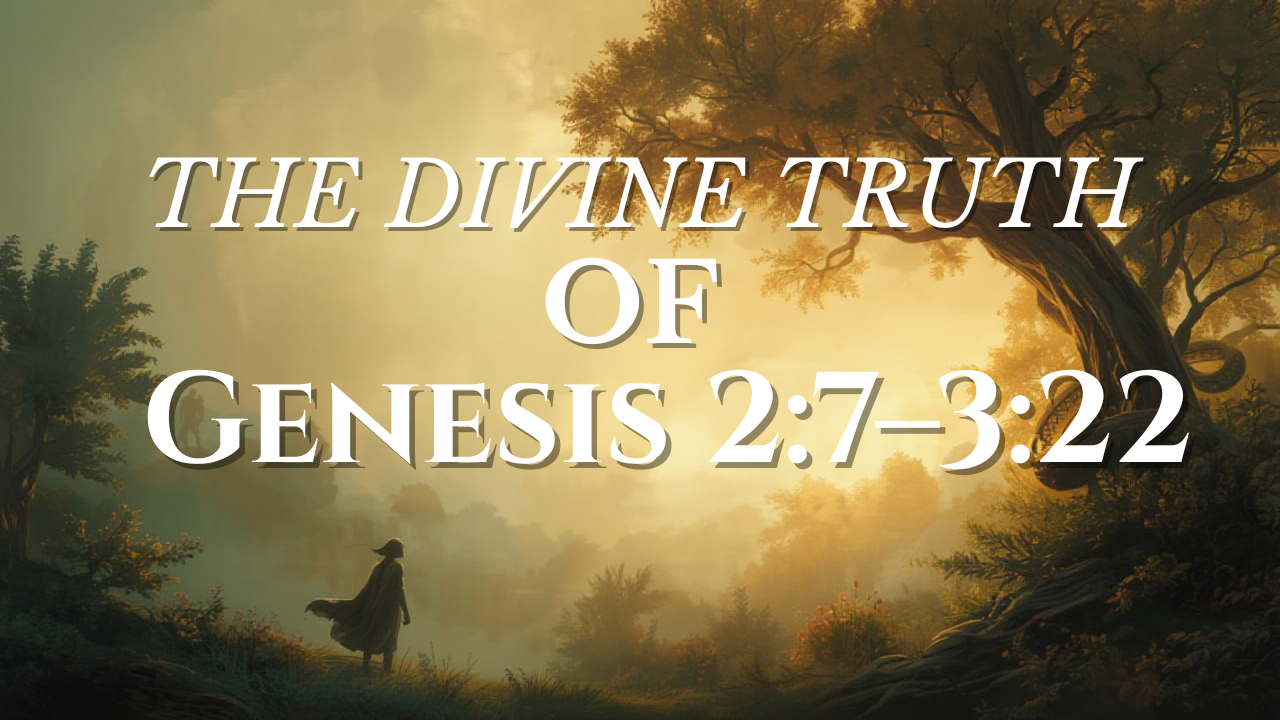
The Divine Truth of Genesis 2:7–3:22
Genesis 2:7–3:22 stands as one of the most profound and foundational passages in the Bible. Within these verses, Scripture reveals deep truths about human origins, divine intention, free will, sin, and God’s enduring mercy. Far from being merely an ancient narrative, this passage offers timeless insight into the human condition and humanity’s relationship with God.
The Breath of Life and Human Identity (Genesis 2:7)
The passage begins with a powerful image: God forming humanity from the dust of the ground and breathing into Adam’s nostrils the breath of life. This act establishes a dual truth about human nature. Humans are both earthly and divine—formed from physical matter, yet animated by God’s own breath. Life, therefore, is not accidental or self-generated; it is a sacred gift directly imparted by God: human dignity and worth flow from this divine origin.
Life in Divine Provision and Freedom (Genesis 2:8–17)
God places Adam in the Garden of Eden, a space of abundance, beauty, and harmony. Every need is provided, and meaningful work is offered: cultivating and caring for the garden. At the centre of Eden stand two trees—the Tree of Life and the Tree of the Knowledge of Good and Evil. God’s command not to eat from the tree of the knowledge of good and evil introduces moral freedom. Obedience is not forced; love and trust are meant to be freely chosen. Divine truth here affirms that genuine relationship with God requires freedom, even when that freedom carries risk.
Relationship and Completeness (Genesis 2:18–25)
God declares that it is not good for man to be alone, revealing that relationality is part of divine design. The creation of woman from man’s side signifies equality, unity, and mutual belonging. Their nakedness without shame reflects innocence, transparency, and complete trust—both with each other and with God. This state represents humanity as God intended: whole, unbroken, and unafraid.
The Fall: Deception, Choice, and Disobedience (Genesis 3:1–7)
The serpent’s deception challenges God’s word and motives, planting doubt and desire for autonomy apart from God. When Adam and Eve eat the forbidden fruit, the act is more than disobedience—it is a grasp for self-defined wisdom and independence. Their eyes are opened, but not to enlightenment; instead, they become aware of shame, guilt, and vulnerability. The divine truth revealed is sobering: sin distorts perception and fractures both inner peace and relationships.
Accountability and Consequences (Genesis 3:8–19)
God seeks the humans, not in ignorance, but in invitation—“Where are you?” This question exposes spiritual separation rather than physical location. Adam and Eve’s blame-shifting highlights how sin erodes responsibility and trust. The consequences pronounced by God affect every dimension of life: spiritual, relational, physical, and environmental. Yet even in judgment, God’s justice is purposeful, not vindictive.
Mercy Within Judgment (Genesis 3:20–22)
Despite humanity’s failure, God demonstrates compassion. He clothes Adam and Eve, covering their shame, and protects them from eating from the Tree of Life in a fallen state. This act prevents eternal separation from God and preserves the possibility of redemption. Divine truth shines clearly here: God’s mercy operates even in the midst of judgment. Humanity is disciplined, but not abandoned.
Conclusion
Genesis 2:7–3:22 reveals the divine truth of who we are, why the world is broken, and how God responds to human failure. It teaches that life comes from God, freedom is essential, sin has real consequences, and mercy remains central to God’s character. This passage lays the groundwork for the entire biblical story—a story not of humanity’s rejection by God, but of God’s persistent pursuit of humanity.
https://divinetruthofnumbers.com/number-70-a-deep-spiritual-and-bible/