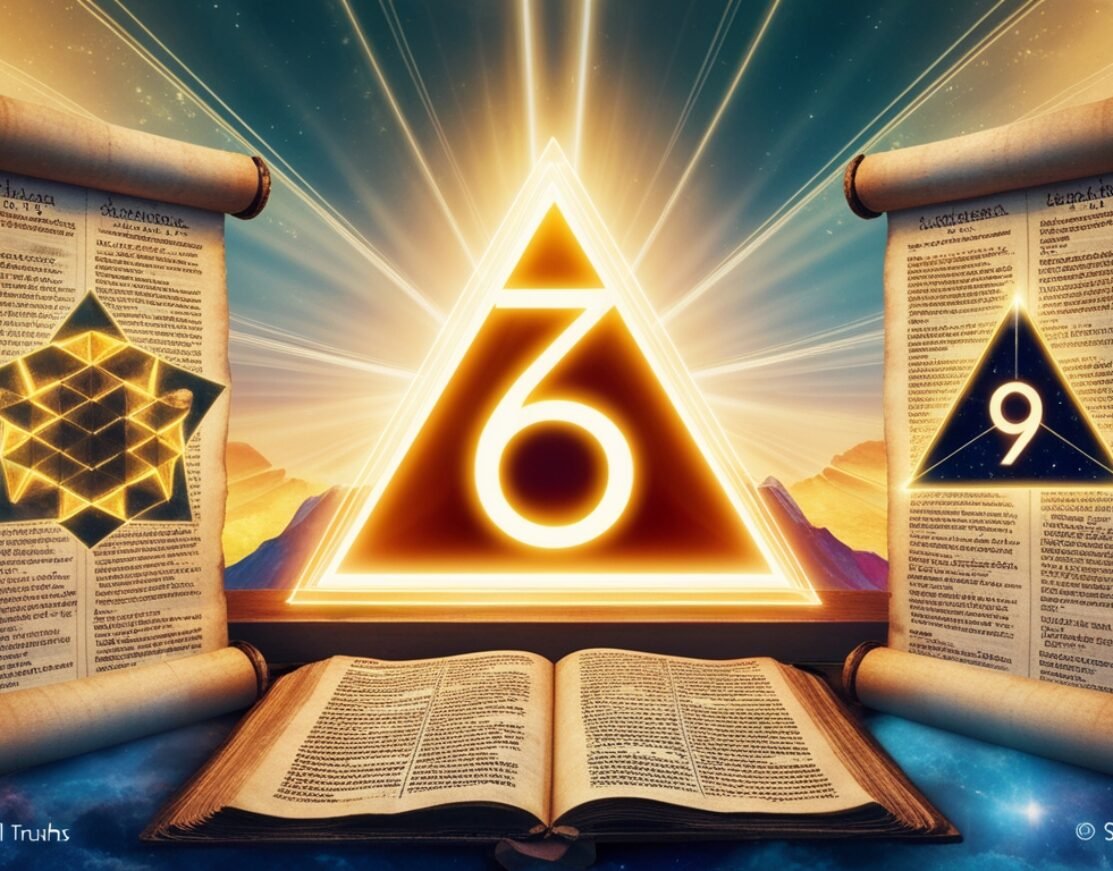
The Biblical Meaning of the Number 6: Symbolism and Significance
In biblical numerology, numbers often convey symbolic meanings that reflect spiritual truths and divine messages. The number 6 is one of the most discussed numbers in the Bible, representing imperfection, humanity, and the temporal nature of creation. It stands in contrast to the divine completeness symbolized by the number 7. This blog explores the meaning of the number 6 in the Bible, its occurrences, and its spiritual implications.
In biblical numerology, numbers often convey symbolic meanings that reflect spiritual truths and divine messages.
1. The Symbolism of the Number 6
The number 6 carries significant symbolic meaning in scripture, often associated with:
Humanity: The number 6 is tied to human weakness and incompleteness. Labor and Effort: It reflects human toil and the limits of human achievement. Imperfection: Falling short of the divine perfection symbolized by 7, the number 6 represents something incomplete or flawed.
2. The Number 6 in Creation
The significance of the number 6 is first seen in the creation narrative:
a. Creation of Humanity
God created humankind on the sixth day of creation (Genesis 1:26-31). This establishes the number’s connection to humanity and the earthly realm.
b. Work and Rest
God’s design for work and rest is built around the number 6:
Humanity is commanded to work for six days and rest on the seventh (Exodus 20:9-10).
This cycle emphasizes human effort during six days, followed by divine completeness and rest on the seventh.
The Biblical Meaning of the Number 6: Symbolism and Significance
3. Occurrences of the Number 6 in the Bible
The number 6 appears in various contexts throughout scripture, often underscoring themes of human limitation or opposition to divine perfection:
a. The Number of the Beast
One of the most well-known uses of the number 6 is in the Book of Revelation, where the number 666 is described as the number of the beast (Revelation 13:18). This triple repetition of 6 symbolizes ultimate imperfection and the epitome of human rebellion against God.
b. Goliath’s Spear
The spear of Goliath, a symbol of human strength and defiance, is described as weighing 600 shekels of iron (1 Samuel 17:7). This detail further emphasizes the limitations and futility of human power when opposed to divine will.
c. The Six Steps to Solomon’s Throne
King Solomon’s throne had six steps, symbolizing earthly authority and human rule (1 Kings 10:19). While grand, it remained a symbol of human governance, distinct from divine sovereignty.
The Biblical Meaning of the Number 6: Symbolism and Significance
4. Theological Implications of the Number 6
a. Humanity’s Incompleteness
The number 6 reminds us that humanity is inherently incomplete without God. While humans were created in God’s image, they are not divine and fall short of God’s perfect standards.
b. Dependence on God
By highlighting human limitation, the number 6 emphasizes the necessity of relying on God for fulfillment and salvation. Human efforts alone cannot achieve spiritual completeness.
c. The Struggle Against Sin
The association of the number 6 with imperfection and rebellion (e.g., 666) underscores humanity’s struggle with sin and the need for redemption through Christ.
5. Lessons from the Number 6
The number 6 offers several spiritual lessons for believers:
Acknowledge Human Limitations: Recognize that human strength and effort are insufficient without God’s guidance and provision. Rest in God’s Completeness: Embrace the rest and perfection offered by God, symbolized by the seventh day. Seek Redemption: Understand that the imperfection represented by 6 points to the need for salvation through Jesus Christ.
6. The Contrast Between 6 and 7
The number 6 often serves as a counterpoint to the number 7, which represents divine perfection and completeness. This contrast emphasizes the distinction between human imperfection and God’s flawless nature:
Six Days of Labor vs. Seventh Day of Rest: Humanity works for six days, but true rest and fulfillment come only in God’s provision on the seventh day. The Beast (666) vs. God’s Perfection (777): The number of the beast symbolizes ultimate imperfection, while 777 reflects divine perfection and holiness.
Conclusion: The Profound Message of the Number 6
The number 6 in the Bible is a powerful reminder of humanity’s limitations, imperfections, and dependence on God. From the creation of humans on the sixth day to the infamous number of the beast, the number underscores the contrast between human frailty and divine perfection.
As believers, we are called to recognize our need for God’s grace and to find rest in His completeness. The number 6 challenges us to move beyond human striving and embrace the perfect work of God in our lives. Let the message of this number inspire you to trust in God’s provision and to seek His perfection in your spiritual journey.
The Biblical Meaning of the Number 5: Symbolism and Significance
In the Bible, numbers often carry profound symbolic meanings, reflecting spiritual truths and divine principles. The number 5 is particularly significant, representing God’s grace, favor, and the completeness of His provision. This blog explores the meaning of the number 5 in the Bible, its occurrences, and the deeper truths it reveals about God’s relationship with humanity.
The number 5 in biblical numerology is closely tied to the themes of:
The Biblical Meaning of the Number 5: Symbolism and Significance
Grace and Favor: It symbolizes God’s unmerited kindness and blessing toward humanity. Provision and Completeness: The number reflects God’s sufficiency in meeting the needs of His people. Divine Order: It emphasizes God’s structured and purposeful design.
2. The Number 5 in Scripture
The number 5 appears throughout the Bible in significant ways, illustrating its spiritual importance:
a. The Five Offerings in the Old Testament
The Levitical system of worship included five main offerings:
Burnt Offering, Grain Offering, Peace Offering, Sin Offering, and Guilt Offering (Leviticus 1–7).
These offerings represent God’s grace in providing a way for humanity to approach Him, atone for sin, and experience fellowship.
b. The Five Books of the Torah
The Torah, also known as the Pentateuch, consists of five books: Genesis, Exodus, Leviticus, Numbers, and Deuteronomy. These foundational scriptures reveal God’s grace in creating the world, calling His people, and establishing His covenant.
c. The Tabernacle’s Design
In the construction of the Tabernacle, the number 5 features prominently, reflecting God’s design and grace:
The Tabernacle’s curtains were arranged in sets of five (Exodus 26:3). The dimensions of the altar and other elements were measured in multiples of five (Exodus 27:1-2).
This design underscores the completeness and sufficiency of God’s provision for worship.
The Biblical Meaning of the Number 5: Symbolism and Significance
3. Biblical Stories Involving the Number 5
The number 5 plays a role in several notable biblical narratives, reinforcing its symbolic meanings:
a. The Five Smooth Stones of David
When David faced Goliath, he selected five smooth stones from a stream (1 Samuel 17:40). Though he only needed one stone to defeat the giant, the five stones symbolized God’s complete provision and David’s reliance on divine grace.
b. The Feeding of the Five Thousand
In the miracle of the feeding of the 5,000, Jesus used five loaves of bread to feed the multitudes (Matthew 14:17-21). This event demonstrates God’s abundant grace and provision, multiplying resources to meet the needs of His people.
c. The Parable of the Talents
In the Parable of the Talents, one servant was entrusted with five talents, which he faithfully multiplied (Matthew 25:14-30). This parable illustrates God’s grace in entrusting resources and the call to stewardship.
4. Theological Implications of the Number 5
a. God’s Grace Toward Humanity
The number 5 emphasizes God’s grace, a central theme in scripture:
The covenantal promises of God, fulfilled through Christ, demonstrate unmerited favor. The grace given to believers is sufficient to overcome challenges and live in obedience.
b. Provision and Sufficiency
Occurrences of the number 5 often highlight God’s provision, assuring believers of His ability to meet both physical and spiritual needs.
c. Responsibility and Stewardship
In stories like the Parable of the Talents, the number 5 also carries a message of responsibility, urging believers to use God’s grace wisely.
The Biblical Meaning of the Number 5: Symbolism and Significance
5. Practical Lessons from the Number 5
The number 5 offers valuable insights for believers today:
Embrace Grace: Trust in God’s unmerited favor and His sufficiency in every area of life. Recognize Provision: Be thankful for God’s abundant blessings and rely on Him for your needs. Fulfill Your Calling: Use the gifts and resources God has entrusted to you to glorify Him and serve others.
Conclusion: The Profound Message of the Number 5
The number 5 in the Bible is a powerful symbol of grace, favor, and provision. Whether in the offerings of the Old Testament, the miracles of Jesus, or the structure of the Tabernacle, the number highlights God’s abundant care and unmerited kindness toward His people.
As believers, we can draw inspiration from the number 5, recognizing God’s sufficiency in every situation and His call to live in grace-filled obedience. Let the message of the number 5 encourage you to rely on God’s provision, embrace His blessings, and walk in the fullness of His grace.
The Biblical Meaning of the Number 4: Symbolism and Significance
In the Bible, numbers carry profound symbolic meanings that reflect God’s creation, purpose, and divine order. The number 4 is one such number, frequently appearing in scripture with rich layers of significance. It symbolizes the created world, completeness in the physical realm, and God’s sovereignty over all creation. This blog delves into the meaning of the number 4 in the Bible, exploring its occurrences and its spiritual implications.
1. The Symbolism of the Number 4
In biblical numerology, the number 4 is deeply connected to the physical universe and the natural world. Its symbolic meanings include:
Creation and the Earth: The number 4 represents the material completeness of the created world.
Universality and Order: It signifies universality, reflecting the totality of the earth and its systems.
God’s Sovereignty Over Creation: The number 4 highlights God’s control and design in organizing the physical world.
2. The Number 4 in Creation
The Bible often links the number 4 to the natural world and God’s creative power:
a. The Four Directions
The number 4 encompasses the entirety of the earth through its four cardinal directions—north, south, east, and west (Ezekiel 7:2). These directions symbolize the universality of God’s dominion.
b. The Fourth Day of Creation
On the fourth day of creation, God created the sun, moon, and stars to govern time and illuminate the earth (Genesis 1:14-19). This act established the structure of day and night, seasons, and years, reflecting order and completeness in the physical realm.
c. The Four Elements
In traditional interpretations, the number 4 is linked to the fundamental elements of earth, air, fire, and water, underscoring God’s creative authority over the building blocks of the world.
3. Occurrences of the Number 4 in the Bible
The number 4 appears throughout scripture in contexts that emphasize completeness and God’s governance:
a. The Four Living Creatures
In Ezekiel’s vision and the Book of Revelation, four living creatures surround God’s throne. These creatures represent the fullness of creation:
A lion (wild animals), An ox (domestic animals), A man (humanity), and An eagle (birds) (Ezekiel 1:5-10; Revelation 4:6-8).
They praise God continually, reflecting His sovereignty over all life.
b. The Four Rivers of Eden
The Garden of Eden is watered by four rivers: Pishon, Gihon, Tigris, and Euphrates (Genesis 2:10-14). These rivers symbolize abundance, life, and the geographical completeness of paradise.
c. The Four Corners of the Earth
Scripture often speaks of the four corners of the earth to describe the whole world (Isaiah 11:12, Revelation 7:1). This phrase emphasizes the universality of God’s creation and judgment.
4. Theological Implications of the Number 4
a. God’s Governance and Judgment
The number 4 appears in contexts of divine judgment, illustrating God’s sovereign control over creation:
In Revelation, four angels stand at the four corners of the earth, holding back the winds of judgment (Revelation 7:1). The four horsemen of the apocalypse—conquest, war, famine, and death—represent God’s judgment on the earth (Revelation 6:1-8).
b. Universality of God’s Plan
The number 4 reminds believers of the universality of God’s plan, encompassing all nations, peoples, and creation. It highlights God’s inclusiveness and His intention to reach all the earth with His message.
c. Earthly Completeness
The repeated appearance of the number 4 emphasizes completeness in the physical world, reflecting the perfection of God’s creation and His attention to detail.
The number 4 offers valuable insights for spiritual reflection and daily life:
Recognize God’s Sovereignty: Trust in God’s control over the world and its systems. Embrace Completeness: Strive for balance and harmony in life, reflecting the order seen in creation. Celebrate Universality: Understand and celebrate God’s inclusive plan for humanity and all creation.
Conclusion: The Profound Message of the Number 4
The number 4 in the Bible symbolizes creation, completeness, and God’s sovereignty over the physical universe. From the four cardinal directions to the living creatures in Revelation, the number reflects God’s purposeful design and His reign over the natural world.
As we encounter the number 4 in scripture, let it serve as a reminder of God’s meticulous care for His creation and His comprehensive plan for humanity. By reflecting on the meaning of this number, believers can deepen their faith and appreciation for the Creator who brings order and beauty to all things.
The Biblical Meaning of the Number 3: Symbolism and Significance
In the Bible, numbers often carry deep symbolic meaning, reflecting divine order, completeness, and significance in God’s plan. The number 3 is particularly important, appearing frequently in scripture with profound implications. This blog explores the meaning of the number 3 in the Bible, uncovering its layers of symbolism and its role in biblical events and teachings.
The Biblical Meaning of the Number 3: Symbolism and Significance
1. The Number 3 in Biblical Numerology
In biblical numerology, numbers are rarely arbitrary; they often symbolize spiritual truths or aspects of God’s nature. The number 3 is associated with:
Divine Completeness and Perfection: It represents the fullness of God’s presence and action in the world. Harmony and Unity: Found in the Holy Trinity—Father, Son, and Holy Spirit—three signifies a perfect and indivisible unity.
The symbolic nature of the number 3 underlines its spiritual weight in various biblical narratives.
The Biblical Meaning of the Number 3: Symbolism and Significance
2. The Number 3 in Creation and God’s Nature
a. The Holy Trinity
One of the most recognized representations of the number 3 is the Holy Trinity, which encapsulates:
God the Father (Creator), God the Son (Redeemer), and God the Holy Spirit (Sustainer).
This triune nature of God highlights the unity and diversity within the Godhead, a foundational Christian belief.
b. Creation and Time
The concept of 3 is also reflected in the structure of time:
Past, Present, Future: Reflecting God’s eternal nature. Creation Narrative: God completed key creative acts in 3 days (dividing waters, creating land, and forming vegetation in Genesis 1).
3. The Number 3 in Biblical Stories
The number 3 features prominently in pivotal biblical moments, underscoring its divine significance:
a. Resurrection of Jesus
The resurrection of Jesus Christ occurred on the third day, fulfilling prophecy and symbolizing victory over sin and death (Luke 24:7). This event is central to Christian faith, and the number 3 emphasizes the completeness of Christ’s mission.
b. Jonah’s Time in the Fish
Jonah spent three days and three nights in the belly of a great fish (Jonah 1:17). This prefigures Christ’s burial and resurrection, connecting the Old Testament and New Testament narratives.
c. Peter’s Denial and Redemption
Peter denied Jesus three times before the rooster crowed (Matthew 26:75), symbolizing human frailty.
After His resurrection, Jesus asked Peter three times if he loved Him, offering forgiveness and restoration (John 21:15-17).
d. The Transfiguration
At the Transfiguration of Jesus, three disciples (Peter, James, and John) witnessed Jesus’ divine glory alongside three figures: Jesus, Moses, and Elijah (Matthew 17:1-3).
4. Symbolism of 3 in Biblical Teachings
a. Completeness in Witness
In biblical law, truth is established by two or three witnesses (Deuteronomy 19:15). This principle emphasizes the reliability and completeness of testimony.
b. Faith, Hope, and Love
Paul highlights three virtues—faith, hope, and love—as the foundation of Christian life (1 Corinthians 13:13).
c. Christ’s Earthly Ministry
Jesus’ ministry lasted approximately three years, during which He performed miracles, taught the multitudes, and prepared His disciples.
5. Theological Reflections on the Number 3
The recurring use of the number 3 reveals deeper truths about God and His relationship with humanity:
God’s Sovereignty: The triune God represents absolute authority and harmony. Human Redemption: Events involving the number 3 often point to divine intervention and salvation. Spiritual Growth: The number 3 reflects a journey toward spiritual maturity, as seen in Peter’s transformation and Paul’s teachings.
6. Practical Applications of the Number 3 in Faith
Believers can draw inspiration from the number 3 by:
Reflecting on the Holy Trinity during prayer and worship. Recognizing the completeness of God’s plans in life’s trials and triumphs. Living out the three virtues of faith, hope, and love.
Conclusion: The Profound Message of the Number 3
The number 3 is far more than a numerical figure in the Bible; it represents completeness, unity, and God’s divine nature. Its repeated presence in scripture reminds us of the depth of God’s plan and the eternal truths embedded in His Word. Understanding the significance of the number 3 enriches one’s faith, offering new layers of meaning to familiar biblical stories and teachings.
As you encounter the number 3 in scripture, let it be a reminder of God’s completeness, the unity of the Trinity, and His redemptive work in your life.
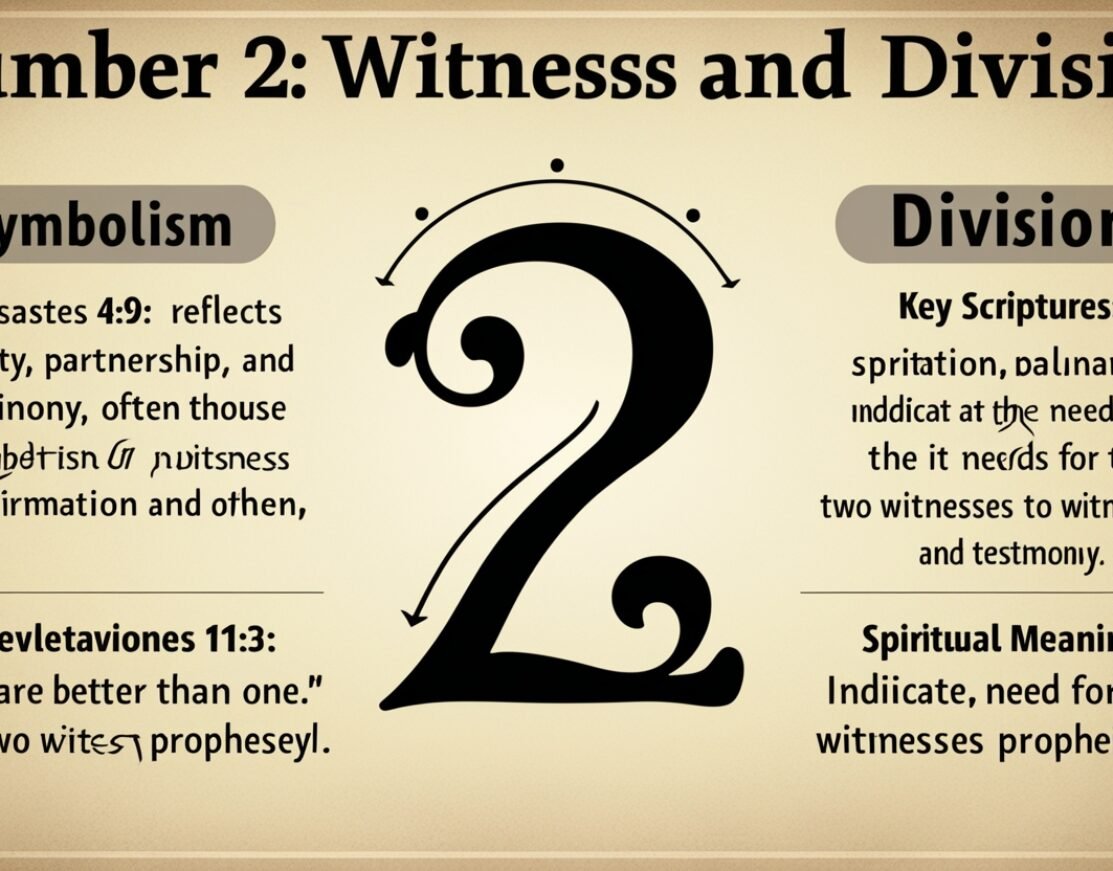
The number 2 is often associated with themes of union, division, and confirmation in the Bible. Throughout the scriptures, it appears in various contexts, sometimes symbolizing a dual nature or a pair that complements each other.
Themes and Symbolism
Union and Partnership
One of the most prominent associations of the number 2 in the Bible is its representation of partnership and union. This is evident from the beginning of the Bible:
Creation of Man and Woman: In Genesis 2:24, the union of man and woman is emphasized: "Therefore a man shall leave his father and mother and be joined to his wife, and they shall become one flesh." This verse highlights the partnership and unity that the number 2 can symbolize.
The Significance of the Number 2 in the Bible
Division and Separation
The number 2 can also represent division or separation, often seen in the context of choices or contrasting elements:
Old and New Testament: The Bible itself is divided into two major sections, the Old Testament and the New Testament. This division represents different covenants between God and humanity.
Two Paths: In Matthew 7:1314, Jesus speaks of two paths—one narrow and one wide—indicating choices that lead to different destinies.
Confirmation and Witness
The number 2 is frequently used to represent confirmation or witness. In biblical law, the testimony of two witnesses is required to establish a matter as true:
Witnesses: Deuteronomy 19:15 states, "A matter must be established by the testimony of two or three witnesses." This principle underscores the reliability and confirmation that comes from having two testimonies.
Examples in Scripture
Noah’s Ark
In the story of Noah's Ark, God instructed Noah to bring animals into the ark in pairs—two of each kind (Genesis 7:9). This underscores the concept of pairs working together to fulfill God’s plans.
The Two Tablets
Moses received the Ten Commandments on two stone tablets (Exodus 31:18), symbolizing the covenant between God and His people. The use of two tablets signifies the completeness and confirmation of the divine law.
Jesus Sending Disciples
In the New Testament, Jesus often sent his disciples out in pairs. For example, in Mark 6:7, Jesus sends the twelve disciples out two by two to preach and perform miracles, emphasizing the strength and support found in partnership.
Conclusion
The number 2 holds significant symbolic meaning in the Bible, representing union, division, and confirmation. Its presence in various stories and teachings highlights the importance of relationships, choices, and the validation of truth. Whether symbolizing the unity between individuals or the division of paths, the number 2 serves as a profound reminder of the dual aspects of life and faith.
The Significance of the Number 2 in the Bible
The number 2 holds various symbolic meanings in the Bible. Throughout biblical texts, numbers often carry deeper meanings and the number 2 is no exception. Here are some of the key interpretations and instances where the number 2 is significant.
The Significance of the Number 2 in the Bible
Symbolism of the Number 2
1. Duality and Division: The number 2 is commonly associated with duality and division. It represents the idea of two entities or concepts that are opposite or complementary. This can be seen in the division of light and darkness, good and evil, or other dualities present in the Bible.
2. Partnership and Witness: The number 2 can also signify partnership and confirmation. In biblical law, the testimony of two witnesses is required to establish the truth of a matter. This principle underscores the importance of agreement and corroboration (Deuteronomy 19:15).
3. Covenant and Union: Biblically, 2 can symbolize union and covenant, such as the relationship between God and humanity, or the union between a husband and wife.
Biblical Instances of the Number 2
1. Creation of Man and Woman: In the creation narrative, God creates man and woman, marking the first instance of human partnership and union (Genesis 1:27). 2. Noah’s Ark: When God instructed Noah to gather animals into the ark, He commanded that they be taken in pairs, male and female, to preserve life on Earth (Genesis 7:2). 3. The Two Tablets of the Law: The Ten Commandments were given on two stone tablets, symbolizing the covenant between God and His people (Exodus 31:18). 4. The Sending of the Disciples: Jesus sent His disciples out in pairs to preach and perform miracles, emphasizing the importance of companionship and mutual support (Mark 6:7).
Conclusion
The number 2 in the Bible is rich with meaning, often symbolizing duality, partnership, and covenant. Its presence in various narratives and laws highlights the importance of relationships, the balance between opposing forces, and the strength found in unity and testimony. Understanding these themes can enhance one’s reading of biblical texts and the messages they convey.
The Significance of the Number 2 in the Bible
The number 2 holds a significant place in biblical numerology and symbolism. Throughout the Bible, it often represents concepts related to duality, partnership, and witness. Below are some key aspects and examples of how the number 2 is used in the Bible:
Duality and Division
The Significance of the Number 2 in the Bible
The number 2 often symbolizes duality or division. This can be seen in the creation narrative where God separates:
Light from Darkness: On the first day, God created light and separated it from darkness, establishing the daynight cycle (Genesis 1:34).
Heaven from Earth: On the second day, God separated the waters, creating the sky to divide the heavens from the earth (Genesis 1:68).
Partnership and Unity
The number 2 is also a symbol of partnership, representing the idea that two can be stronger or more complete together:
Marriage: In Genesis 2:24, it is stated that a man shall leave his parents and unite with his wife, and they shall become one flesh. This union signifies the idea of two becoming one in partnership.
Jesus Sending Disciples in Pairs: In the New Testament, Jesus sends his disciples out in pairs to spread his teachings, emphasizing the importance of partnership and mutual support (Mark 6:7).
Witness and Testimony
In biblical law, the testimony of two witnesses is required to establish truth or confirm an event:
Legal Requirement: Deuteronomy 19:15 specifies that a matter must be established by the testimony of two or three witnesses.
Jesus’ Teachings: Jesus mentions the importance of having two or three witnesses to resolve disputes or confirm a truth, reflecting the legal standards of the time (Matthew 18:16).
Examples of 2 in Stories
Several biblical stories highlight the significance of the number 2:
Noah’s Ark: God instructed Noah to bring animals onto the ark in pairs to ensure the continuation of each species (Genesis 6:19).
The Two Tablets: Moses received the Ten Commandments on two stone tablets, highlighting the dual nature of the covenant between God and His people (Exodus 31:18).
Conclusion
Throughout the Bible, the number 2 carries rich symbolism, often representing duality, partnership, and the necessity of witnesses. These themes underscore the importance of unity and collaboration in both divine and human relationships. The consistent use of the number 2 across various narratives and teachings illustrates its enduring significance in biblical thought.
Biblical Numerology: The Profound Significance of the Number One
Biblical Numerology: The Profound Significance of the Number One. Biblical numerology, the study of numbers in scripture, reveals layers of symbolic meaning that extend far beyond their literal interpretation. Among the many numbers imbued with spiritual significance, the number one holds a uniquely profound place. It embodies unity, primacy, and the singularity of God, serving as a cornerstone for understanding key theological principles within the Bible.
The number one in the Bible is a powerful symbol of unity, beginning, and indivisibility. Its meaning resonates across both the Old and New Testaments, reflecting the foundational aspects of faith and the divine order.
Unity and Monotheism
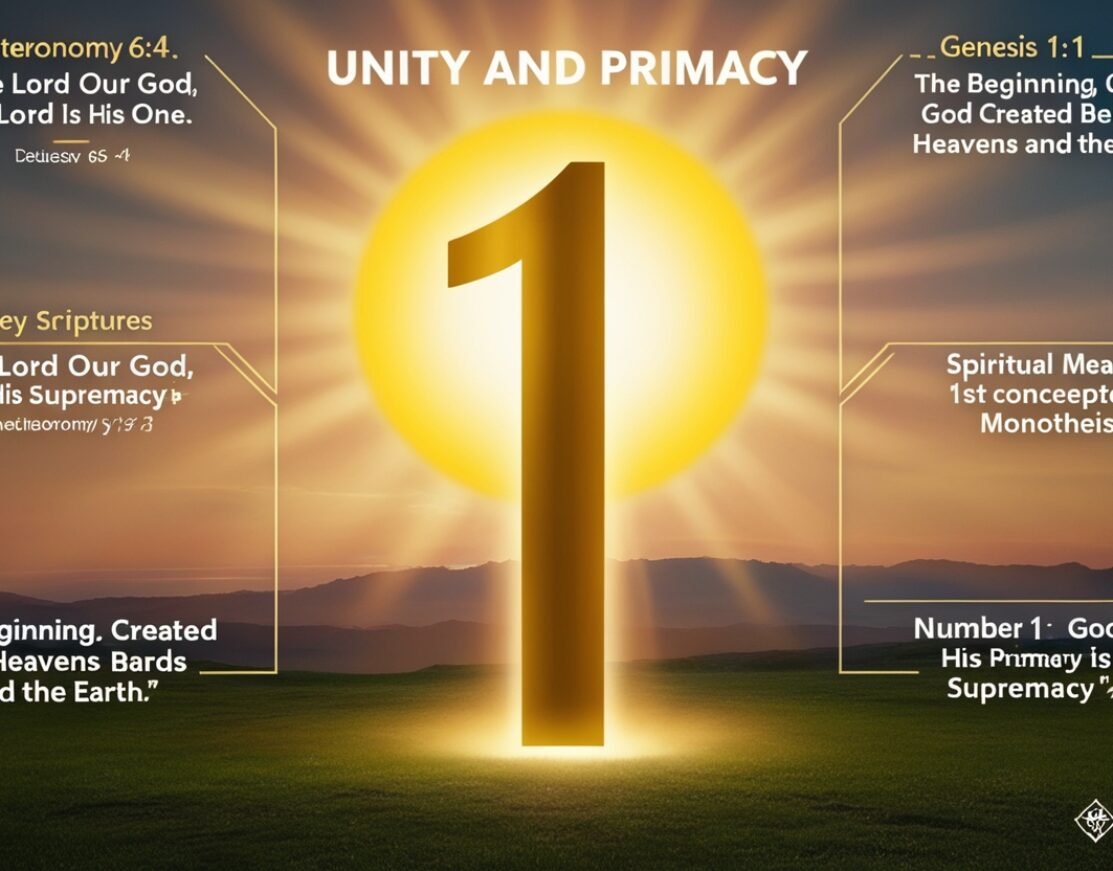
At its core, the number one symbolizes unity and oneness, particularly with regard to the nature of God. This is famously encapsulated in the Shema, a central declaration of Jewish faith: "Hear, O Israel: The Lord our God, the Lord is one" (Deuteronomy 6:4).
This statement emphasizes the monotheistic essence of the Bible, asserting the singularity of God. It sets biblical faith apart from polytheistic traditions, establishing the belief in one supreme deity who is sovereign over all creation.
The theme of unity extends to the New Testament, where the Church is described as one body united in Christ: "There is one body and one Spirit, just as you were called to one hope when you were called; one Lord, one faith, one baptism; one God and Father of all" (Ephesians 4:4-6).
This passage underscores the spiritual oneness of believers, rooted in their shared connection to Christ and the Holy Spirit.
Biblical Numerology: The Profound Significance of the Number One
Primacy and Beginnings
The number one often signifies primacy and the idea of being first or foundational. In the creation narrative of Genesis, the very first verse introduces God as the origin of all things: "In the beginning, God created the heavens and the earth" (Genesis 1:1).
This verse illustrates the primacy of God in the universe, presenting Him as the ultimate source of existence. The first act of creation—bringing light into being on the first day—marks the beginning of divine order and purpose.
The theme of beginnings continues in the New Testament with the concept of a “new creation” through faith in Christ. This spiritual renewal signifies the transformative power of God, initiating a fresh start for humanity.
Indivisibility and Wholeness
Another key aspect of the number one is its representation of indivisibility and wholeness. Theologically, this can be seen in the relationship between Christ and the Church. Believers, though diverse in background and gifts, are united as one body under one Spirit: "For just as each of us has one body with many members, and these members do not all have the same function, so in Christ we, though many, form one body" (Romans 12:4-5).
This indivisibility reflects the holistic nature of God’s design, where all parts are interconnected and work harmoniously within the greater whole.
Singular Authority and Leadership
The number one also signifies singular authority, particularly in relation to God’s unmatched sovereignty. Throughout scripture, God is portrayed as the supreme ruler with no rival or equal. The first commandment in the Ten Commandments exemplifies this: "You shall have no other gods before me" (Exodus 20:3).
This directive underscores the exclusivity of worship owed to God alone, affirming His unique position as the one true deity. Similarly, the New Testament highlights Jesus as the “one and only Son,” emphasizing His singular role in salvation: "For God so loved the world that He gave His one and only Son, that whoever believes in Him shall not perish but have eternal life" (John 3:16).
Here, the number one signifies Christ’s unique authority and mission as the mediator between humanity and God.
Key Biblical References to the Number One
The prominence of the number one is woven throughout scripture, appearing in key passages that underscore its symbolic importance:
Genesis 1:1: "In the beginning, God created the heavens and the earth." This verse highlights God as the first cause and the initiator of all creation.
Deuteronomy 6:4: "Hear, O Israel: The Lord our God, the Lord is one." A declaration of monotheism and the unity of God.
Ephesians 4:4-6: "One body, one Spirit, one hope, one Lord, one faith, one baptism, one God and Father of all." A powerful affirmation of spiritual unity among believers.
John 3:16: "For God so loved the world that He gave His one and only Son." A testament to Christ’s unique and unparalleled role in salvation.
Biblical Numerology: The Profound Significance of the Number One
Theological Insights from the Number One
The study of the number one in biblical numerology reveals profound theological insights:
Monotheism: It reinforces the belief in one God who is sovereign, eternal, and unchanging. Divine Primacy: It underscores God’s role as the first and ultimate cause of existence. Spiritual Unity: It calls believers to unity in their faith, reflecting the oneness of God. Exclusivity of Worship: It reminds followers of the singular devotion owed to God. Christ’s Uniqueness: It highlights the singularity of Jesus’ mission and His central role in salvation.
Conclusion
The number one in biblical numerology is far more than a mere digit; it is a profound symbol of unity, primacy, and divine singularity. From the oneness of God in Deuteronomy to the unity of believers in Christ described in Ephesians, the themes associated with this number resonate throughout scripture.
By understanding the symbolic meaning of the number one, we gain deeper insights into the core beliefs of biblical theology. It reminds us of God’s unmatched sovereignty, the beginnings of creation, and the call to unity among His followers. The specialty of the number one is a testament to the interconnectedness of biblical teachings and the enduring significance of its message.
Through this lens, the number one becomes not just a numerical figure, but a gateway to understanding the profound truths of faith and the divine order of the universe.
Biblical Numerology: The Profound Significance of the Number One
BIBLICAL NUMEROLOGY:
Specialty of Number One
Biblical numerology is the study of numbers within the Bible, which often carries symbolic significance beyond their literal meaning. One of the most fundamental numbers in this context is the number one, which is deeply embedded in the biblical narrative and holds a unique position in Christian theology.
Symbolism of Number One
Biblical numerology is a fascinating study that assigns spiritual significance to numbers found within the scriptures. Among these numbers, the number one holds a particularly profound position, symbolizing unity, primacy, and the singularity of God. This article will delve into the specialty of the number one in biblical numerology and explore its multifaceted meanings.
The number one symbolizes unity, primacy, and the beginning. It is often associated with God Himself, representing His sovereignty and singular nature. Here are some key aspects of the number one in biblical terms:
Biblical Numerology: The Profound Significance of the Number One
Unity and Monotheism
In biblical texts, the number one is often associated with the idea of unity. It represents God’s oneness, emphasizing the monotheistic nature of Christianity and Judaism. The Shema, a traditional Jewish prayer found in Deuteronomy 6:4, declares, “Hear, O Israel: The Lord our God, the Lord is one.” This verse underscores the central belief in one God, highlighting the interconnectedness of divine attributes.
In biblical teachings, the number one is synonymous with the concept of monotheism, the belief in a single, allpowerful God. This is clearly articulated in the Shema, a traditional Jewish prayer found in Deuteronomy 6:4:
“Hear, O Israel: The Lord our God, the Lord is one.”
This verse emphasizes the uniqueness and unity of God, distinguishing the faith from polytheistic beliefs.
Primacy and Importance
This concept of beginnings is further exemplified in the biblical concept of a “new creation” in Christ, as described in the New Testament.
The number one also signifies primacy and importance. It often represents the first, the best, or the most significant. For instance, in the Ten Commandments, the first commandment instructs believers to have no other gods before the one true God, highlighting the priority of God in the lives of His followers.
Beginnings and Creation
The number one also signifies primacy and beginnings. In the Book of Genesis, the creation story starts with “In the beginning, God created the heavens and the earth,” marking the commencement of the universe. The use of the number one here signifies the first step in God’s grand design, setting the stage for all subsequent creation.
In the creation narrative of Genesis, the number one signifies the beginning of everything. God created light on the first day, marking the start of creation. This association with inception and new beginnings underscores the transformative power of God’s word.
Examples of Number One in the Bible
Genesis 1:1 “In the beginning, God created the heavens and the earth.” This verse highlights the number one’s association with the start of the universe.
John 1:1 “In the beginning was the Word, and the Word was with God, and the Word was God.” Here, one again emphasizes the unity and divine nature of God and His Word.
Ephesians 4:46 This passage speaks of one body, one spirit, one hope, one Lord, one faith, one baptism, and one God, underscoring the oneness of the Christian faith and its community.
Indivisibility and Wholeness
Another aspect of the number one’s specialty is its representation of indivisibility and wholeness. In biblical terms, this can be seen in the relationship between Christ and the Church. Ephesians 4:46 speaks of one body, one Spirit, and one hope, emphasizing the complete and undivided nature of the faithful community. This reflects the idea that believers, though many, are united as one in Christ.
Singular Authority
The number one is also indicative of singular authority and leadership in the Bible. Throughout scripture, God is portrayed as the ultimate authority, with no equal or rival. Similarly, Jesus is described as the “one and only Son” in John 3:16, emphasizing His unparalleled role in salvation and His unique position as the mediator between God and humanity.
Key Biblical References
Genesis 1:1 The beginning of creation, illustrating the foundational aspect of the number one. Deuteronomy 6:4 The Shema, highlighting the oneness of God. Ephesians 4:46 The unity of the Church as one body. John 3:16 Jesus as the “one and only Son.”
Biblical Numerology: The Specialty of Number One
Biblical numerology is the study of numbers in the Bible, often holding symbolic significance. The number one holds a unique and profound place in this context, representing unity, primacy, and the singularity of God.
Unity and Singularity
In biblical terms, the number one often symbolizes the unity and singular nature of God. This is encapsulated in the Shema, a central declaration of the Jewish faith found in Deuteronomy 6:4: “Hear, O Israel: The Lord our God, the Lord is one.” This affirmation underscores the monotheistic essence of the Bible, emphasizing that there is only one true God.
Primacy and Supremacy
The number one also signifies primacy and supremacy. It denotes a position of being first or primary. In the creation narrative, God is described as the first cause, the origin of all things. Genesis 1:1 states, “In the beginning, God created the heavens and the earth.” Here, God is depicted as the supreme being who initiates creation, establishing His authority and precedence over all creation.
Oneness in Christ
In the New Testament, the concept of oneness extends to the relationship between believers and Christ. Ephesians 4:46 speaks of one body and one Spirit, emphasizing unity among believers in their faith and connection to Christ. This underscores the idea that just as God is one, His followers are called to be united as one body in Christ.
The First Commandment
The importance of the number one is also reflected in the Ten Commandments, where the first commandment states, “You shall have no other gods before me” (Exodus 20:3). This commandment highlights the exclusivity of worship and devotion owed to God alone, reinforcing His solitary and unmatched divinity.
Conclusion
In biblical numerology, the number one holds great significance, symbolizing unity, primacy, and the unmatched sovereignty of God. It underscores the foundational belief in monotheism, the supremacy of God in creation, and the call for unity among believers. Understanding the symbolic meaning of one enriches the spiritual and theological insights drawn from the Bible, illustrating the profound depth and interconnectedness of its teachings.
The Number One
In biblical numerology, the number one is imbued with deep spiritual significance. It represents unity, the beginning, indivisibility, and singular authority. These themes are woven throughout both the Old and New Testaments, underscoring the number one’s pivotal role in conveying key theological concepts. Understanding the specialty of number one can enrich one’s appreciation of biblical texts and the profound messages they convey.
The number one in biblical numerology carries profound significance. It encapsulates themes of unity, the primacy of God, and the inception of creation. By understanding the symbolic nature of the number one, we gain deeper insight into the foundational beliefs of biblical theology and the overarching narrative of the scriptures.
In the realm of biblical numerology, many numbers carry explicit and profound meanings. Numbers like 3, 7, and 12 are often associated with perfection, completion, and divine order. However, the number zero (0), though not explicitly mentioned in the Bible, holds a significant conceptual and theological essence. Its meaning can be derived from the spiritual themes of emptiness, beginnings, nothingness, and the infinite nature of God. Let us explore the divine truths encapsulated in the concept of zero within a biblical framework.
1. Zero as Symbolic of Creation from Nothing (Ex Nihilo)
The number zero is often associated with “nothingness,” yet this concept is foundational to the biblical creation narrative. The Bible begins with an extraordinary proclamation:
“In the beginning God created the heavens and the earth. Now the earth was formless and empty, darkness was over the surface of the deep, and the Spirit of God was hovering over the waters.” — Genesis 1:1-2
Here, the earth is described as formless and void—a state of nothingness or “zero.” From this void, God spoke everything into existence, demonstrating His power to create ex nihilo (out of nothing). The concept of zero reminds us that God does not need pre-existing materials or resources to fulfill His purposes. He is the Creator of all things, and from nothing, He brings forth abundance.
2. Zero Reflects God’s Infinite Nature
Mathematically, zero is both a point of nothingness and a concept linked to the infinite. In Scripture, God is described as eternal and infinite, having no beginning and no end:
“Before the mountains were born or You brought forth the whole world, from everlasting to everlasting You are God.” — Psalm 90:2
Zero represents a lack of limitation, much like the nature of God. It reminds us that our finite minds cannot fully comprehend the infinite depth, power, and love of our Creator. Just as zero marks the boundary between finite and infinite in mathematics, it signifies the vastness of God’s being, beyond human understanding.
3. Humility and Emptiness Before God
Zero also symbolizes a state of emptiness or humility, which is a recurring theme in the Bible. Jesus Himself taught the value of spiritual poverty and humility:
“Blessed are the poor in spirit, for theirs is the kingdom of heaven.” — Matthew 5:3
To be “poor in spirit” is to recognize our spiritual emptiness apart from God. In this emptiness (our zero), God fills us with His presence, grace, and power. As Paul writes:
“But we have this treasure in jars of clay to show that this all-surpassing power is from God and not from us.” — 2 Corinthians 4:7
The concept of zero, then, teaches us that apart from God, we are nothing. It is only in our emptiness that God’s fullness can be revealed.
4. The Servant’s Heart: Becoming Nothing to Be Exalted
Zero can also be seen as a symbol of servanthood and selflessness, a central teaching in the life and ministry of Jesus Christ. In Philippians, Paul writes:
“He made Himself nothing by taking the very nature of a servant, being made in human likeness. And being found in appearance as a man, He humbled Himself by becoming obedient to death—even death on a cross!” — Philippians 2:7-8
Here, the phrase “He made Himself nothing” echoes the idea of zero. Jesus emptied Himself, humbling Himself entirely to fulfill the will of the Father. His example teaches believers to embrace humility and servanthood, recognizing that true greatness lies in becoming “nothing” for God’s glory.
The Biblical Significance of the Number Zero (0)
5. A Fresh Start: Zero as the Beginning Point
Zero signifies a starting point, the beginning of a new journey. Biblically, this theme resonates with God’s promises of renewal and fresh starts:
“Therefore, if anyone is in Christ, the new creation has come: The old has gone, the new is here!” — 2 Corinthians 5:17
When we come to Christ, our past is wiped clean, and we start anew—a spiritual reset to zero. Similarly, the concept of the Year of Jubilee in Leviticus 25 represents a reset of debts and property, symbolizing God’s provision for restoration and new beginnings.
6. God’s Sovereignty Over Nothingness
Zero highlights God’s ability to work in the void, the spaces of our lives that feel empty or desolate. Ezekiel’s vision of the valley of dry bones (Ezekiel 37) illustrates how God breathes life into what seems dead or nonexistent. He transforms nothingness into life and abundance.
“Then you will know that I am the Lord, when I open your graves and bring you up from them.” — Ezekiel 37:13
The lesson is clear: God’s power is most evident when we feel like we have nothing left—when we are at “zero.” In these moments, He shows us that He is sufficient.
7. The Eternal Promise of Zero Separation
Zero can also symbolize the absence of separation between God and His people. Paul assures believers of this truth:
“For I am convinced that neither death nor life, neither angels nor demons, neither the present nor the future, nor any powers…will be able to separate us from the love of God that is in Christ Jesus our Lord.” — Romans 8:38-39
Through Christ, the separation (or “distance”) between humanity and God is reduced to zero. This truth is the cornerstone of our hope and faith.
The Biblical Significance of the Number Zero (0)
Conclusion: The Profound Lessons of Zero
While the number zero does not appear explicitly in Scripture, its spiritual significance is woven into the themes of God’s creation, His infinite nature, and His transformative power in our lives. Zero teaches us that:
God creates and provides out of nothing.
Our emptiness is a space for God’s fullness.
True humility and servanthood lead to exaltation in Christ.
Human Organs in Hebrew: Names, Gematria & Spiritual Meaning (PART 2)
Welcome to Part 2 of our series, “The Divine Design: Hebrew Names of Human Organs & Their Hidden Spiritual Code.” In Part 1, we explored 7 key human organs—brain, heart, lungs, liver, blood, bones, and kidneys—unpacking their Hebrew names, gematria (numerical values), and the spiritual symbolism encoded within them. Now, in this second part, we continue the journey into the body as a sacred language.
This time, we’re focusing on more human organs and systems—eyes, skin, tongue, stomach, joints, muscles, DNA, cells, and feet—to reveal how divine wisdom is embedded in every part of us, from structure to spirit.
Biblical Insight: “Open my eyes, that I may behold wondrous things out of Your law.” – Psalm 119:18
Spiritual Insight: Eyes represent divine perception. The value 180 symbolizes full spiritual awareness (180° vision).
Mystical Insight: 180 = symbol of full-circle awareness (like 180 degrees). Eyes represent divine perception and spiritual vigilance.
Eyes symbolize divine perception, awareness, and clarity. In Kabbalistic thought, the eyes are associated with prophecy and the ability to see truth beyond the physical. The number 180 relates to life cycles and wholeness (as in the 3 patriarchs who lived long, full lives), representing spiritual alignment with divine vision.
2. 👅 Tongue – לָשׁוֹן (Lashon)
Meaning: Tongue, speech, language
Numerical Value: ל (Lamed) = 30 ש (Shin) = 300 ו (Vav) = 6 ן (Final Nun) = 50 Total: 386 Gematria Breakdown: ל (30) + ש (300) + ו (6) + ן (50)
Biblical Insight: “Death and life are in the power of the tongue.” – Proverbs 18:21
Spiritual Insight: Speech creates reality. 386 is also the value of “Yeshua” (Jesus), linking speech to divine manifestation.
Mystical Insight: 386 = same gematria as “Yeshua” (ישוע). The tongue creates reality—blessing or destruction. It mirrors divine speech.
Lashon represents the power of speech—to bless, to curse, to create, and to destroy. In Jewish tradition, words are sacred. The number 386 is also the gematria of “Yeshua” (ישוע), linking the tongue with deliverance and expression of divine will.
Spiritual Insight: Feet symbolize movement, direction, and humility. They carry the weight of the body and are always grounded. In scripture, feet are associated with obedience and service. The number 283 connects to concepts of structure and path, highlighting how our physical walk mirrors our spiritual journey.
Biblical Insight: “God made garments of skin for Adam and his wife.” – Genesis 3:21
Mystical Insight: Skin represents both separation and protection. Interestingly, “Or” (skin) is spelt like “Or” (light, אוֹר), highlighting the shift from spiritual light to physical covering after the Fall.
The skin separates but also connects the body to the world. Interestingly, “Or” (עור) with an Ayin means “skin,” but “Or” (אוֹר) with an Aleph means “light.” In mystical texts, skin and light are interchanged, hinting at the transformation of the physical into spiritual radiance.
5. 🧬 DNA / Essence – תוֹרַשָׁה (Torasha) or צֶלֶם (Tzelem)
Tzelem Meaning: Image, form (used in “image of God”) צ (Tzadi) = 90 ל (Lamed) = 30 ם (Mem sofit) = 40 Total: 160
Biblical Insight: “Let us make man in our image (tzelem), after our likeness.” – Genesis 1:26
Mystical Insight: DNA is a modern expression of “Tzelem Elokim”—the divine imprint. It reflects infinite wisdom encoded into physical form.
🧬 DNA – דנ״א (Dalet–Nun–Aleph)
Meaning (symbolic): The encoded blueprint of life Gematria: ד (Dalet) = 4 נ (Nun) = 50 א (Aleph) = 1 Total: 55
Spiritual Insight: In modern Hebrew, DNA is transliterated as דנ״א. Mystically, 55 is the number of grace upon grace—a doubling of divine favour (חֵן = 58). DNA, as the biological code that determines identity, is viewed in Kabbalah as a physical reflection of divine intention. Just as Torah is written letter by letter, so too is the human body formed by this sacred “text” within us.
Spiritual Insight: Joints symbolize flexibility, cooperation, and harmony between parts. Spiritually, they represent the ability to adapt while staying grounded.
Spiritual Insight: Joints enable movement and flexibility, symbolizing adaptability in spiritual practice and relationships. The number 430 is the gematria of “nefesh” (נפש) meaning soul, tying bodily function directly to spiritual motion.
Spiritual Insight: Muscles represent inner strength and willpower. In Hebrew, this root is connected to action and resistance. The high value of 760 points to elevated endurance, necessary for both physical and spiritual growth.
🧫 Cells – תָּאִים (Taim)
Meaning: Cells, units of life Gematria (תא): ת (Tav) = 400 א (Aleph) = 1 Total: 401
Insight: Cells are the smallest units of life, each carrying divine instruction. 401 = Aleph (1) within Tav (400) — the divine spark hidden in physical matter.
Spiritual Insight: Cells are the building blocks of life, and the gematria 451 is significant—it matches the word אֵמֶת (Emet) meaning “truth.” This reflects how cells hold the “truth” of the body—its identity, structure, and continuity. Spiritually, this suggests that truth begins at the most foundational level.
🍽️ Stomach – קֵבָה (Keivah)
Meaning: Stomach, inner chamber ק (Qof) = 100 ב (Bet) = 2 ה (Heh) = 5 Total: 107
Biblical Insight: “The stomach of the wicked craves evil.” – Proverbs 13:25
Mystical Insight: The stomach breaks down and processes. Spiritually, it’s about digesting experience and desire. 107 = testing and inner discipline.
The stomach symbolizes reception, digestion, and discernment—not just of food, but of experiences and emotions. The number 107 reflects a refining process—taking in, breaking down, and transforming what is consumed. In a mystical sense, the stomach teaches how to absorb only what serves us and release what doesn’t.
Insight: The back carries weight. Symbolically tied to support, resilience, and what is hidden. 9 = truth and endurance.
🦴 Final Reflections: The Body as a Living Scroll
Each organ, from the brain to the feet, speaks a unique spiritual language. The Hebrew names, their gematria, and the mystical insights tied to them paint a picture of the body not as a machine—but as a sacred scroll written by the Divine.
Your body is not random. It is a structure of symbols, energies, and encoded light—divinely designed to bridge the physical and the spiritual.
Unlocking the Secrets of Hebrew Names in the Bible, 50 Biblical Names, Their Meanings, Hebrew Spellings, and Numerical Values | 100+ Biblical Names of God, with their Hebrew spellings and numerical values (Gematria) (Part 6/6)
The Power of Hebrew Names in the Bible
Names in the Bible are more than just labels—they carry deep meanings, symbolism, prophecy, and divine messages. In the Hebrew tradition, a name often reveals a person’s character, destiny, and relationship with God. Understanding these names unlocks deeper insights into biblical stories, prophecies, and spiritual truths.
The Power of Names
Names in the Bible are not just ordinary labels—they hold deep spiritual meaning, significance, and prophetic insight. In Hebrew culture, a name often reflects a person’s character, destiny, and divine purpose. Many biblical names are rooted in God’s attributes, historical events, or prophetic messages, making them essential to understanding biblical narratives.
Unlocking the Secrets of Hebrew Names in the Bible, 50 Biblical Names, Their Meanings, Hebrew Spellings, and Numerical Values | 100+ Biblical Names of God, with their Hebrew spellings and numerical values (Gematria) (Part 6/6)
In this article, we explore the fascinating world of Hebrew names, uncovering their hidden meanings and spiritual significance to unlock deeper biblical truths.
Hidden Meanings Revealed
Why did God change people’s names in the Bible? How do Hebrew names reflect divine plans and destiny? What do names like Elijah, Daniel, and Joshua reveal about God’s nature?
Unlocking the Secrets of Hebrew Names in the Bible, 50 Biblical Names, Their Meanings, Hebrew Spellings, and Numerical Values | 100+ Biblical Names of God, with their Hebrew spellings and numerical values (Gematria) (Part 6/6)
By understanding Hebrew names, we gain profound insights into biblical events, prophecies, and God’s messages to humanity.
Biblical Names Unraveled
We will explore: Names that describe God’s character (Elijah – “My God is Yahweh”) Names that reveal prophecy (Immanuel – “God with us”) Names that reflect destiny (Abraham – “Father of many nations”)
Each name in the Bible tells a unique story, connecting us to ancient wisdom and divine purpose.
Ancient Wisdom Uncovered
Many Hebrew names contain God’s name (El, Yah) or reflect divine themes, showing how God’s plan is woven into history.
Names are more than words—they hold the power of identity, transformation, and prophecy.
Watch now and unlock the hidden secrets of Hebrew names in the Bible!
50 Biblical Names and Their Deep spiritual meanings, prophetic significance, and divine revelations
Names in the Bible carry deep spiritual meanings, prophetic significance, and divine revelations. Many biblical names are tied to God’s attributes, historical events, or a person’s destiny. Below is a list of 50 powerful biblical names, their meanings, and where they appear in Scripture.
Explores the mystical and theological importance of Hebrew names, focusing on: The importance of names in Hebrew culture and the Bible Common themes and meanings behind Hebrew names Famous Hebrew names and their significance
Unlocking the Secrets of Hebrew Names in the Bible, 50 Biblical Names, Their Meanings, Hebrew Spellings, and Numerical Values | 100+ Biblical Names of God, with their Hebrew spellings and numerical values (Gematria) (Part 6/6)
How understanding Hebrew names enriches Biblical interpretation?
By the end of this guide, you will have a deeper understanding of how Hebrew names shape biblical narratives and reveal divine truths.
The Importance of Names in Hebrew Culture and the Bible
In biblical times, a name was more than just an identity marker—it was believed to shape a person’s character, fate, and divine purpose. In Genesis 2:19-20, we see that God gave Adam the authority to name the animals, showing that naming was an act of understanding, power, and dominion.
Similarly, Hebrew names often reflected: A person’s destiny or mission God’s divine plan for them A historical or prophetic event A characteristic or trait
For example, the name Abram (אַבְרָם) means “exalted father,” but God later changes his name to Abraham (אַבְרָהָם), meaning “father of many nations” (Genesis 17:5), reflecting his new divine purpose.
Unlocking the Secrets of Hebrew Names in the Bible, 50 Biblical Names, Their Meanings, Hebrew Spellings, and Numerical Values | 100+ Biblical Names of God, with their Hebrew spellings and numerical values (Gematria) (Part 6/6)
Names and Divine Encounters
Many biblical figures received new names from God after a lifechanging spiritual encounter:
Jacob (יַעֲקֹב) → Israel (יִשְׂרָאֵל) – “He who struggles with God” (Genesis 32:28). Sarai (שָׂרַי) → Sarah (שָׂרָה) – “Princess,” marking her role as the mother of nations (Genesis 17:15). Simon (שִׁמְעוֹן) → Peter (Πέτρος, Cephas) – “Rock,” reflecting his role in establishing the Church (John 1:42).
This pattern reveals that names in the Bible are not static—they evolve as a person’s spiritual journey unfolds.
Common Themes in Hebrew Names and Their Meanings
Hebrew names in the Bible often follow specific themes. Here are some of the most common categories:
1. Names That Reflect God’s Nature
Many Hebrew names contain the divine elements of God’s name, such as El (אֵל), meaning “God,” or Yah (יָהּ), from Yahweh (יהוה), meaning “the Lord.”
Unlocking the Secrets of Hebrew Names in the Bible, 50 Biblical Names, Their Meanings, Hebrew Spellings, and Numerical Values | 100+ Biblical Names of God, with their Hebrew spellings and numerical values (Gematria) (Part 6/6)
Examples include:
Elijah (אֵלִיָּהוּ) – “My God is Yahweh” Gabriel (גַּבְרִיאֵל) – “God is my strength” Daniel (דָּנִיֵּאל) – “God is my judge”
These names remind us of God’s attributes and reflect the faith and mission of the person who bears them.
2. Names That Reflect Personal Characteristics
Some biblical names describe a person’s nature or role:
Examples:
Unlocking the Secrets of Hebrew Names in the Bible, 50 Biblical Names, Their Meanings, Hebrew Spellings, and Numerical Values | 100+ Biblical Names of God, with their Hebrew spellings and numerical values (Gematria) (Part 6/6)
David (דָּוִד) – “Beloved” (Psalm 89:20) Solomon (שְׁלֹמֹה) – “Peaceful” (2 Samuel 12:24) Boaz (בֹּעַז) – “Strength” (Ruth 2:1)
These names foreshadow the life and character of the individual.
3. Names That Represent a Prophetic Future
Some biblical names prophesy events or destinies.
Unlocking the Secrets of Hebrew Names in the Bible, 50 Biblical Names, Their Meanings, Hebrew Spellings, and Numerical Values | 100+ Biblical Names of God, with their Hebrew spellings and numerical values (Gematria) (Part 6/6)
Examples:
Isaac (יִצְחָק) – “He will laugh” (Genesis 17:19), reflecting Sarah’s laughter at the prophecy of his birth. Jabez (יַעְבֵּץ) – “Pain” (1 Chronicles 4:910), reflecting the suffering of his birth but also his prayer for blessings.
These names are prophetic markers of God’s plan.
Unlocking the Secrets of Hebrew Names in the Bible, 50 Biblical Names, Their Meanings, Hebrew Spellings, and Numerical Values | 100+ Biblical Names of God, with their Hebrew spellings and numerical values (Gematria) (Part 6/6)
Famous Hebrew Names in the Bible and Their Meanings
1. Adam (אָדָם) – “Man, Earth”
Adam’s name reflects his earthly origin:
“The Lord God formed man from the dust of the ground…” – (Genesis 2:7)
Adam represents humanity itself, created in God’s image.
2. Noah (נֹחַ) – “Rest, Comfort”
Noah’s name reflects his role in saving humanity from destruction:
“He will comfort us in the labor and painful toil of our hands caused by the ground the Lord has cursed.” – (Genesis 5:29)
3. Moses (מֹשֶׁה) – “Drawn Out”
Moses’ name reflects how he was drawn out of the Nile as a baby (Exodus 2:10) and later led Israel out of Egypt.
4. Joshua (יְהוֹשֻׁעַ) – “The Lord Saves”
Joshua’s name is the Hebrew version of Jesus (Yeshua) and reflects his mission to lead Israel into the Promised Land.
5. Jesus (יֵשׁוּעַ, Yeshua) – “Salvation”
Jesus’ name means “The Lord Saves”, fulfilling His role as the Savior of the world.
“You shall call his name Jesus, for he will save his people from their sins.” – (Matthew 1:21)
How Understanding Hebrew Names Deepens Biblical Interpretation?
When we study Hebrew names, we gain deeper insights into biblical themes.
1. Names Reveal God’s Plan
Understanding biblical names helps us see God’s hidden messages in the text. For example:
The genealogy of Jesus (Matthew 1) contains names that align with prophecy.
The story of Jacob and Esau (Genesis 25) is foreshadowed by their names.
2. Names Strengthen Our Faith
Recognizing the meaning behind biblical names strengthens our faith by showing how: God’s promises are embedded in names. Prophecies are fulfilled through people’s identities. Divine plans are woven into history.
3. Names Provide Personal Encouragement
Biblical names remind us that our names and identities matter. Just as God changed names to reflect a new mission, He can transform our lives for His purpose.
50 Biblical Names, Their Meanings, Hebrew Spellings, and Numerical Values
In the Bible, names carry deep spiritual significance. Each Hebrew letter has a numerical value, revealing hidden meanings through Gematria (Hebrew numerology). Below is a list of 50 powerful biblical names along with their meanings, Hebrew spellings, and numerical values.
1. Names of God and Divine Titles
Elijah (אֵלִיָּהוּ) – “My God is Yahweh” (52) – 1 Kings 17:1 Emmanuel (עִמָּנוּאֵל) – “God with us” (197) – Matthew 1:23 El Shaddai (אֵל שַׁדַּי) – “God Almighty” (345) – Genesis 17:1 Jehovah Jireh (יְהוָה יִרְאֶה) – “The Lord will provide” (358) – Genesis 22:14 Adonai (אֲדֹנָי) – “Lord, Master” (65) – Genesis 15:2 Yeshua (יֵשׁוּעַ) – “The Lord saves” (386) – Matthew 1:21 Messiah (מָשִׁיחַ) – “The Anointed One” (358) – John 1:41 Jehovah Rapha (יְהוָה רָפָא) – “The Lord who heals” (292) – Exodus 15:26 Jehovah Nissi (יְהוָה נִסִּי) – “The Lord is my banner” (200) – Exodus 17:15 Jehovah Shalom (יְהוָה שָׁלוֹם) – “The Lord is peace” (376) – Judges 6:24
2. Names of Biblical Heroes and Saints
Abraham (אַבְרָהָם) – “Father of many nations” (248) – Genesis 17:5 Isaac (יִצְחָק) – “Laughter” (208) – Genesis 21:6 Jacob/Israel (יַעֲקֹב / יִשְׂרָאֵל) – “Supplanter; One who struggles with God” (182 / 541) – Genesis 32:28 Joseph (יוֹסֵף) – “God will add/increase” (156) – Genesis 30:24 Moses (מֹשֶׁה) – “Drawn out of the water” (345) – Exodus 2:10 David (דָּוִד) – “Beloved” (14) – 1 Samuel 16:13 Solomon (שְׁלֹמֹה) – “Peace” (375) – 2 Samuel 12:24 Samuel (שְׁמוּאֵל) – “Heard by God” (377) – 1 Samuel 1:20 Gideon (גִּדְעוֹן) – “Mighty warrior” (114) – Judges 6:12 Joshua (יְהוֹשֻׁעַ) – “The Lord is salvation” (391) – Joshua 1:1
Names in the Bible are more than just labels—they carry profound spiritual meanings, prophetic significance, and divine revelations. Many biblical names reflect God’s nature, historical events, or a person’s destiny. Each name has a purpose and often reveals God’s plan for the individual or His people.
Here is a list of 50 Powerful Biblical names, their meanings, and their scriptural references.
Meanings, Biblical References of The God’ Names and Divine Attributes
Elijah – “My God is Yahweh” (1 Kings 17:1)
Emmanuel – “God with us” (Matthew 1:23)
El Shaddai – “God Almighty” (Genesis 17:1)
Jehovah Jireh – “The Lord will provide” (Genesis 22:14)
Adonai – “Lord, Master” (Genesis 15:2)
Messiah – “The Anointed One” (John 1:41)
Jehovah Rapha – “The Lord who heals” (Exodus 15:26)
Jehovah Nissi – “The Lord is my banner” (Exodus 17:15)
Jehovah Shalom – “The Lord is peace” (Judges 6:24)
Names of Biblical Heroes and Saints
Abraham – “Father of many nations” (Genesis 17:5)
Isaac – “Laughter” (Genesis 21:6)
Jacob (Israel) – “Supplanter; One who struggles with God” (Genesis 32:28)
Martha – “Lady; Mistress of the house” (Luke 10:38)
Lazarus – “God has helped” (John 11:43)
Conclusion
Biblical names carry deep spiritual meaning, often reflecting a person’s destiny or divine mission.
Hebrew letters have numerical values, and these reveal hidden messages through Gematria.
Choosing a biblical name can add spiritual significance to one’s life.
FAQs
1. What is the significance of numbers in Hebrew names?
Hebrew letters also serve as numbers, creating deeper spiritual insights through Gematria.
2. Why does the name “Messiah” equal 358?
It connects to the prophecy of the Redeemer, showing divine design in Scripture.
3. How do I choose a biblical name based on numerology?
Consider the meaning and numerical value that aligns with your faith journey.
1. Why do Hebrew names have numerical values?
In Hebrew, letters also serve as numbers, a system called Gematria. This allows names to carry additional meanings beyond their literal definitions.
2. What is the significance of the number 358 in Hebrew?
It is the numerical value of Messiah (מָשִׁיחַ Mashiach), symbolizing the coming of the Savior.
3. How do biblical names influence destiny?
Many biblical figures were given names that reflected their divine mission (e.g., Abram → Abraham, Jacob → Israel).
4. Can I choose a biblical name based on Gematria?
Yes! Many people select names with meaningful numerical values to align with their faith and destiny.
Final Thoughts
Each biblical name carries a unique message and often reflects God’s divine plan. Hebrew names hold deep numerical significance, revealing connections between people, prophecies, and God’s attributes.
May these names inspire your spiritual journey and bring a deeper understanding of the hidden wisdom in God’s Word. 🙏✨
The Eternal Significance of Hebrew Names
The study of Hebrew names in the Bible unlocks hidden spiritual meanings and deepens our understanding of God’s divine plan. Names reflect: Destiny and purpose God’s attributes and promises The unfolding of biblical prophecy
Next time you read the Bible, pay attention to the names—they hold divine truths waiting to be discovered.
Reflection Question:
Which name resonates most with you? 🌟 What biblical name speaks to you the most? Share in the comments! 😊 Which of these names speaks to your heart the most? 🌟
May these names bless and inspire you in your spiritual walk! 🙏✨
100+ Biblical Names of God, with their Hebrew spellings and numerical values (Gematria) (Part 5/6)
Explore the spiritual depth of God’s names in the Bible through Hebrew spelling and Gematria. Includes detailed breakdowns of each name with letter-by-letter values and total numerical significance.
This guide offers a detailed breakdown of the biblical names of God, revealing the power encoded in every Hebrew letter. Each name is more than a label—it carries divine essence expressed through its spelling and numerical structure. Using Gematria, the ancient system that assigns numerical values to Hebrew letters, we examine the individual values of each letter and the total value of every name. Whether you’re studying Kabbalah, scripture, or sacred linguistics, this list is a tool for understanding the deeper vibration behind each divine name.
Explore the spiritual depth of God’s names in the Bible through Hebrew spelling and Gematria.
2. Emmanuel (עִמָּנוּאֵל) – “God with us”
Hebrew Letters & Numerical Values:
ע (Ayin) = 70
מ (Mem) = 40
נ (Nun) = 50
ו (Vav) = 6
א (Aleph) = 1
ל (Lamed) = 30
Total Numerical Value: 197
3. Abraham (אַבְרָהָם) – “Father of Many Nations”
Hebrew Letters & Numerical Values:
א (Aleph) = 1
ב (Bet) = 2
ר (Resh) = 200
ה (Hey) = 5
ם (Mem Final) = 40
Total Numerical Value: 248
4. Isaac (יִצְחָק) – “Laughter”
Hebrew Letters & Numerical Values:
י (Yod) = 10
צ (Tsade) = 90
ח (Chet) = 8
ק (Qof) = 100
Total Numerical Value: 208
5. Jacob (יַעֲקֹב) – “Supplanter”
Hebrew Letters & Numerical Values:
י (Yod) = 10
ע (Ayin) = 70
ק (Qof) = 100
ב (Bet) = 2
Total Numerical Value: 182
6. Moses (מֹשֶׁה) – “Drawn Out of Water”
Hebrew Letters & Numerical Values:
מ (Mem) = 40
ש (Shin) = 300
ה (Hey) = 5
Total Numerical Value: 345
7. David (דָּוִד) – “Beloved”
Hebrew Letters & Numerical Values:
ד (Dalet) = 4
ו (Vav) = 6
ד (Dalet) = 4
Total Numerical Value: 14
8. Solomon (שְׁלֹמֹה) – “Peace”
Hebrew Letters & Numerical Values:
ש (Shin) = 300
ל (Lamed) = 30
מ (Mem) = 40
ה (Hey) = 5
Total Numerical Value: 375
9. Joshua (יְהוֹשֻׁעַ) – “The Lord Saves”
Hebrew Letters & Numerical Values:
י (Yod) = 10
ה (Hey) = 5
ו (Vav) = 6
ש (Shin) = 300
ע (Ayin) = 70
Total Numerical Value: 391
10. Daniel (דָּנִיֵּאל) – “God is My Judge”
Hebrew Letters & Numerical Values:
ד (Dalet) = 4
נ (Nun) = 50
י (Yod) = 10
א (Aleph) = 1
ל (Lamed) = 30
Total Numerical Value: 95
11. Samuel (שְׁמוּאֵל) – “God has heard”
ש (Shin) = 300
מ (Mem) = 40
ו (Vav) = 6
א (Aleph) = 1
ל (Lamed) = 30 Total Value: 377
12. Joseph (יוֹסֵף) – “God will add”
י (Yod) = 10
ו (Vav) = 6
ס (Samekh) = 60
ף (Pe Final) = 80 Total Value: 156
13. Noah (נֹחַ) – “Rest”
נ (Nun) = 50
ח (Chet) = 8 Total Value: 58
14. Isaiah (יְשַׁעְיָהוּ) – “Salvation of Yahweh”
י (Yod) = 10
ש (Shin) = 300
ע (Ayin) = 70
י (Yod) = 10
ה (Hey) = 5
ו (Vav) = 6 Total Value: 401
15. Jeremiah (יִרְמְיָהוּ) – “Yahweh will exalt”
י (Yod) = 10
ר (Resh) = 200
מ (Mem) = 40
י (Yod) = 10
ה (Hey) = 5
ו (Vav) = 6 Total Value: 271
16. Ezekiel (יְחֶזְקֵאל) – “God strengthens”
י (Yod) = 10
ח (Chet) = 8
ז (Zayin) = 7
ק (Qof) = 100
א (Aleph) = 1
ל (Lamed) = 30 Total Value: 156
17. Malachi (מַלְאָכִי) – “My Messenger”
מ (Mem) = 40
ל (Lamed) = 30
א (Aleph) = 1
כ (Kaf) = 20
י (Yod) = 10 Total Value: 101
18. Zechariah (זְכַרְיָה) – “Yahweh remembers”
ז (Zayin) = 7
כ (Kaf) = 20
ר (Resh) = 200
י (Yod) = 10
ה (Hey) = 5 Total Value: 242
19. Nathanael (נְתַנְאֵל) – “Gift of God”
נ (Nun) = 50
ת (Tav) = 400
נ (Nun) = 50
א (Aleph) = 1
ל (Lamed) = 30 Total Value: 531
20. Jonah (יוֹנָה) – “Dove”
י (Yod) = 10
ו (Vav) = 6
נ (Nun) = 50
ה (Hey) = 5 Total Value: 71
100+ Biblical Names of God, with their Hebrew spellings and numerical values (Gematria) (Part 5/6)
21. Seth (שֵׁת) – “Appointed”
ש (Shin) = 300
ת (Tav) = 400 Total Value: 700
22. Caleb (כָּלֵב) – “Wholehearted”
כ (Kaf) = 20
ל (Lamed) = 30
ב (Bet) = 2 Total Value: 52
23. Gideon (גִּדְעוֹן) – “Mighty warrior”
ג (Gimel) = 3
ד (Dalet) = 4
ע (Ayin) = 70
ו (Vav) = 6
ן (Nun Final) = 50 Total Value: 133
24. Levi (לֵוִי) – “Joined, attached”
ל (Lamed) = 30
ו (Vav) = 6
י (Yod) = 10 Total Value: 46
25. Ezra (עֶזְרָא) – “Helper”
ע (Ayin) = 70
ז (Zayin) = 7
ר (Resh) = 200
א (Aleph) = 1 Total Value: 278
26. Reuben (רְאוּבֵן) – “Behold, a son”
ר (Resh) = 200
א (Aleph) = 1
ו (Vav) = 6
ב (Bet) = 2
ן (Nun Final) = 50 Total Value: 259
27. Simeon (שִׁמְעוֹן) – “God has heard”
ש (Shin) = 300
מ (Mem) = 40
ע (Ayin) = 70
ו (Vav) = 6
ן (Nun Final) = 50 Total Value: 466
28. Asher (אָשֵׁר) – “Happy, blessed”
א (Aleph) = 1
ש (Shin) = 300
ר (Resh) = 200 Total Value: 501
29. Naphtali (נַפְתָּלִי) – “My struggle”
נ (Nun) = 50
פ (Pe) = 80
ת (Tav) = 400
ל (Lamed) = 30
י (Yod) = 10 Total Value: 570
30. Benjamin (בִּנְיָמִין) – “Son of the right hand”
ב (Bet) = 2
נ (Nun) = 50
י (Yod) = 10
מ (Mem) = 40
ן (Nun Final) = 50 Total Value: 152
31. Jethro (יִתְרוֹ) – “His abundance”
י (Yod) = 10
ת (Tav) = 400
ר (Resh) = 200
ו (Vav) = 6 Total Value: 616
32. Boaz (בֹּעַז) – “Strength”
ב (Bet) = 2
ע (Ayin) = 70
ז (Zayin) = 7 Total Value: 79
33. Deborah (דְּבוֹרָה) – “Bee”
ד (Dalet) = 4
ב (Bet) = 2
ו (Vav) = 6
ר (Resh) = 200
ה (Hey) = 5 Total Value: 217
34. Ruth (רוּת) – “Friend, companion”
ר (Resh) = 200
ו (Vav) = 6
ת (Tav) = 400 Total Value: 606
35. Esther (אֶסְתֵּר) – “Star”
א (Aleph) = 1
ס (Samekh) = 60
ת (Tav) = 400
ר (Resh) = 200 Total Value: 661
36. Miriam (מִרְיָם) – “Rebellion”
מ (Mem) = 40
ר (Resh) = 200
י (Yod) = 10
ם (Mem Final) = 40 Total Value: 290
37. Hannah (חַנָּה) – “Grace”
ח (Chet) = 8
נ (Nun) = 50
ה (Hey) = 5 Total Value: 63
38. Joanna (יוֹחָנָה) – “God is gracious”
י (Yod) = 10
ו (Vav) = 6
ח (Chet) = 8
נ (Nun) = 50
ה (Hey) = 5 Total Value: 79
39. Elizabeth (אֱלִישֶׁבַע) – “God is my oath”
א (Aleph) = 1
ל (Lamed) = 30
י (Yod) = 10
ש (Shin) = 300
ב (Bet) = 2
ע (Ayin) = 70 Total Value: 413
40. Magdalene (מִגְדַּל עֵדֶר) – “Tower of the flock”
מ (Mem) = 40
ג (Gimel) = 3
ד (Dalet) = 4
ל (Lamed) = 30
ע (Ayin) = 70
ד (Dalet) = 4
ר (Resh) = 200 Total Value: 351
100+ Biblical Names of God, with their Hebrew spellings and numerical values (Gematria) (Part 5/6)
41. Samson (שִׁמְשׁוֹן) – “Like the sun”
ש (Shin) = 300
מ (Mem) = 40
ש (Shin) = 300
ו (Vav) = 6
ן (Nun Final) = 50 Total Value: 696
42. Malachi (מַלְאָכִי) – “My messenger”
מ (Mem) = 40
ל (Lamed) = 30
א (Aleph) = 1
כ (Kaf) = 20
י (Yod) = 10 Total Value: 101
43. Aaron (אַהֲרֹן) – “Exalted, strong”
א (Aleph) = 1
ה (Hey) = 5
ר (Resh) = 200
ן (Nun Final) = 50 Total Value: 256
44. Melchizedek (מַלְכִּי־צֶדֶק) – “King of righteousness”
מ (Mem) = 40
ל (Lamed) = 30
כ (Kaf) = 20
י (Yod) = 10
צ (Tzade) = 90
ד (Dalet) = 4
ק (Kuf) = 100 Total Value: 294
45. Hosea (הוֹשֵׁעַ) – “Salvation”
ה (Hey) = 5
ו (Vav) = 6
ש (Shin) = 300
ע (Ayin) = 70 Total Value: 381
46. Amos (עָמוֹס) – “Burdenbearer”
ע (Ayin) = 70
מ (Mem) = 40
ו (Vav) = 6
ס (Samekh) = 60 Total Value: 176
47. Zechariah (זְכַרְיָה) – “The Lord remembers”
ז (Zayin) = 7
כ (Kaf) = 20
ר (Resh) = 200
י (Yod) = 10
ה (Hey) = 5 Total Value: 242
48. Hezekiah (חִזְקִיָּהוּ) – “God strengthens”
ח (Chet) = 8
ז (Zayin) = 7
ק (Kuf) = 100
י (Yod) = 10
ה (Hey) = 5
ו (Vav) = 6 Total Value: 136
Every Hebrew letter carries both a meaning and a numerical value, forming a deeper layer of spiritual revelation. The gematria of biblical names often reveal hiddentruths about God’s plan and individuals’ destiny.
100+ Biblical Names of God, with their Hebrew spellings and numerical values (Gematria).
YHWH (יהוה) – “The LORD” – Gematria: 26 Elohim (אֱלֹהִים) – “God, Mighty One” – Gematria: 86 Adonai (אֲדֹנָי) – “Lord, Master” – Gematria: 65 Yahweh Rapha (יְהוָה רָפָא) – “The LORD Who Heals” – Gematria: 307 Yahweh Yireh (יְהוָה יִרְאֵה) – “The LORD Will Provide” – Gematria: 273 El Elyon (אֵל עֶלְיוֹן) – “God Most High” – Gematria: 200 El Olam (אֵל עוֹלָם) – “The Everlasting God” – Gematria: 221 El Roi (אֵל רֳאִי) – “The God Who Sees” – Gematria: 217 Yahweh Rohi (יְהוָה רֹעִי) – “The LORD My Shepherd” – Gematria: 305 Yahweh Mekaddishkem (יְהוָה מְקַדִּשְׁכֶם) – “The LORD Who Sanctifies” – Gematria: 526 Abba (אַבָּא) – “Father” – Gematria: 4
Yeshua (יֵשׁוּעַ) – “Jesus (Salvation)” – Gematria: 386 Messiah (מָשִׁיחַ) – “Anointed One” – Gematria: 358 HaShem (הַשֵּׁם) – “The Name” – Gematria: 345 El Gibbor (אֵל גִּבּוֹר) – “Mighty God” – Gematria: 243 Ehiyeh Asher Ehiyeh (אֶהְיֶה אֲשֶׁר אֶהְיֶה) – “I Am That I Am” – Gematria: 543 Emmanuel (עִמָּנוּאֵ) – “God With Us” Yah (יָהּ) – “Shortened Name of God” – Gematria: 15 Goel (גּוֹאֵל) – “Redeemer” – Gematria: 40 Tzur Israel (צוּר יִשְׂרָאֵל) – “Rock of Israel” – Gematria: 406 El Bethel (אֵל בֵּית אֵל) – “God of the House of God” – Gematria: 179 Melech HaOlam (מֶלֶךְ הָעוֹלָם) – “King of the Universe” – Gematria: 231 Avinu Malkeinu (אָבִינוּ מַלְכֵּנוּ) – “Our Father, Our King” – Gematria: 303 Yahweh Chereb (יְהוָה חֶרֶב) – “The LORD is a Sword” – Gematria: 215
El Roi (אֵל רֳאִי) – “The God Who Sees Me” Yah (יָהּ) – “The LORD” (Shortened form of YHWH) Abba (אַבָּא) “Father.” A personal, intimate term for God. ( Mark 14:36, Romans 8:15) Yahweh Mekoddishkem( יְהוָה מְקַדִּשְׁכֶם ) “”The LORD Who Sanctifies You.” Shows God’s work in making His people holy” Exodus 31:13, Leviticus 20:8 Yahweh Raah(יְהוָה רֹעִ) “The LORD My Shepherd.” Declares God’s guidance and care” Psalm 23:1 HaMashiach (הַמָּשִׁיחַ)”The Messiah.” The Anointed One, referring to Jesus) HaMashiach ( הַמָּשִׁיחַ) “The Messiah.” The Anointed One, referring to Jesus.
Yahweh Bore (יְהוָה בּוֹרֵא) – “The LORD Creator” – Gematria: 228 Yahweh Machsi (יְהוָה מַחְסִי) – “The LORD My Refuge” – Gematria: 213 Yahweh Maginnenu (יְהוָה מָגִנֵּנוּ) – “The LORD Our Shield” – Gematria: 205 Yahweh Mephalti (יְהוָה מְפַלְטִי) – “The LORD My Deliverer” – Gematria: 318 Yahweh Ozi (יְהוָה עֻזִּי) – “The LORD My Strength” – Gematria: 203 Yahweh Goelekha (יְהוָה גֹּאֲלֶךָ) – “The LORD Your Redeemer” – Gematria: 238 Yahweh Tsuri (יְהוָה צוּרִי) – “The LORD My Rock” – Gematria: 302 Yahweh Uzzi (יְהוָה עֻזִּי) – “The LORD My Might” – Gematria: 208 Yahweh Kedosh (יְהוָה קָדוֹשׁ) – “The LORD is Holy” – Gematria: 415 Yahweh Ori (יְהוָה אוֹרִי) – “The LORD My Light” – Gematria: 227
Yahweh Elyon (יְהוָה עֶלְיוֹן) – “The LORD Most High” – Gematria: 221 El Emunah (אֵל אֱמוּנָה) – “Faithful God” – Gematria: 189 El Rachum (אֵל רַחוּם) – “Compassionate God” – Gematria: 284 Yahweh Tsevaot (יְהוָה צְבָאוֹת) – “The LORD of Armies” – Gematria: 499 Yahweh Shofet (יְהוָה שׁוֹפֵט) – “The LORD is Judge” – Gematria: 396 Yahweh Malchi (יְהוָה מַלְכִּי) – “The LORD My King” – Gematria: 226 Yahweh Goali (יְהוָה גֹּאֲלִי) – “The LORD My Redeemer” – Gematria: 238 Yahweh Machseh (יְהוָה מַחְסֶה) – “The LORD My Refuge” – Gematria: 213 El Ne’eman (אֵל נֶאֱמָן) – “Faithful God” – Gematria: 222 Yahweh Tov (יְהוָה טוֹב) – “The LORD is Good” – Gematria: 51 Yahweh Roi (יְהוָה רֹעִי) – “The LORD My Shepherd” El Olam (אֵל עוֹלָם) – “Everlasting God”
Detailed breakdown of each biblical name, including the Hebrew spelling, individual letter values, and total numerical value (Gematria).
YHWH (יהוה) – “The LORD” | Meaning: The self-existent, eternal God. | Hebrew: יהוה | י (10) + ה (5) + ו (6) + ה (5) = 26 | Reference: Exodus 3:14-15
Elohim (אֱלֹהִים) – “God, Mighty One” | Meaning: The powerful and supreme God. | Hebrew: אֱלֹהִים | א (1) + ל (30) + ה (5) + י (10) + מ (40) = 86 | Reference: Genesis 1:1
Yahweh Rapha (יְהוָה רָפָא) – “The LORD Who Heals” | Meaning: The God who restores and heals. | Hebrew: יְהוָה רָפָא | י (10) + ה (5) + ו (6) + ה (5) = 26, ר (200) + פ (80) + א (1) = 281, Total: 307 | Reference: Exodus 15:26
Yahweh Yireh (יְהוָה יִרְאֵה) – “The LORD Will Provide” | Meaning: God’s provision for His people. | Hebrew: יְהוָה יִרְאֵה | י (10) + ה (5) + ו (6) + ה (5) = 26, י (10) + ר (200) + א (1) + ה (5) = 216, Total: 273 | Reference: Genesis 22:14
Yahweh Nissi (יְהוָה נִסִּי) – “The LORD My Banner” | Meaning: The One who leads and protects His people. | Hebrew: יְהוָה נִסִּי | י (10) + ה (5) + ו (6) + ה (5) = 26, נ (50) + ס (60) + י (10) = 120, Total: 146 | Reference: Exodus 17:15
Yahweh Shalom (יְהוָה שָׁלוֹם) – “The LORD Is Peace” | Meaning: God as the source of true peace. | Hebrew: יְהוָה שָׁלוֹם | י (10) + ה (5) + ו (6) + ה (5) = 26, ש (300) + ל (30) + ו (6) + ם (40) = 376, Total: 402 | Reference: Judges 6:24
El Elyon (אֵל עֶלְיוֹן) – “God Most High” | Meaning: The highest and sovereign God. | Hebrew: אֵל עֶלְיוֹן | א (1) + ל (30) = 31, ע (70) + ל (30) + י (10) + ו (6) + ן (50) = 166, Total: 197 | Reference: Genesis 14:18-20
Yahweh Tsidkenu (יְהוָה צִדְקֵנוּ) – “The LORD Our Righteousness” | Meaning: God as the source of righteousness. | Hebrew: יְהוָה צִדְקֵנוּ | י (10) + ה (5) + ו (6) + ה (5) = 26, צ (90) + ד (4) + ק (100) + נ (50) + ו (6) = 250, Total: 276 | Reference: Jeremiah 23:6
Yahweh Sabaoth (יְהוָה צְבָאוֹת) – “The LORD of Hosts” | Meaning: The commander of heavenly armies. | Hebrew: יְהוָה צְבָאוֹת | י (10) + ה (5) + ו (6) + ה (5) = 26, צ (90) + ב (2) + א (1) + ו (6) + ת (400) = 499, Total: 525 | Reference: 1 Samuel 1:3, Isaiah 6:3
HaMashiach (הַמָּשִׁיחַ) – “The Messiah” | Meaning: The Anointed One, referring to Jesus Christ. | Hebrew: הַמָּשִׁיחַ | ה (5) + מ (40) + ש (300) + י (10) + ח (8) = 363 | Reference: Daniel 9:25-26, John 1:41
Yahweh Jireh ( יְהוָה יִרְאֵה) Meaning: “The LORD Will Provide.” God’s provision for His people. Hebrew Letters: י (Yod) + ה (Heh) + ו (Vav) + ה (Heh) + י (Yod) + ר (Resh) + א (Aleph) + ה (Heh). Numerical Value: י (10) + ה (5) + ו (6) + ה (5) + י (10) + ר (200) + א (1) + ה (5) = 242. Details: Named by Abraham after God provided a ram. Reference: Genesis 22:14
HaMashiach ( הַמָּשִׁיחַ) Meaning: “The Messiah.” The Anointed One, referring to Jesus. Hebrew Letters: ה (Heh) + מ (Mem) + ש (Shin) + י (Yod) + ח (Chet). Numerical Value: ה (5) + מ (40) + ש (300) + י (10) + ח (8) = 363. Details: Used in prophecy for the coming Savior. Reference: Daniel 9:2526, John 1:41
Immanuel עִמָּנוּאֵל Meaning: “God With Us.” A prophecy about Jesus Christ. Hebrew Letters: ע (Ayin) + מ (Mem) + נ (Nun) + ו (Vav) + א (Aleph) + ל (Lamed). Numerical Value: ע (70) + מ (40) + נ (50) + ו (6) + א (1) + ל (30) = 197. Details: A prophetic name referring to the Messiah, Jesus Christ. Reference: Isaiah 7:14, Matthew 1:23
Abba אַבָּא Meaning: “Father.” Expresses an intimate relationship with God. Hebrew Letters: א (Aleph) + ב (Bet) + א (Aleph). Numerical Value: א (1) + ב (2) + א (1) = 4. Details: Used by Jesus to refer to God with deep affection. Reference: Romans 8:15, Mark 14:36
Yahweh Mekoddishkem יְהוָה מְקַדִּשְׁכֶם Meaning: “The LORD Who Sanctifies You.” Shows God’s work in making His people holy. Hebrew Letters: י (Yod) + ה (Heh) + ו (Vav) + ה (Heh) + מ (Mem) + ק (Qof) + ד (Dalet) + ש (Shin) + כ (Kaf) + ם (Mem). Numerical Value: י (10) + ה (5) + ו (6) + ה (5) + מ (40) + ק (100) + ד (4) + ש (300) + כ (20) + ם (40) = 530. Details: Used in the context of holiness and obedience to God’s laws. Reference: Exodus 31:13, Leviticus 20:8
El Gibbor אֵל גִּבּוֹר Meaning: “Mighty God.” A prophetic title for Jesus Christ. Hebrew Letters: א (Aleph) + ל (Lamed) + ג (Gimel) + ב (Bet) + ו (Vav) + ר (Resh). Numerical Value: א (1) + ל (30) + ג (3) + ב (2) + ו (6) + ר (200) = 242. Details: Used in Isaiah’s prophecy of the Messiah. Reference: Isaiah 9:6
Yahweh Raah יְהוָה רֹעִי Meaning: “The LORD My Shepherd.” Declares God’s guidance and care. Hebrew Letters: י (Yod) + ה (Heh) + ו (Vav) + ה (Heh) + ר (Resh) + ע (Ayin) + י (Yod). Numerical Value: י (10) + ה (5) + ו (6) + ה (5) + ר (200) + ע (70) + י (10) = 306. Details: Found in Psalm 23, showing God as a loving shepherd. Reference: Psalm 23:1
Yahweh Rapha יְהוָה רָפָא Meaning: “The LORD Who Heals.” God as the divine healer. Hebrew Letters: י (Yod) + ה (Heh) + ו (Vav) + ה (Heh) + ר (Resh) + פ (Pe) + א (Aleph). Numerical Value: י (10) + ה (5) + ו (6) + ה (5) + ר (200) + פ (80) + א (1) = 307. Details: First mentioned when God promised healing to Israel. Reference: Exodus 15:26
Emmanuel ( עִמָּנוּאֵל) Meaning: “God With Us.” A prophetic name of Jesus. Hebrew Letters: ע (Ayin) + מ (Mem) + נ (Nun) + ו (Vav) + א (Aleph) + ל (Lamed). Numerical Value: ע (70) + מ (40) + נ (50) + ו (6) + א (1) + ל (30) = 197. Details: Prophesied by Isaiah as a sign of God’s presence. Reference: Isaiah 7:14, Matthew 1:23
Each name of God is like a doorway into a specific aspect of Divine presence—strength, mercy, justice, healing, and beyond. Their Hebrew spellings and Gematria values reveal hidden layers of meaning that go beyond language and into the realm of spiritual resonance. As you reflect on these names, consider journaling, meditating, or praying with the ones that speak to you most. Let this collection be a tool for both study and soul-alignment on your personal path of faith and insight.